

RBI's draft 2026 loan-rate rules: a three-year freeze on spread hikes, credit risk premium tied to your profile, resets capped at three months
RBI's draft Interest Rates on Loans Directions, 2026 propose a three-year freeze on spread hikes, a credit risk premium tied to your profile and resets every three months or less.
Key points
- The RBI released draft Interest Rates on Loans and Advances Directions, 2026 on August 12, 2026, covering banks, NBFCs, HFCs and AIFIs.
- Spread components other than the credit risk premium could not be raised for three years, with a proposed effective date of April 01, 2027.
- The rules are proposed, not final; borrowers should check their loan agreement now and the final Directions when the RBI issues them.
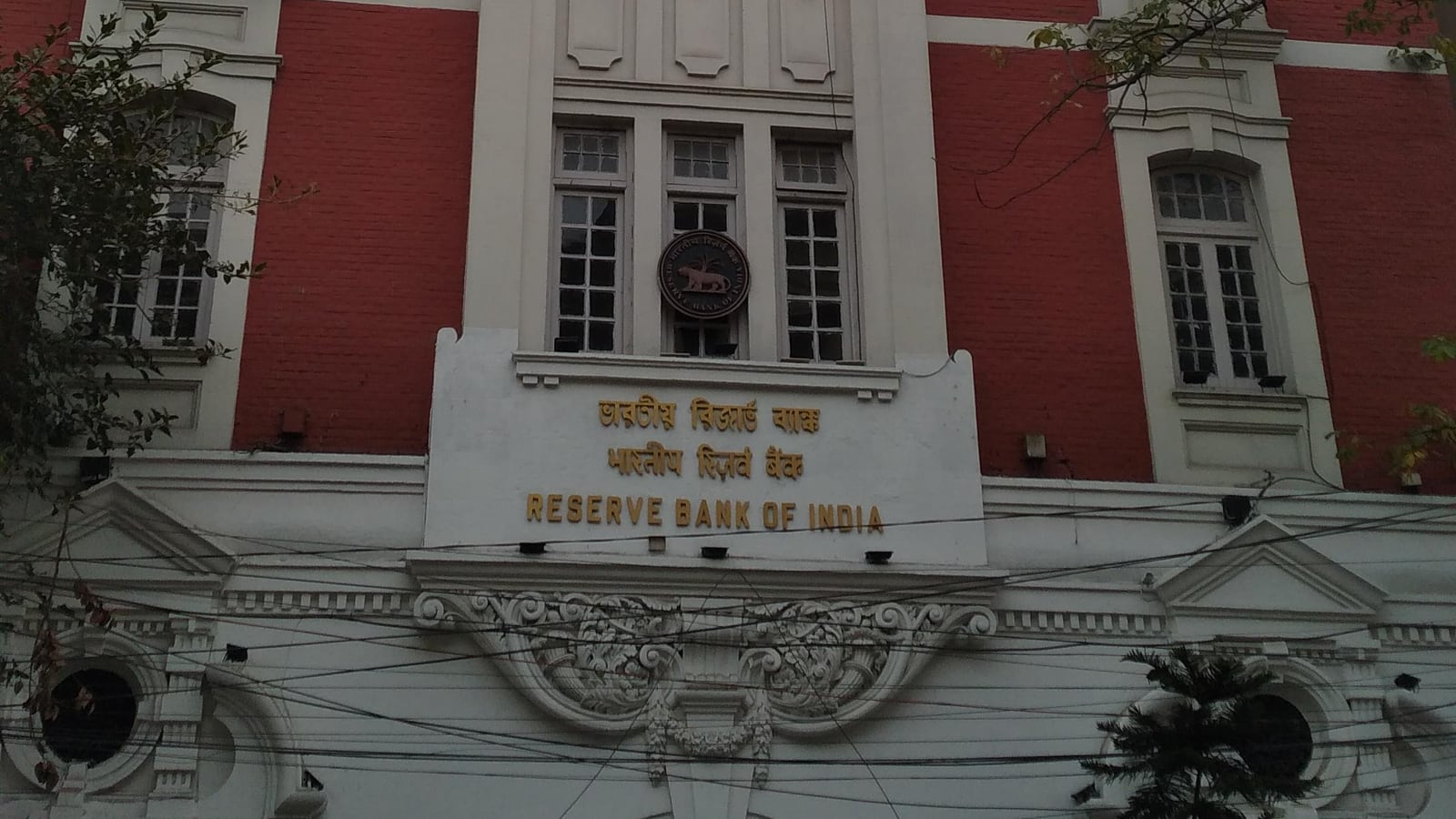
Photo: सुबोध कुलकर्णी / Wikimedia Commons, CC BY-SA 4.0 (cropped). File photo.
The Reserve Bank of India has put out for comment a single rulebook on how lenders price loans: the Reserve Bank of India (Interest Rates on Loans and Advances) Directions, 2026, issued in draft with press release 2026-2027/877 on August 12, 2026. Every rule described below is proposed, not final law. Comments closed on September 11, 2026, the proposed effective date is April 01, 2027, and the RBI has said final Directions will be issued separately for each category of regulated entity. Until then, the terms in your existing loan agreement continue to govern your loan.
For a borrower, three proposals matter most. First, the parts of your spread other than the credit risk premium could not be raised for three years. Second, the credit risk premium itself could move only when your own credit profile changes, after a comprehensive credit review. Third, the benchmark on a floating-rate loan would reset at a periodicity chosen by the lender but not exceeding three months, fixed for the life of the loan. This playbook sets out the draft text, the procedure it implies, the protections a borrower could rely on if it is finalised, and what the record says so far.
This article is general information drawn from the RBI's published draft. It is not legal or financial advice, and the Oquilia Research Desk does not act for borrowers before any court or tribunal.
The Statutory Position
The draft is a set of Directions issued by the RBI as regulator, published on rbi.org.in as document Id 5143. It is not an Act of Parliament like the SARFAESI Act, 2002 or the Recovery of Debts and Bankruptcy Act, 1993, and it does not touch recovery procedure. It governs the earlier question every recovery dispute eventually turns on: how the interest rate on the loan was set and changed.
The press release accompanying the draft (prid 63355, August 12, 2026) gave two reasons for the exercise. The RBI noted "divergent practices" among banks on the Marginal Cost of Funds based Lending Rate (MCLR) and its components, and said existing guidance on fixed-rate loans is "very limited".
Who the draft would cover (para 3)
| Category of regulated entity | Covered by the draft? | Note in the draft |
|---|---|---|
| Commercial banks | Yes | Floating personal and MSME loans to be linked to an external benchmark (para 18) |
| Regional Rural Banks (RRBs) | Yes | Domestic operations |
| Urban Co-operative Banks (UCBs) | Yes | Tier 1 and Tier 2 UCBs exempted from the three-month reset cap |
| Rural Co-operative Banks (RCBs) | Yes | Small RCBs exempted from the three-month reset cap |
| All India Financial Institutions (EXIM Bank, NABARD, NaBFID, NHB, SIDBI) | Yes | Domestic operations |
| NBFCs, including Housing Finance Companies | Yes | Base Layer NBFCs exempted from the three-month reset cap |
The draft applies to the domestic operations of these entities. That means a home loan from an HFC, a personal loan from an NBFC and a business loan from a public sector bank would all sit under one framework if the text survives, rather than under different circulars for each type of lender.
The core proposed rules, paragraph by paragraph
| Paragraph | Proposed rule | What it changes for a borrower |
|---|---|---|
| Para 2 | Effective date April 01, 2027 | Nothing changes before that date |
| Paras 7-8 | Fixed-rate loans priced with reference to an internal benchmark, and not below it | Fixed rates get a documented floor |
| Para 11 | Loan agreement must state benchmark, reset periodicity and reset date | You can check every reset against your own papers |
| Para 12(i) | Floating-rate benchmark reset at lender-chosen periodicity, not exceeding three months, fixed for the tenor | Resets no less often than once in three months |
| Para 13 | Agricultural loans reset per crop season, up to 12 months | Farm loans keep a longer cycle |
| Para 18 | Floating personal and MSME loans from commercial banks linked to an external benchmark | Ties these loans to a published external rate |
| Paras 22-23 | Credit risk premium stays positive; revised only on a change in the borrower's credit profile after a comprehensive review | Premium cannot be raised without a borrower-specific reason |
| Paras 24-24.2 | Other spread components frozen for three years; lender may cut earlier for retention on non-discriminatory grounds | Spread can fall early but cannot rise early |
| Para 30.1 | No migration charges during transition | Moving to the new framework should be free |
The reference to a "spread" is to the margin a lender adds over the benchmark. Under the draft, that spread has two parts treated very differently: the credit risk premium (paras 22-23) and everything else (paras 24-24.2).
Procedure Step by Step
If the draft becomes final in its present form, a borrower's loan would move through a defined sequence from sanction to each reset. The steps below follow the paragraph numbers of the draft published on August 12, 2026.
- Sanction and agreement (para 11). The loan agreement must record three things: the benchmark the rate is linked to, the reset periodicity, and the reset date. A borrower should be able to read all three on the face of the document signed at disbursement.
- Choice of reset periodicity (para 12(i)). The lender picks the periodicity, but it cannot exceed three months for a floating-rate loan. Once chosen, it stays fixed for the tenor of the loan. A lender that picks a one-month cycle in 2027 would, on this text, keep it for a 20-year home loan.
- Agricultural exception (para 13). For agricultural loans, the reset follows the crop season, up to 12 months, rather than the three-month cap.
- Exempt lenders. Small RCBs, Base Layer NBFCs and Tier 1 and Tier 2 UCBs are exempted from the three-month reset rule. A borrower from one of these lenders should check the agreement for the reset periodicity actually agreed.
- Benchmark reset. On each reset date, the benchmark component moves to its current value. This is the part of the rate that tracks policy changes; use the rate-cut pass-through calculator to see how a benchmark move flows into a monthly instalment.
- Credit risk premium review (paras 22-23). The credit risk premium must remain positive. It may be revised only when the borrower's credit profile changes, and only after a comprehensive credit review. The draft does not define the change; a borrower should ask which change in profile, such as a movement in credit score, the review relied on.
- Other spread components (paras 24-24.2). Components other than the credit risk premium cannot be revised for three years from first disbursement or the last spread revision, whichever is later. The lender may reduce them earlier to retain a customer, provided it does so on non-discriminatory grounds.
- Transition (para 30.1). For loans migrating to the new framework, no migration charges are to be levied.
A worked timeline on the draft's own dates
| Event | Date under the draft | Rule applied |
|---|---|---|
| Draft released | August 12, 2026 | Press release 2026-2027/877 |
| Comments closed | September 11, 2026 | 30 days after release |
| Proposed effective date | April 01, 2027 | Para 2 |
| Hypothetical first disbursement | April 01, 2027 | Starts the three-year clock (para 24) |
| Earliest date non-CRP spread could rise | April 01, 2030 | Three years from first disbursement |
| Maximum gap between benchmark resets | Three months | Para 12(i) |
The 2027 disbursement is an illustration only. The clock in para 24 runs from first disbursement or the last spread revision, whichever is later, so a loan whose spread was last revised in, say, 2028 would restart the count from that revision.
To compare what a spread change does to a long loan, run two scenarios through the home loan EMI calculator with the same benchmark and a different margin. The gap between the two outputs, multiplied across 240 or 360 months, shows why a three-year freeze on one part of the spread matters.
Borrower Defences Available
The draft does not create a new tribunal, appeal or deposit requirement. Its value to a borrower is evidential: it would give a written standard against which a rate change can be tested. If the Directions are finalised, these are the grounds a borrower could raise with the lender, and then with the RBI's grievance machinery, when a rate moves.
Ground 1: the spread rose inside three years (paras 24-24.2)
If a lender raises a spread component other than the credit risk premium before three years have passed from first disbursement or the last spread revision, the draft text would not permit it. The only early movement paras 24-24.2 allow is a reduction, for retention, on non-discriminatory grounds. A borrower should ask the lender in writing for the date of first disbursement, the date of the last spread revision and the component that changed.
Ground 2: the credit risk premium rose without a profile change (paras 22-23)
The draft ties any revision of the credit risk premium to a change in the borrower's credit profile, assessed through a comprehensive credit review. A borrower whose premium rises should ask for the review and the change in profile on which it relied. If no such review exists, paras 22-23 of the draft would be the basis of the complaint.
Ground 3: the reset does not match the agreement (paras 11 and 12(i))
Para 11 requires the benchmark, periodicity and reset date to be stated in the agreement. Para 12(i) fixes the periodicity for the loan's tenor. A reset on a date, or at an interval, different from the one in the agreement would be inconsistent with both paragraphs.
Ground 4: a migration fee was charged (para 30.1)
Para 30.1 proposes that no migration charges be levied during transition. A fee debited to move an existing loan onto the new framework would be the clearest breach to document, because it shows on the loan statement.
Ground 5: a fixed rate was set below the internal benchmark (paras 7-8)
This ground protects the system more than the individual borrower, but paras 7-8 require fixed-rate loans to be priced with reference to the lender's internal benchmark and not below it. A borrower comparing fixed offers can ask which internal benchmark the rate references.
What the draft does not give you
| Question a borrower may ask | Position in the draft |
|---|---|
| Can I switch from floating to fixed at a reset? | Draft is silent |
| Can I choose a higher EMI or a longer tenor at a reset? | Draft is silent |
| Is there a cap on how much the benchmark can move? | No cap stated in the briefing record |
| Does the three-year freeze cover the credit risk premium? | No; CRP follows paras 22-23 instead |
| Do the rules apply before April 01, 2027? | No; proposed effective date is para 2 |
The silence on floating-to-fixed switches and on EMI or tenor choice at reset is significant. It means the draft, as published on August 12, 2026, does not itself answer those questions, and a borrower should not assume it does. If your rate does change, the balance transfer calculator and the foreclosure calculator help test whether moving or closing the loan costs less than staying.
How to frame a complaint
Keep the complaint to four documents: the sanction letter, the loan agreement showing para 11 terms, the statement showing the rate before and after, and the lender's reply. Quote the paragraph number of the final Directions, not the draft, because paragraph numbers may change between the August 12, 2026 draft and the final text. The RBI press release of August 12, 2026 confirms that final Directions will be issued separately for each category of lender, so check the version that applies to yours.
Recent Tribunal/HC Position
There is no tribunal or High Court judgement yet on these Directions, and there cannot be one on the text as law, because the text is a draft. As of November 27, 2026, the record consists of the draft itself (rbi.org.in Id 5143) and the press release of August 12, 2026 (prid 63355). The comment window closed on September 11, 2026, and the proposed effective date of April 01, 2027 has not arrived.
What the record does show is the regulator's own diagnosis. In the August 12, 2026 press release, the RBI pointed to "divergent practices" among banks on MCLR and its components, and described guidance on fixed-rate loans as "very limited". That is the regulator stating, on the public record, that the earlier framework left room for inconsistent pricing. Borrowers who believe a past rate increase was unfair should note that the draft is forward-looking: its rules are proposed from April 01, 2027, and nothing in the briefing record makes them retrospective.
What to watch for between now and April 2027
| Milestone | Source to check | Why it matters |
|---|---|---|
| Final Directions for commercial banks | rbi.org.in notifications | Fixes the binding paragraph numbers |
| Final Directions for NBFCs and HFCs | rbi.org.in notifications | Issued separately per the press release |
| Final Directions for UCBs and RCBs | rbi.org.in notifications | Exemptions for small lenders may change |
| Any change to the April 01, 2027 date | Final text, para 2 equivalent | Determines when protections start |
| First reported dispute under final text | indiankanoon.org | First judicial reading of paras 22-24 |
Oquilia will report the final Directions when the RBI issues them. Until then, every protection in this playbook should be read as "proposed under the August 12, 2026 draft".
FAQ
Is the three-year spread freeze already in force?
No. It is in paras 24-24.2 of a draft released on August 12, 2026, with a proposed effective date of April 01, 2027. Final Directions are to be issued separately for each category of regulated entity.
Does the freeze stop my interest rate from rising for three years?
No. Under the draft, only spread components other than the credit risk premium are frozen for three years. The benchmark still resets at intervals of up to three months (para 12(i)), and the credit risk premium can change if your credit profile changes (paras 22-23).
Can my lender raise my credit risk premium at any time?
Under paras 22-23 of the draft, only when your credit profile changes and only after a comprehensive credit review. The premium must also stay positive.
How often will my floating rate reset?
The lender would choose the periodicity, up to a maximum of three months, and it would stay fixed for the tenor (para 12(i)). Agricultural loans reset per crop season, up to 12 months (para 13). Small RCBs, Base Layer NBFCs and Tier 1 and Tier 2 UCBs are exempted from the three-month cap.
Will I pay a fee to move my existing loan to the new framework?
Para 30.1 of the draft proposes no migration charges during transition. Check the final Directions once issued.
Does the draft let me switch to a fixed rate or choose a longer tenor at reset?
The draft is silent on both the floating-to-fixed switch and on EMI or tenor choice at reset. Do not assume either right comes from these Directions.
Does the draft apply to my HFC or NBFC home loan?
Para 3 of the draft lists NBFCs, including HFCs, among the covered entities, for domestic operations. Base Layer NBFCs are exempted from the three-month reset cap only.
Sources & Citations
- Reserve Bank of India (Interest Rates on Loans and Advances) Directions, 2026 - Draft for comments — Reserve Bank of India
- Press release 2026-2027/877: Draft Directions on Interest Rates on Loans and Advances — Reserve Bank of India