

Sending money abroad through an app: RBI's May 2026 framework for third-party outward remittance platforms
RBI's A.P. (DIR Series) Circular No. 10 of May 13, 2026 ends case-by-case approval for remittance apps and lists what every screen and invoice must show a person sending money abroad.
Key points
- RBI's A.P. (DIR Series) Circular No. 10 of May 13, 2026 ended specific RBI approval for remittance app tie-ups with AD Category-I banks.
- Apps must now show the AD bank's name, a timestamped rate, the interbank rate and mark-up separately, and the exact amount to be credited.
- The bank stays solely responsible for FEMA and KYC, remitter funds can never pass through the app's account, and no new LRS limit is set.
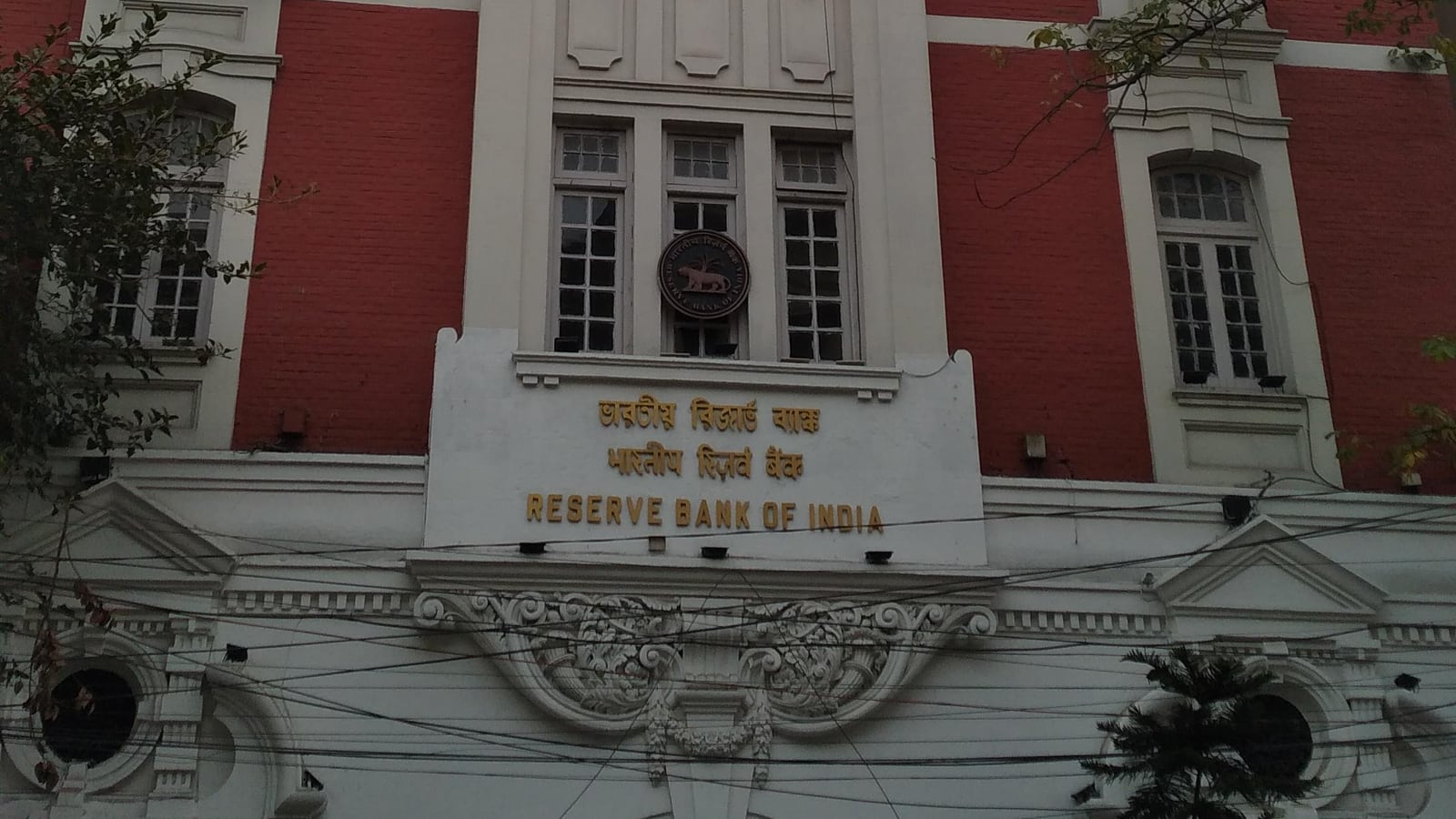
Photo: सुबोध कुलकर्णी / Wikimedia Commons, CC BY-SA 4.0 (cropped). File photo.
A parent in Pune paying a daughter's tuition in Toronto, or topping up a son's rent in London, is now more likely to do it through an app than at a bank branch. On May 13, 2026, the Reserve Bank of India issued A.P. (DIR Series) Circular No. 10 (RBI/2026-27/82), titled "Operating framework for facilitating Outward Remittance services by non-bank entities through Authorized Dealer (Category I) banks in India". It changes how those apps are allowed to work with banks, and it spells out, line by line, what a person sending money abroad must be shown on screen before pressing "pay".
This explainer, written for resident families sending money to NRI relatives, sets out what the May 13, 2026 circular says and where the tax and account rules around it fit. It is information, not advice.
FEMA / DTAA Position
What changed on May 13, 2026
Until May 13, 2026, paragraph 10 of the RBI's Master Direction - Miscellaneous (Master Direction No. 19/2015-16, dated January 1, 2016) set out a route under which a non-bank entity could seek specific approval from the RBI before tying up with an Authorised Dealer (AD) Category-I bank to offer outward remittance services. Circular No. 10 records that, "on a review", the RBI decided to dispense with that approval process. Paragraph 10 of the Master Direction "stands deleted with immediate effect", per paragraph 3 of the circular.
In place of case-by-case approval, ADs must now follow the instructions in the circular's Annex whenever they facilitate cross-border outward remittances for non-trade current account transactions through a third party in online mode. The circular lists that mode broadly: "website/ online platform/ software application/ mobile application/ any other interface".
Paragraph 4 states the legal basis: sections 10(4) and 11(1) of the Foreign Exchange Management Act, 1999 (42 of 1999), "without prejudice to permissions / approvals, if any, required under any other law". The directions bind the bank, not the app directly.
| Point | Before May 13, 2026 | From May 13, 2026 (Circular No. 10) |
|---|---|---|
| Who controlled the tie-up | RBI, via specific approval under para 10 of MD No. 19/2015-16 | The AD bank, under the Annex conditions |
| Para 10 of the Master Direction | In force | Deleted with immediate effect |
| Transactions covered | Outward remittances via non-bank tie-ups | Non-trade current account outward remittances through an online third-party interface |
| FEMA and KYC responsibility | AD bank | AD bank, "solely responsible" (Annex para 1) |
| Legal basis | Master Direction framework | Sections 10(4) and 11(1) of FEMA, 1999 |
| Forex card or cash door-step delivery ordered via an app | Not addressed in this framework | Transparency, grievance and protection rules apply (Annex Section B) |
Current account, not a new limit
Section 5 of FEMA treats current account transactions as generally permitted, with some restricted categories. Gifts to relatives, maintenance, education and medical payments sent abroad by residents are current account transactions. The circular sets no new limit on how much a resident may send under the Liberalised Remittance Scheme; it regulates the channel, not the ceiling. Readers should check the current LRS position on rbi.org.in before a large transfer.
Where DTAAs fit
A Double Taxation Avoidance Agreement allocates taxing rights over income. A gift or maintenance payment from a parent in India to a child in the US or UK is a transfer of money, not income earned in India by the child, so the treaty rarely decides whether that transfer is taxed. Treaties matter later: once the money earns interest, dividends or gains. The India-US treaty, in force from September 12, 1991, caps Indian tax on interest at 15%; the India-UK treaty, in force from October 26, 1993, also caps interest at 15%. Neither treaty makes capital gains in India "exempt": India retains taxing rights, with long-term gains taxed at 12.5% under both. See our DTAA glossary entry for the mechanics.
What the app must now show you
This is the core of Circular No. 10 for an ordinary remitter. Annex paragraph 2 lists the information that must be "displayed prominently" on the third party's website, platform or app.
| Annex para | What must be on screen | Why it matters to you |
|---|---|---|
| 2.1 | Name of the AD bank, its role and responsibilities, its authorisation status (Category-I or II), and the AD whose exchange rate is used | You know which regulated bank is actually moving your money |
| 2.2 | The exchange rate quoted by the AD, with a timestamp and the period of validity | A rate shown on screen cannot silently change after you confirm |
| 2.3 | Total estimated cost, with the interbank rate and mark-up shown separately, plus service and other charges described "without any ambiguity" | Hidden margins inside the rate become visible |
| 2.4 | The exact foreign currency amount that will be credited and the maximum time to credit the beneficiary | You can tell your child exactly what will arrive and by when |
| 2.5 | Grievance officer's telephone number and email, with timelines for resolving disputes | You know whom to escalate to |
Under paragraph 2.3, an app advertising "zero fees" while earning through the exchange rate must now show that mark-up as its own line, and paragraph 2.4 requires the exact credited amount, not an estimate. Our remittance cost calculator lets you compare the all-in cost of two quotes once you have those figures.
The invoice for every transfer
Annex paragraph 3 requires the AD that supplies the rate and the foreign exchange to ensure that an invoice is generated and issued by the third party for every transaction. The invoice must show four things:
- The break-up of the final amount, including the interbank rate and mark-up separately, the service charge and any other charges levied by the third party.
- The amount remitted by the remitter and the amount to be credited to the beneficiary's account.
- The maximum time, in hours, for credit to the beneficiary's account.
- The name of the AD quoting the exchange rate.
Keep these invoices: under paragraph 3 they record what you sent, when and through which bank, which helps with the tax steps below.
What the bank must do behind the screen
The Annex places the obligations on the AD bank. Paragraph 1 makes the AD "solely responsible" for FEMA compliance and for KYC, under A.P. (DIR Series) Circular No. 16 dated November 28, 2025. Paragraph 4.1 requires the AD to list on its homepage the names of all third parties it works with for online remittance, their role, and a grievance contact. Paragraph 4.2 requires the AD to publish its policy on storing customer data, including the type of data, its purpose and the storage period.
Paragraph 5.1 says the AD's agreement with the third party cannot "dilute or absolve" the AD of its obligations, and that the AD is "fully responsible and liable for all acts and omissions of the third party". Paragraph 5.2 lists 12 matters the agreement must cover, including data privacy, audit rights and a refund policy, and paragraph 7 requires data to be collected only with the remitter's "prior and explicit consent".
Your money never sits with the app
Three paragraphs protect the funds themselves:
- Paragraph 8: the AD must ensure the remittance reaches the beneficiary's bank account within the time promised, and if it is late, the remitter must be able to track its status.
- Paragraph 9: the AD must ring-fence the remitter's funds from insolvency risk and ensure they do not, at any stage, flow into the account of the third party in India.
- Paragraph 10: remittances are permitted only from the remitter's bank account to the beneficiary's bank account.
Paragraph 11 adds that a third party resident outside India must hold a licence from the destination jurisdiction's regulator where that activity needs one. The closing note requires enhanced due diligence on remittances linked to countries named in FATF statements circulated by the RBI.
Section B of the Annex extends the transparency, grievance and customer-protection paragraphs to the door-step delivery of forex cards or foreign currency notes ordered through a third party's website or app.
Tax Treatment in India
Circular No. 10 of May 13, 2026 is a FEMA instrument and changes no income-tax rate, threshold or exemption. Branch or app, the AD bank remains the authorised dealer.
Tax collected at source
Outward remittances under the LRS can attract tax collected at source (TCS), which the AD bank collects from the remitter under the Income-tax Act. The rate depends on the purpose of the remittance and on the amount already sent in the tax year. Because the bank behind the app collects TCS, the app's invoice under Annex paragraph 3 should be read alongside the TCS certificate your bank issues. Our TCS calculator works through the current slab, and the official rates are published on incometax.gov.in.
TCS is not a final tax: it is credited against the remitter's tax for the year, and any excess is refunded when the return is filed, as explained on incometax.gov.in.
Gifts to NRI relatives
The Income-tax Act's gift provisions generally exclude money received from a defined "relative", and parents and children fall within that definition (the text of the Act is on incometax.gov.in). The parent does not deduct TDS on a personal gift. The family should keep a record (the app invoice now provides one) in case the bank or the tax department asks about the source and purpose.
| Who | Indian tax point | Record to keep |
|---|---|---|
| Resident parent (remitter) | TCS collected by the AD bank on LRS remittances, set against tax for the year | App invoice (Annex para 3), bank TCS certificate |
| NRI child (recipient) | Gift from a "relative" generally outside the gift charge | Invoice copy, bank credit advice abroad |
| NRI child, later income in India | Interest, rent or gains taxed in India, subject to DTAA rates | Form 26AS / annual statement |
Readers working out their own Indian liability as non-residents can use our NRI tax calculator; if the money comes from rent on an Indian flat, the NRI rental income tax calculator covers TDS on rent.
Tax Treatment Abroad
Circular No. 10 has no effect on foreign tax law, but its paragraph 3 invoice gives the recipient clean evidence of the transfer.
United States. A gift received by a US resident from a foreign person is not usually taxed as income to the recipient, but large foreign gifts can carry reporting duties with the Internal Revenue Service. If the money is later invested in India and earns interest, India's tax on that interest is capped at 15% under the India-US treaty (in force since September 12, 1991), and Article 24 provides a foreign tax credit in the country of residence. So Indian tax paid on that later income can usually be set off against US tax on the same income.
United Kingdom. Under the India-UK treaty (in force since October 26, 1993), Indian tax on interest is again capped at 15%, and Indian long-term capital gains remain taxable in India at 12.5%. Where the UK also taxes the same income, the treaty's elimination-of-double-taxation article allows credit for Indian tax. Article 4's tie-breaker rule decides residence for a person who is resident in both countries in the same year.
Across both treaties the principle is the same: a transfer of capital is not income, but what it earns is. Confirm local reporting thresholds with your country's tax authority.
Repatriation Mechanics
Circular No. 10 covers residents sending money out through an app; NRIs moving their own money out of India use the account rules below.
| Account | Currency | Repatriable? | How money typically goes abroad |
|---|---|---|---|
| NRE account | Indian rupees | Yes, freely, principal and interest | Outward transfer by the bank |
| NRO account | Indian rupees | Within the USD 1 million-a-year facility, after tax compliance | Bank remittance, typically with Form 15CA/15CB |
| FCNR(B) deposit | Foreign currency | Yes, principal and interest | Paid out in the deposit currency |
Two practical points follow from Circular No. 10:
- The app is a front end; the bank is the remitter's counterparty. Annex paragraph 1 keeps FEMA and KYC with the AD. If a parent's remittance is questioned, it is the AD bank that must answer, and the AD's name must appear on screen (para 2.1) and on the invoice (para 3(d)).
- Account to account only. Paragraph 10 limits these remittances to transfers from the remitter's bank account to the beneficiary's bank account, so a child abroad must give a bank account, not a wallet or cash pick-up.
For an NRI repatriating sale proceeds or NRO balances, our repatriation calculator works through the steps. For a resident paying an NRI relative's Indian costs locally instead of remitting, see our earlier explainer on paying an NRI relative's hospital bills in rupees.
A five-step check before you send
- Confirm the AD bank's name and Category-I status on screen (Annex para 2.1).
- Note the rate, its timestamp and validity window (para 2.2).
- Read the separate interbank rate and mark-up lines and add the charges (para 2.3).
- Check the exact foreign-currency credit and the maximum time (para 2.4).
- Save the invoice and check the bank's homepage lists the app as a partner (paras 3 and 4.1).
FAQ
Does RBI still approve each remittance app?
No. A.P. (DIR Series) Circular No. 10 dated May 13, 2026 deleted paragraph 10 of Master Direction No. 19/2015-16, which required non-bank entities to obtain specific RBI approval for tie-ups. The AD bank must now comply with the conditions in the circular's Annex.
Did the circular change how much I can send abroad under LRS?
No. Circular No. 10 regulates how online third-party services work with AD Category-I banks and sets no new LRS limit.
What must the app show me before I pay?
Under Annex paragraph 2, the AD's name and authorisation category, the exchange rate with a timestamp and validity period, the total cost with the interbank rate and mark-up shown separately, the exact foreign currency to be credited with the maximum credit time, and grievance contacts.
Will I get a receipt?
Yes. Annex paragraph 3 requires an invoice for every transaction showing the cost break-up, the amount remitted and the amount credited, the maximum time in hours for credit, and the name of the AD quoting the rate.
Can the app hold my money in its own account?
No. Annex paragraph 9 requires the AD to ring-fence the remitter's funds from insolvency risk and to ensure they never flow into the third party's account in India at any stage.
Does using an app change the TCS on my remittance?
No. Circular No. 10 is issued under sections 10(4) and 11(1) of FEMA and changes no income-tax rule; the AD bank collects TCS as it would at a branch.
Source: Reserve Bank of India, RBI/2026-27/82, A.P. (DIR Series) Circular No. 10, May 13, 2026. This article is for information only and is not legal, tax or financial advice.
Sources & Citations
- Operating framework for facilitating Outward Remittance services by non-bank entities through Authorized Dealer (Category I) banks in India, A.P. (DIR Series) Circular No. 10, May 13, 2026 — Reserve Bank of India
- Foreign Exchange Management Act, 1999 — India Code
- Income Tax Department e-filing portal — Income Tax Department