

Can a resident pay an NRI relative's hospital bills and stay in India in rupees? What RBI's forex FAQ says
RBI's forex FAQ (as on November 28, 2025) says a resident paying an NRI close relative's medical bills in India may be covered under FEMA 14(R)/2016-RB. What it means for tax and cash.
Key points
- The Reserve Bank of India's FAQ on miscellaneous forex facilities says a resident individual may pay an NRI close relative's medical expenses in India.
- Question 15 treats the payment as a resident to resident transaction that may be covered under Regulation 6(2) of FEMA 14(R)/2016-RB dated May 2, 2016.
- Families can settle the hospital bill in rupees without a remittance, but should track the patient's days in India for income-tax residence.
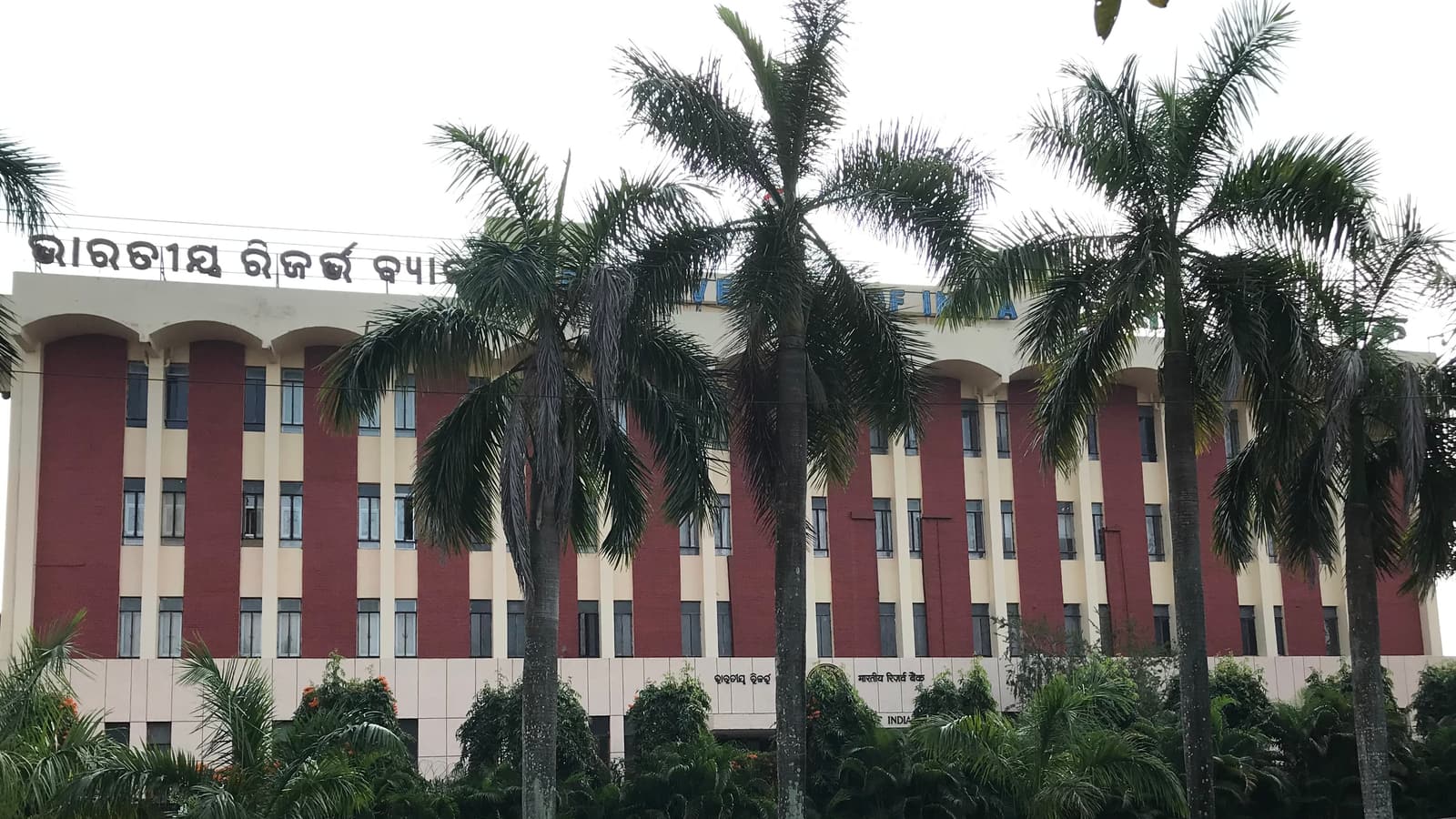
Photo: Subhrasingh / Wikimedia Commons, CC BY-SA 4.0 (cropped). File photo.
When a parent or child who lives abroad flies home and needs treatment in an Indian hospital, the first instinct of the family in India is simply to pay the bill. The Reserve Bank of India answers whether that is allowed in its FAQ on "Miscellaneous forex facilities", updated as on November 28, 2025. Question 15 of that FAQ deals directly with a resident individual meeting the medical expenses in India of a non-resident close relative, and Questions 4, 5, 13, 14 and 16 cover the surrounding situations: hospitality for a visitor, cash brought in at the airport, air tickets and assets held abroad.
This explainer sets out what the 16-question FAQ says, how the payment sits under the Foreign Exchange Management Act, 1999 (FEMA), what the income-tax position looks like, and how money can move between the family's accounts. It is general information drawn from the RBI's text, not advice on any family's own case. Where a point is not settled by the FAQ, we say so rather than fill the gap.
FEMA / DTAA Position
FEMA came into force on June 1, 2000, and the RBI's FAQ opens by restating its basic split: every foreign-exchange transaction is either a capital account transaction or a current account transaction. In the RBI's words, transactions by a resident "that do not alter his / her assets or liabilities, including contingent liabilities, outside India" are current account transactions. Under Section 5 of FEMA, persons resident in India may buy or sell foreign exchange for any current account transaction unless the Central Government has prohibited it. The FEMA glossary entry explains these two categories in more detail.
A hospital bill paid in rupees by a resident son or daughter does not involve foreign exchange at all, and that is the heart of the RBI's answer. Question 15 says that where the medical expenses of an NRI close relative are paid by a resident individual, "such a payment being in the nature of a resident to resident transaction may be covered under the term 'services related thereto' under Regulation 6(2) of Notification No. FEMA 14(R)/2016-RB dated May 2, 2016." The resident pays a hospital in India; no money leaves the country.
Two words in that answer matter. First, "close relative" is not left open: the FAQ points to the definition of "relative" in Section 2(77) of the Companies Act, 2013. Second, the RBI says the payment "may be covered", not "is always covered". Families should read Question 15 as the regulator's published view of how the 2016 regulation applies, and keep the hospital's bills and receipts in the payer's name.
Question 13 is the wider rule that Question 15 rests on. It says a person resident in India "is free to make any payment in Indian Rupees towards meeting expenses, on account of boarding, lodging and services related thereto or travel to and from and within India, of a person resident outside India, who is on a visit to India." The phrase "services related thereto" in Question 13 is the same phrase that Question 15 uses to bring medical treatment within the rule.
| RBI FAQ question | What it permits | Condition stated in the FAQ |
|---|---|---|
| Q13: local hospitality | Rupee payment for boarding, lodging, related services and travel to, from and within India | The non-resident must be on a visit to India |
| Q14: air tickets | Residents booking tickets in India for travel not touching India | Counts within the traveller's LRS entitlement of USD 250,000 |
| Q15: medical expenses | A resident individual paying an NRI close relative's medical bills in India | "Relative" as in Section 2(77), Companies Act, 2013; may be covered under Regulation 6(2), FEMA 14(R)/2016-RB |
| Q16: assets abroad | Holding, owning, transferring or investing in assets outside India | Acquired while non-resident, or inherited from a non-resident (Section 6(4), FEMA) |
The treaty side is narrower than many families expect. A double taxation avoidance agreement allocates taxing rights over income, and a resident paying a hospital in India is not income of the patient under the RBI's description of a "resident to resident transaction". Oquilia's treaty data for the India-US agreement, in force from September 12, 1991, records that Article 24 gives a foreign tax credit in the country of residence, but no DTAA article turns a family hospital payment into treaty income. The DTAA glossary entry covers how treaties work in general.
Tax Treatment in India
The RBI's Question 15 is a foreign-exchange answer; it does not decide income tax. The two laws use different residence tests. For income tax, tax years beginning on or after April 1, 2026 are governed by the Income-tax Act, 2025, and FY 2025-26 and earlier by the Income-tax Act, 1961, according to the Income Tax Department's non-resident FAQs. Under section 6(2)(a) of the 2025 Act, an individual is resident if in India for 182 days or more in the year. Our residential status glossary entry sets out the other tests.
That matters for a long medical stay. A non-resident parent who comes home for treatment could cross a residence threshold. Section 6(2)(b) of the 2025 Act makes an individual resident if in India for 60 days or more in the year and 365 days or more in the four years before; but for an Indian citizen or person of Indian origin visiting India, section 6(4) and 6(5) switch off the 60-day test unless Indian income exceeds Rs 15 lakh, in which case 120 days replaces 60. A patient whose stay stretches should count days carefully using the NRI tax calculator.
For the resident who pays, the bill is a personal expense met from income already taxed in that person's hands. For the patient, the payment is made to the hospital, not to the patient. The FAQ does not discuss whether a relative's payment could be treated as a gift for income-tax purposes, and the rules on gifts between relatives use their own definition of "relative", which is not the Companies Act definition cited in Question 15. Families should check that point under the Act for the relevant tax year on the Income Tax Department's portal rather than assume the FEMA definition carries across.
Where the non-resident pays part of the bill from their own Indian accounts, the source of the money brings its own tax rules. Under the Income-tax Act, 1961, section 10(4)(ii), interest on an NRE account is exempt for a person resident outside India under FEMA, an exemption the Department's non-resident FAQs say is retained in Schedule IV of the 2025 Act. NRO interest has no such exemption and is taxed in India, with TDS deducted by the bank.
If the non-resident's own Indian income is large enough to attract surcharge, the rates in Oquilia's rate configuration apply on top of the slab tax, with health and education cess of 4% on tax plus surcharge.
| Total income band | Surcharge, new regime | Surcharge, old regime |
|---|---|---|
| Rs 50 lakh to Rs 1 crore | 10% | 10% |
| Rs 1 crore to Rs 2 crore | 15% | 15% |
| Rs 2 crore to Rs 5 crore | 25% | 25% |
| Above Rs 5 crore | 25% (capped) | 37% |
Two other figures are frequently misapplied to visiting relatives. The new-regime rebate of up to Rs 60,000 for total income within Rs 12 lakh is for residents only, under section 156(2) of the 2025 Act, so a non-resident cannot use it. And the standard deduction of Rs 75,000 applies only to salary income, under section 19(1) of the 2025 Act; neither has anything to do with a hospital bill paid by family.
Tax Treatment Abroad
The country where the NRI lives will apply its own rules, and the RBI's FAQ does not address them. A foreign tax credit, the mechanism described in our foreign tax credit calculator, exists to relieve the same income being taxed twice. Article 24 of the India-US treaty provides that credit in the country of residence, but it only comes into play where income is taxed in India and abroad.
In the ordinary case covered by Question 15, there is no Indian income for the patient to report abroad: a resident relative pays an Indian hospital in rupees. The questions a family member abroad may need to raise with their own tax authority are different ones: whether a relative's payment for their care counts as a gift under that country's law, and whether medical costs incurred abroad can be claimed there. Oquilia has not verified any foreign country's rules on those points, and they vary from one jurisdiction to another.
Where the NRI does earn Indian income during the stay, the treaty rates become relevant. Oquilia's data for the India-US treaty records a 15% rate for interest and for royalties and fees for technical services, 25% for portfolio dividends (15% only where the recipient holds at least 10% of the voting stock, under Article 10) and 12.5% for long-term capital gains, on which India retains its taxing right. Capital gains are not exempt in India under any treaty.
| India-US DTAA item (Oquilia treaty data) | Rate |
|---|---|
| Interest | 15% |
| Royalties and fees for technical services | 15% |
| Dividends, portfolio holding | 25% |
| Dividends, holding of 10% or more of voting stock | 15% |
| Long-term capital gains (India keeps taxing right) | 12.5% |
Article 12 of the same treaty applies a "make available" test to fees for technical services, which matters only if the NRI does paid work while in India. That is a separate issue from the hospital bill, and a relative in this position should also read our earlier piece on salary earned during a long India visit, linked below.
Repatriation Mechanics
Because Question 15 describes a rupee payment between residents, no remittance is needed for the resident to settle the bill. The movement of money becomes relevant only in three situations: the NRI wants to pay part of it, the NRI wants to reimburse the family later, or the family brings cash across the border. The repatriation calculator and the glossary entries on the NRO account, NRE account and FCNR deposit explain how each account is treated.
Cash at the border is governed by Questions 4 and 5. Under Question 4, a person resident outside India, other than a citizen of Pakistan or Bangladesh or a traveller coming from or going to those countries, may bring Indian currency notes up to Rs 25,000 while entering only through an airport. A resident returning from a temporary visit abroad (other than from Nepal or Bhutan) may also bring up to Rs 25,000.
Foreign currency has no upper limit under Question 5, but declaration thresholds apply. If currency notes, bank notes or travellers' cheques together exceed USD 10,000 or its equivalent, or foreign currency notes alone exceed USD 5,000, the traveller must declare them to Customs on the Currency Declaration Form on arrival.
| Bringing money into India (RBI FAQ Q4, Q5) | Limit or threshold |
|---|---|
| Indian currency, non-resident visitor (airport entry only) | Up to Rs 25,000 |
| Indian currency, returning resident | Up to Rs 25,000 |
| Foreign exchange, any traveller | No limit |
| Declare on the Currency Declaration Form if notes, bank notes and TCs exceed | USD 10,000 |
| Declare if foreign currency notes alone exceed | USD 5,000 |
Going the other way, a resident who later travels abroad to care for the same relative uses the Liberalised Remittance Scheme. Question 14 confirms that tickets booked in India for travel not touching India form part of the traveller's overall LRS entitlement of USD 250,000. The remittance cost calculator at /calculators/nri/remittance-cost can help compare the charges on any transfer.
Question 16 deals with returning NRIs. Under Section 6(4) of FEMA, a person resident in India may hold, own, transfer or invest in foreign currency, foreign securities or immovable property outside India if acquired while resident outside India or inherited from a person resident outside India. A parent who moves back to India for long-term treatment therefore does not have to sell foreign assets bought while abroad.
FAQ
Can a resident pay an NRI parent's hospital bill in India in rupees?
The RBI's FAQ on miscellaneous forex facilities (as on November 28, 2025), Question 15, says such a payment by a resident individual "may be covered" under "services related thereto" in Regulation 6(2) of Notification FEMA 14(R)/2016-RB dated May 2, 2016, because it is a resident to resident transaction.
Who counts as a "close relative" for this purpose?
Question 15 refers to "relative" as defined in Section 2(77) of the Companies Act, 2013. That is the FEMA reference point; the income-tax rules on gifts between relatives use their own definition, so the two should not be assumed to match.
Does the rule cover only medical bills?
No. Question 13 says a resident may pay in rupees for the boarding, lodging, related services and travel to, from and within India of any person resident outside India who is visiting India. Question 15 applies the same "services related thereto" wording to medical expenses.
Does paying the bill make the NRI patient resident for tax?
The payment itself does not. Days spent in India do. Under section 6(2)(a) of the Income-tax Act, 2025, 182 days or more in India in a tax year makes an individual resident; a visiting Indian citizen with Indian income above Rs 15 lakh faces a 120-day test under sections 6(4) and 6(5).
How much Indian cash can a visiting NRI bring?
Up to Rs 25,000 in Indian currency notes, entering only through an airport, under Question 4 of the RBI's FAQ. Citizens of Pakistan and Bangladesh, and travellers coming from or going to those countries, are excluded.
Is there a limit on foreign currency an NRI can bring for the treatment?
There is no limit under Question 5, but notes, bank notes and travellers' cheques above USD 10,000 in total, or foreign currency notes above USD 5,000, must be declared to Customs on the Currency Declaration Form on arrival.
Do air tickets booked in India for a relative's onward travel count against LRS?
Question 14 says residents may book tickets in India for travel not touching India, such as London to New York, but those tickets form part of the traveller's overall LRS entitlement of USD 250,000.
Sources: Reserve Bank of India, FAQ on Miscellaneous forex facilities (updated as on November 28, 2025), Questions 4, 5, 13, 14, 15 and 16; Income Tax Department, Non-resident FAQs. This article is general information, not advice on any individual's case.
Sources & Citations
- FAQ: Miscellaneous forex facilities (updated as on November 28, 2025) — Reserve Bank of India
- Non-resident FAQs — Income Tax Department