

MSME borrower facing SARFAESI? Claim the 2015 revival framework in your Section 13(3A) reply: Swami Samarth v NKGSB (SC, 2025)
The Supreme Court ruled on 28 July 2025 that an MSME borrower must claim its status, with an affidavit, in the Section 13(3A) reply to stall SARFAESI action. Here is the step-by-step playbook.
Key points
- The Supreme Court dismissed an MSME borrower's writ against NKGSB Co-op Bank on 28 July 2025, leaving it free to approach the DRT under Section 17.
- A bank must examine an MSME claim and hold SARFAESI action in abeyance once the borrower raises it, with an affidavit, in its Section 13(3A) reply.
- MSME borrowers should invoke the 29 May 2015 revival framework within the 60-day Section 13(2) window, not in a late writ after a Section 14 order.
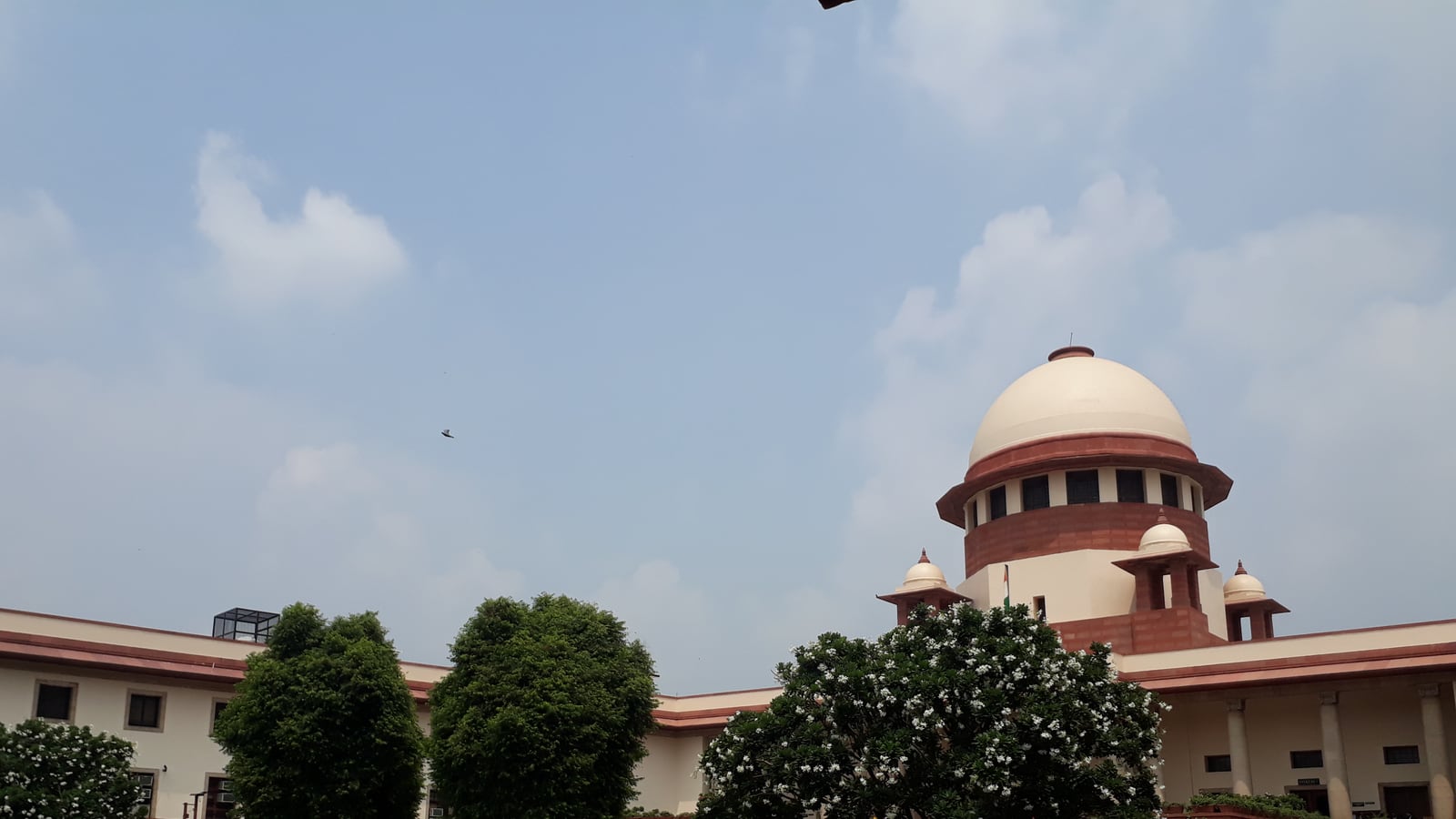
Photo: Pinakpani / Wikimedia Commons, CC BY-SA 4.0 (cropped). File photo.
On 28 July 2025, a two-judge bench of the Supreme Court of India settled a timing question that matters to every small business with a secured bank loan: when must an MSME borrower raise its MSME status to stop a SARFAESI enforcement? The answer in Shri Shri Swami Samarth Construction & Finance Solution v. Board of Directors of NKGSB Co-op Bank (WP (C) 684 of 2025, 2025 INSC 908) is precise: in the representation filed under Section 13(3A) of the SARFAESI Act, 2002, backed by an affidavit, and not 14 months later in a writ petition.
The judgement, authored by Justice Dipankar Datta with Justice Augustine George Masih on the bench, turns on paragraphs 6, 7 and 10. The full text is on Indian Kanoon.
The Statutory Position
Four provisions of the SARFAESI Act, 2002 and two of the Recovery of Debts and Bankruptcy Act, 1993 (RDDB Act) frame every MSME borrower's options. The bare text of both statutes is available on India Code, the Government of India's official repository of central legislation.
| Provision | What it does | Time limit or deposit |
|---|---|---|
| SARFAESI s. 13(2) | Secured creditor demands repayment after the account is classified as an NPA | 60 days to pay |
| SARFAESI s. 13(3A) | Borrower files a representation or objection to the 13(2) notice; creditor must reply with reasons | Creditor reply within 15 days |
| SARFAESI s. 13(4) | On non-payment, creditor may take possession, sell, lease or appoint a manager without going to court | After the 60-day window |
| SARFAESI s. 14 | Creditor applies to the Chief Metropolitan Magistrate or District Magistrate for help in taking possession | 30-day disposal mandate (post-2016 amendment) |
| SARFAESI s. 17 | Borrower's application to the Debt Recovery Tribunal against 13(4) measures | 45 days; deposit not mandatory, but the DRT may direct one |
| SARFAESI s. 18 | Appeal from the DRT to the Appellate Tribunal (DRAT) | 30 days; 50% pre-deposit, reducible to not less than 25% |
| RDDB s. 20 | Appeal from a DRT recovery order to the DRAT | 45 days |
| RDDB s. 21 | Pre-deposit for an RDDB appeal by a debtor | 75% of the debt determined; DRAT may waive or reduce |
Section 13(3A) was inserted by the 2004 amendment. It is the only point between 13(2) and 13(4) where the statute obliges the bank to answer the borrower in writing, within 15 days, which is why the July 2025 ruling treats the 13(3A) reply as the place for an MSME claim.
The MSME layer sits on top of this statute. On 29 May 2015, the Ministry of Micro, Small and Medium Enterprises notified a framework for the revival and rehabilitation of MSMEs. In Pro Knits v. Canara Bank, reported at (2024) 10 SCC 292, the Supreme Court had already dealt with how that 2015 framework interacts with SARFAESI recovery. Swami Samarth in 2025 does not add a new right; it fixes the moment and the manner in which a borrower must invoke the existing one.
Section 31 of the SARFAESI Act also matters at the threshold. It takes certain securities out of the Act altogether, including liens, agricultural land, crops, and financial assets below Rs 1 lakh. If your security falls within Section 31, the 13(2) notice may be challengeable on that ground alone, before any MSME argument arises.
Procedure Step by Step
The Swami Samarth facts give a real-world timeline running from May 2024 to July 2025. The table below sets each event against the statutory step it corresponds to.
| Date | Event in Swami Samarth | Statutory step |
|---|---|---|
| 13 May 2024 | Bank issues demand notice | Section 13(2), 60 days to pay |
| Within the 60-day window | No MSME claim recorded in a 13(3A) reply | Section 13(3A) opportunity |
| 3 April 2025 | Court Commissioner appointed to take possession | Section 14 |
| 14 July 2025 | Borrower files writ invoking the 29 May 2015 MSME notification and Pro Knits | Article 32 writ, outside the SARFAESI ladder |
| 28 July 2025 | Supreme Court dismisses the petition, leaves the borrower free to approach the DRT | Section 17 route preserved (para 10) |
Here is the procedure an MSME borrower should follow, in order, once a Section 13(2) notice arrives:
- Day 0: diarise the notice. Record the date of receipt of the 13(2) notice. The 60-day period under Section 13(2) runs from here, and every later step is measured against it.
- Days 1-10: assemble your MSME proof. Gather your registration under the Micro, Small and Medium Enterprises Development Act, 2006 (the MSMED Act). The borrower in Swami Samarth was MSMED-registered, yet the bank was found to be unaware of that status.
- Days 1-10: check Section 31. Confirm the secured asset is not agricultural land, crops, a lien or a financial asset under Rs 1 lakh, each of which Section 31 excludes from SARFAESI.
- Within the 60 days: file the Section 13(3A) representation. State in terms that the borrower is an MSME, attach the registration and a supporting affidavit, and expressly invoke the 29 May 2015 revival and rehabilitation framework. Paragraph 6 of the judgement makes the affidavit the trigger for the bank's duty.
- Within 15 days of your representation: expect the bank's reasoned reply. Section 13(3A) obliges the creditor to respond with reasons within 15 days. Keep proof of service of your representation so that the 15-day clock can be proved.
- If the bank proceeds under Section 13(4): calendar 45 days. Section 17 gives 45 days to approach the DRT against possession, sale, lease or appointment of a manager.
- If a Section 14 application is filed: act immediately. The magistrate has a 30-day disposal mandate after the 2016 amendment, so the window to put your MSME objection on record before physical possession is short.
- If the DRT rules against you: calendar 30 days and budget the deposit. A Section 18 appeal to the DRAT requires 50% of the debt due (the lower of the bank's claim or the DRT's figure), reducible to not less than 25% for recorded reasons.
Use the loan settlement cost calculator at step 2 to estimate what a one-time settlement would cost against the outstanding, so your 13(3A) representation can propose a realistic figure alongside the MSME claim.
Borrower Defences Available
The 2025 ruling sharpens one defence and leaves the others where they were. The table below summarises what each ground requires and when it must be raised.
| Defence | Statutory or case basis | Raise it by | Deposit exposure |
|---|---|---|---|
| MSME status and 2015 framework | 29 May 2015 notification; Pro Knits (2024) 10 SCC 292; Swami Samarth para 6 | 13(3A) reply, with affidavit | None at representation stage |
| Asset excluded from SARFAESI | Section 31 (lien, agricultural land, crops, financial assets below Rs 1 lakh) | 13(3A) reply, then Section 17 | Section 17: discretionary |
| Defective or premature 13(2) notice | Section 13(2), 60-day requirement | 13(3A) reply, then Section 17 | Section 17: discretionary |
| Bank failed to give reasons within 15 days | Section 13(3A) | Section 17 within 45 days | Section 17: discretionary |
| Illegal 13(4) measure | Section 17 | DRT within 45 days | Discretionary under Section 17; 50% (min 25%) on appeal under Section 18 |
Defence 1: the MSME claim, raised on time. Paragraph 6 of Swami Samarth draws a clear line. A bank that does not know of the borrower's MSME status may lawfully classify the account as an NPA and issue a Section 13(2) notice. Once the borrower claims MSME status in its 13(3A) reply, supported by an affidavit, the bank must examine the claim and keep SARFAESI action in abeyance. The obligation is triggered by the borrower, not presumed by the court.
Defence 2: procedural lapses by the bank. The statute fixes two clocks the bank must respect: 60 days under Section 13(2) and 15 days for a reasoned reply under Section 13(3A). A bank that moves to Section 13(4) without honouring them gives the borrower a ground under Section 17, which must be filed within 45 days of the measure.
Defence 3: the Section 17 application itself. Section 17, before the DRT, is the forum the Supreme Court pointed the Swami Samarth borrower to in paragraph 10. No deposit is mandatory at this stage, although the DRT may direct one. That makes Section 17 the cheapest effective remedy, and a writ the most expensive, as the 14-day journey from filing on 14 July 2025 to dismissal on 28 July 2025 shows.
What the deposits mean in money. For a debt of Rs 1 crore, the arithmetic of the two appellate regimes differs sharply:
| Debt due | SARFAESI s. 18 at 50% | SARFAESI s. 18 at 25% floor | RDDB s. 21 at 75% |
|---|---|---|---|
| Rs 25 lakh | Rs 12.5 lakh | Rs 6.25 lakh | Rs 18.75 lakh |
| Rs 1 crore | Rs 50 lakh | Rs 25 lakh | Rs 75 lakh |
| Rs 5 crore | Rs 2.5 crore | Rs 1.25 crore | Rs 3.75 crore |
Those figures follow directly from the percentages in Sections 18 and 21. They show why winning at the 13(3A) stage, where no deposit is involved, is worth far more than winning on appeal. If a settlement looks likelier than a contest, the foreclosure calculator and the debt consolidation calculator can help model the cash needed to close or restructure the account.
Recent Tribunal/HC Position
The controlling authority for MSME borrowers is now the Supreme Court's decision of 28 July 2025, reported as 2025 INSC 908. Its reasoning can be read in three steps.
Paragraph 6: who must act, and when. The bench held that a bank unaware of the borrower's MSME status is entitled to classify the account as an NPA and issue a notice under Section 13(2). The duty to pause arises only when the borrower claims MSME status in its Section 13(3A) reply and supports the claim with an affidavit. At that point the bank must examine the claim and hold SARFAESI action in abeyance. This places the burden of the first move squarely on the borrower, inside the 60-day window that begins with the 13(2) notice.
Paragraph 7: bona fides. Counting the gaps is instructive. The borrower received its 13(2) notice on 13 May 2024, saw a Court Commissioner appointed under Section 14 on 3 April 2025, and raised the 29 May 2015 notification and Pro Knits for the first time in a writ filed on 14 July 2025. The court found the borrower's bona fides suspect. A claim surfacing 427 days after the demand notice, and 102 days after the Section 14 appointment, reads as a tactic to stall possession rather than a genuine request for revival.
Paragraph 10: the remedy left open. The writ petition was dismissed, with liberty to approach the DRT under Section 17, the designated forum for challenging 13(4) measures within 45 days.
The practical rule after July 2025. Pro Knits, (2024) 10 SCC 292, remains available, but its benefit depends on invoking it through the 13(3A) channel with an affidavit. A correct argument raised in the wrong forum, 14 months late, will not stop a Section 14 possession.
For other recent SARFAESI rulings covered by the Oquilia Research Desk, see our analysis of M. Rajendran v KPK Oils (SC, 2025) on the redemption right under the amended Section 13(8), and our report on the Kerala High Court ruling that tenants must go to the DRT.
A Model 13(3A) Representation: What It Should Contain
Paragraph 6 of the 2025 judgement effectively sets the checklist for the representation. Each element below maps to a step the court relied on.
| Element | Why it matters after 28 July 2025 |
|---|---|
| Date of the 13(2) notice and date of receipt | Proves the representation is within the 60-day window |
| Express statement of MSME status | The bank's duty under para 6 starts only on a claim |
| MSMED Act registration attached | Answers the "bank unaware" defence accepted in para 6 |
| Supporting affidavit | Para 6 names the affidavit as part of the trigger |
| Express invocation of the 29 May 2015 framework | Avoids the para 7 finding that the claim was an afterthought |
| Reference to Pro Knits (2024) 10 SCC 292 | Ties the claim to existing Supreme Court authority |
| Request for a reasoned reply within 15 days | Records the Section 13(3A) duty for a later Section 17 challenge |
| Any Section 31 exclusion, pleaded in the alternative | Keeps every threshold objection on record from day one |
Keep the representation factual and short, and send it in a manner that gives proof of delivery. The 15-day reply clock in Section 13(3A) only helps if you can prove when it started. If your secured loan is backed by more than one collateral asset, list each one so the bank's reply has to deal with all of them.
FAQ
Does an MSME borrower automatically get protection from SARFAESI?
No. Under paragraph 6 of Swami Samarth (2025 INSC 908), a bank that does not know the borrower is an MSME may classify the account as an NPA and issue a Section 13(2) notice. Protection under the 29 May 2015 framework is triggered when the borrower claims MSME status in its Section 13(3A) reply, supported by an affidavit.
What is the deadline for raising the MSME claim?
The Section 13(2) notice gives 60 days to pay, and the Section 13(3A) representation should be filed within that window. In Swami Samarth, the notice was dated 13 May 2024 and the MSME claim surfaced only in a writ on 14 July 2025, which the Supreme Court treated as casting doubt on bona fides (para 7).
What must the bank do once I raise the MSME claim?
The bank must examine the claim and hold SARFAESI action in abeyance, according to paragraph 6 of the 28 July 2025 judgement. Separately, Section 13(3A) requires the bank to reply to any representation with reasons within 15 days.
Can I go straight to the Supreme Court or a High Court by writ?
The Swami Samarth writ, WP (C) 684 of 2025, was dismissed on 28 July 2025, with liberty to approach the DRT under Section 17 (para 10). Section 17 allows 45 days to challenge Section 13(4) measures, and no deposit is mandatory at that stage, although the DRT may direct one.
How much must I deposit to appeal a DRT order?
For a SARFAESI appeal under Section 18, 50% of the debt due (the lower of the bank's claim or the DRT's determination), which the DRAT may reduce to not less than 25% for recorded reasons; the appeal lies within 30 days. For an appeal under Section 20 of the RDDB Act, the period is 45 days and Section 21 requires 75% of the debt determined, which the DRAT may waive or reduce.
Which assets fall outside SARFAESI altogether?
Section 31 of the SARFAESI Act excludes liens, agricultural land, crops and financial assets below Rs 1 lakh. If your security falls in one of these categories, plead it in the 13(3A) representation along with any MSME claim.
Does the Section 14 possession process have a time limit?
Yes. After the 2016 amendment, the Chief Metropolitan Magistrate or District Magistrate is mandated to dispose of a Section 14 application within 30 days. In Swami Samarth, a Court Commissioner was appointed under Section 14 on 3 April 2025, and the writ came 102 days later.
This article explains the law as stated in the Supreme Court's judgement of 28 July 2025 and the statutory provisions cited. It is general information, not legal advice for any specific account; the Oquilia Research Desk does not represent borrowers before any court or tribunal.
Sources & Citations
- Shri Shri Swami Samarth Construction & Finance Solution v. Board of Directors of NKGSB Co-op Bank, 2025 INSC 908 — Supreme Court of India via Indian Kanoon
- SARFAESI Act, 2002 and RDDB Act, 1993 (official text) — India Code, Government of India