

Employer wants back excess salary after you retire? The five situations Rafiq Masih says recovery is not allowed
The Supreme Court's 18 December 2014 Rafiq Masih judgment lists five situations where an employer cannot recover excess pay, including from retirees. What it means, the 2016 exception and a drawdown example.
Key points
- The Supreme Court, in State of Punjab v. Rafiq Masih on 18 December 2014, listed five situations in which recovery of excess pay is impermissible in law.
- Recovery is barred from retired employees, from those within one year of retirement, and where the excess was paid for more than five years before the order.
- Retirees facing a recovery order should first check for a refund undertaking, which the Supreme Court in 2016 held allows recovery in instalments.
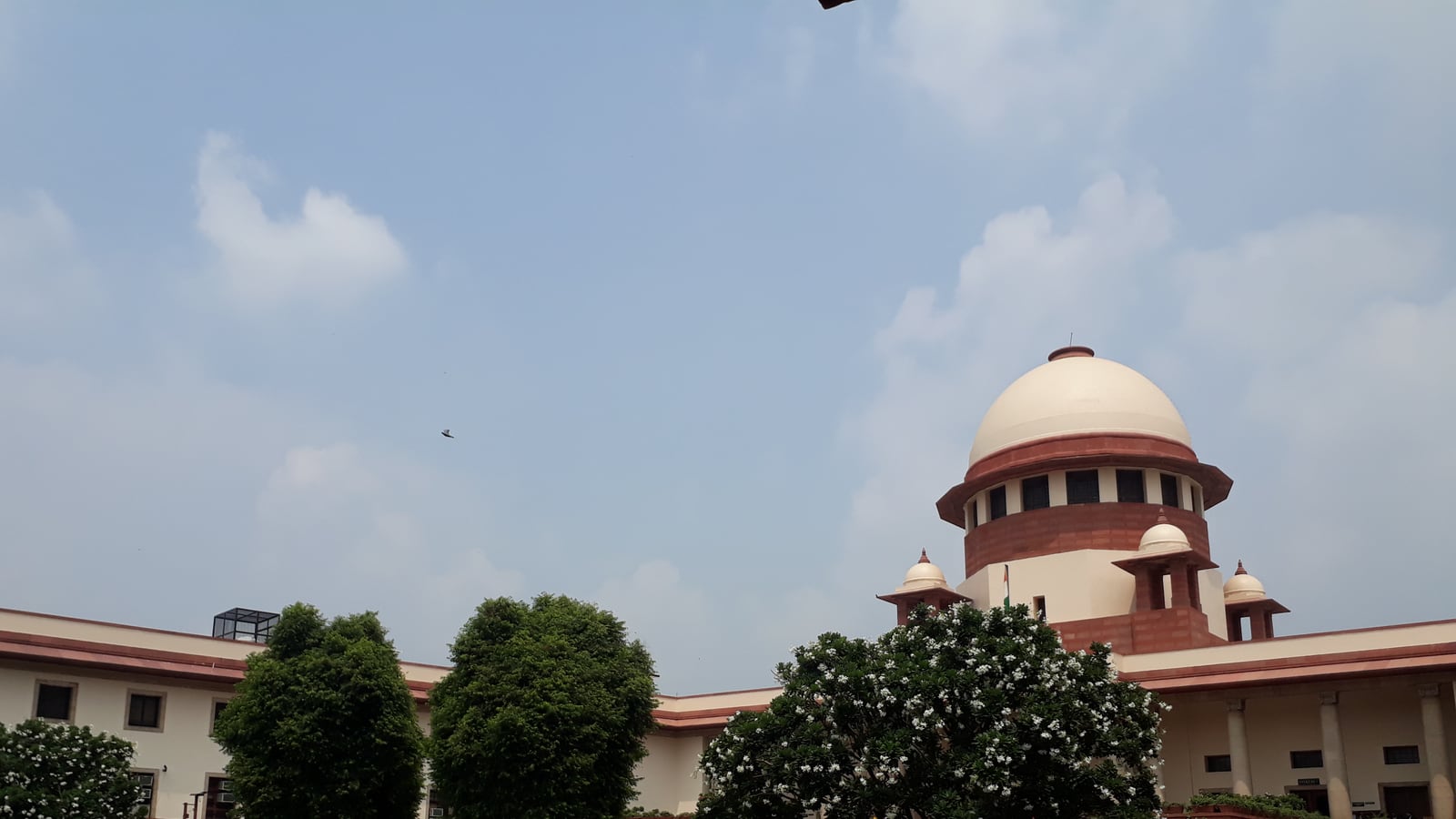
Photo: Pinakpani / Wikimedia Commons, CC BY-SA 4.0 (cropped). File photo.
A letter arrives some months after your farewell: a pay re-fixation has found that you were paid more than your entitlement, and the department proposes to deduct the excess from your pension, your gratuity or your arrears. On 18 December 2014 the Supreme Court of India answered when that is allowed. In State of Punjab v. Rafiq Masih (White Washer), Civil Appeal No. 11527 of 2014 and a batch of connected appeals, a bench of Justice Jagdish Singh Khehar (who wrote the judgment) and Justice Arun Mishra set out five situations in which recovery of a mistaken excess payment is "impermissible in law". The full text is on Indian Kanoon, which lists it as cited by more than 7,000 later documents.
This guide covers the five situations, a drawdown example in rupees and the 2016 exception every retiree should check first. It is general information on a judgment, not legal advice on any individual order.
The Scheme Explained
The "scheme" here is not a savings product but a protection the Supreme Court built in paragraph 12 of its judgment. The court said it is "not possible to postulate all situations of hardship", and then, "as a ready reference", listed five situations in which an employer cannot recover payments it made by mistake in excess of an employee's entitlement.
The five situations in paragraph 12
| No. | Situation in which recovery is impermissible (para 12) | Who it usually helps |
|---|---|---|
| (i) | Recovery from employees in Class-III and Class-IV service (Group C and Group D) | Lower-grade staff, serving or retired |
| (ii) | Recovery from retired employees, or employees due to retire within one year of the order of recovery | Every retiree, and anyone in the last 12 months of service |
| (iii) | Recovery where the excess was paid for a period of more than five years before the recovery order is issued | Long-running mistakes, such as a wrong pay fixation left uncorrected |
| (iv) | Recovery where the employee was wrongly made to discharge duties of a higher post and paid for it, though he should have worked against an inferior post | Officiating staff paid the higher scale |
| (v) | Any other case where the court finds recovery would be iniquitous, harsh or arbitrary to an extent that far outweighs the employer's equitable right to recover | A residual category, decided case by case |
Situation (ii) is the one that matters most for this desk's readers. The court reasoned that a retired employee's earnings have "substantially dwindled", and held that a recovery order made after retirement, or within one year of the date of superannuation, should be treated as arbitrary. The judgment ties that conclusion to Article 14 of the Constitution, calling such recovery "iniquitous and arbitrary".
Situation (iii) works on a five-year clock. The court said that if a mistake is detected within five years the employer may recover, but where the excess has been paid "for a period in excess of five years", the employer can correct the pay going forward and yet a refund would be "extremely iniquitous and arbitrary". The clock runs to the date the recovery order is issued.
What the court actually decided
Paragraph 13 records that counsel for the State of Punjab accepted that all the cases in the batch fell within the first four categories. The orders of the Punjab and Haryana High Court quashing the recoveries were therefore "deemed to have been upheld", and paragraph 14 disposed of the appeals. A separate 8 July 2014 order in the same name concerned a reference; the five situations come from the 18 December 2014 judgment.
The exception: an undertaking you signed
On 29 July 2016, in High Court of Punjab and Haryana v. Jagdev Singh, Civil Appeal No. 3500 of 2006, reported at (2016) 14 SCC 267, a bench of Chief Justice T.S. Thakur and Justice D.Y. Chandrachud (who wrote the judgment) held that situation (ii) "cannot apply" where the officer had furnished an undertaking, when opting for a revised pay scale, that any excess found later would be refunded. The court said he was "bound by the undertaking", allowed the recovery, and directed that it be made in equated monthly instalments spread over two years. The text is on Indian Kanoon.
So the first document a retiree should find is the pay-option form signed at the last pay revision. If it carries a refund undertaking, the 2014 protection for retirees is unlikely to help on its own, although the instalment approach of 2016 may still limit the monthly hit.
Where your retirement money sits today
A recovery is usually adjusted against one of the streams below. The rates are those on record for the current period.
| Retirement stream | Current position | Source |
|---|---|---|
| Senior Citizens' Savings Scheme (SCSS) | 8.2% a year, Oct-Dec 2026 quarter, unchanged; next review 1 January 2027 | Finance Ministry quarterly notification |
| Employees' Provident Fund (EPF) | 8.25% for FY 2025-26, as declared by EPFO | EPFO |
| Gratuity | Exempt from tax up to Rs 20 lakh for most private-sector employees | Section 10(10), Income-tax Act, 1961, as amended in 2018 |
| Pension | Taxed as salary at slab rates | Income-tax law |
Explainers on gratuity, pension and superannuation cover each stream in more detail.
Tax on Withdrawal
The tax question is mostly about the pension and savings income a recovery eats into. The figures below apply for the tax year 2026-27.
| Item | New regime | Old regime |
|---|---|---|
| Standard deduction against salary or pension | Rs 75,000 | Rs 50,000 |
| Rebate threshold (total income up to) | Rs 12 lakh | Rs 5 lakh |
| Maximum rebate | Rs 60,000 | Rs 12,500 |
| First taxable slab | 5% from Rs 4 lakh to Rs 8 lakh | 5% from Rs 2.5 lakh to Rs 5 lakh |
| Top rate | 30% above Rs 24 lakh | 30% above Rs 10 lakh |
Three points follow for a retiree facing recovery.
1. Pension and SCSS interest are both taxed at slab rates. Pension from a former employer is taxed as salary, so the Rs 75,000 standard deduction applies under the new regime. SCSS interest at 8.2% is added to income and taxed at the same slab rates; it is not exempt.
2. The excess was usually taxed when it was paid. Salary is taxed in the year it is paid or falls due, so the excess you received between, say, 2019 and 2026 was normally counted in each year's Form 16. If recovery is barred under situation (ii) or (iii), the money stays with you and no rule we can point to taxes it a second time. If you do refund an amount, keep the recovery order, the deduction schedule and the pension slips, and take advice from a chartered accountant on how the refund is reflected in your return; the Income Tax Department e-filing portal carries the current forms.
3. Arrears work the other way. If the same re-fixation also produced arrears in your favour, relief for salary received in arrears was available under Section 89 of the Income-tax Act, 1961 for years up to FY 2025-26. For the tax year 2026-27, check the corresponding provision under the Income-tax Act, 2025, in force from 1 April 2026, before you file.
A worked tax check
Take a retiree in the new regime with pension of Rs 50,000 a month (Rs 6,00,000 a year) and SCSS interest of Rs 1,23,000 on a Rs 15 lakh deposit at 8.2%.
| Step | Amount |
|---|---|
| Pension | Rs 6,00,000 |
| Add: SCSS interest (Rs 15 lakh x 8.2%) | Rs 1,23,000 |
| Less: standard deduction | Rs 75,000 |
| Taxable income | Rs 6,48,000 |
| Tax at 5% on Rs 2,48,000 above Rs 4 lakh | Rs 12,400 |
| Less: rebate (income below Rs 12 lakh) | Rs 12,400 |
| Tax payable | Nil (before cess) |
At this income tax is nil, so a recovery's real damage, at Rs 14,000 a month in the example below, is to cash flow.
Worked Drawdown
The example below is illustrative. Every rupee figure is a constructed assumption except the 8.2% SCSS rate, which is used as a benchmark return.
The facts
A Group B officer retires on 31 March 2026 on a pension of Rs 50,000 a month. On 1 September 2026, five months after retirement, the department issues a recovery order: a pay fixation made in April 2019 was wrong, and the officer was overpaid Rs 8,000 a month for 84 months, from April 2019 to March 2026. The excess totals Rs 6,72,000 (Rs 8,000 x 84). The order proposes to deduct Rs 14,000 a month from pension for 48 months.
Testing the order against paragraph 12
| Test | Facts | Result |
|---|---|---|
| (i) Group C or D | Group B officer | Does not apply |
| (ii) Retired, or within one year of retirement, at the date of the order | Order dated 1 September 2026, after retirement on 31 March 2026 | Applies |
| (iii) Excess paid for more than five years before the order | Excess ran for 7 years (84 months) | Applies |
| (iv) Paid for a higher post wrongly held | No officiating arrangement | Does not apply |
| Jagdev Singh exception | Was a refund undertaking signed at the 2019 option? | Decisive; check the file |
On these facts, two of the five situations apply. If no undertaking was signed, the order is the kind the Supreme Court called impermissible in 2014.
What the recovery would cost a drawdown plan
Suppose the retiree keeps Rs 15 lakh as a reserve and, to keep household spending steady, draws Rs 1,68,000 a year (Rs 14,000 x 12) from it to replace the pension deduction. The table assumes the reserve earns 8.2% a year on its opening balance, with the withdrawal taken at year end.
| Year | Opening reserve | Return at 8.2% | Withdrawal to cover deduction | Closing reserve |
|---|---|---|---|---|
| 1 | Rs 15,00,000 | Rs 1,23,000 | Rs 1,68,000 | Rs 14,55,000 |
| 2 | Rs 14,55,000 | Rs 1,19,310 | Rs 1,68,000 | Rs 14,06,310 |
| 3 | Rs 14,06,310 | Rs 1,15,317 | Rs 1,68,000 | Rs 13,53,627 |
| 4 | Rs 13,53,627 | Rs 1,10,997 | Rs 1,68,000 | Rs 12,96,624 |
Without the recovery, a retiree who spends only the return keeps the reserve at Rs 15,00,000. With it, the reserve ends year 4 at Rs 12,96,624, a gap of Rs 2,03,376, and that gap keeps costing 8.2% a year for the rest of retirement. Pension itself drops from Rs 50,000 to Rs 36,000 a month for 48 months, a 28% cut.
If an undertaking was signed
If the file does hold a refund undertaking, Jagdev Singh points to a gentler schedule rather than a lump sum. In that case the court directed instalments over two years, which on these facts would be Rs 28,000 a month for 24 months (Rs 6,72,000 / 24), against the Rs 14,000 for 48 months proposed here. A longer schedule halves the monthly hit but doubles its length, so a retiree should run both versions through the retirement drawdown calculator before agreeing to either.
Retirees rebuilding a reserve after a recovery can model the trade-off between buying an annuity and drawing from savings in the annuity vs SWP calculator, check a gratuity figure in the gratuity calculator, and compare an NPS pot with the SCSS benchmark.
A practical sequence
- Ask in writing for the full calculation: the months covered, the rate applied and the date of the original mistake.
- Find the pay-option form from the relevant pay revision and check for a refund undertaking.
- Note the date of the recovery order against your date of retirement and against the first month of excess payment.
- Reply in writing, citing paragraph 12 of the 18 December 2014 judgment and the situations that apply.
- If deductions start regardless, the retirees in Rafiq Masih went to the High Court; a lawyer can advise on the forum for your service.
FAQ
Can my employer recover excess salary from my pension after I retire?
Under situation (ii) of paragraph 12 of State of Punjab v. Rafiq Masih, decided on 18 December 2014, recovery from retired employees, or from employees due to retire within one year of the recovery order, is impermissible in law. The main exception, from Jagdev Singh on 29 July 2016, is where you signed an undertaking to refund any excess.
Does Rafiq Masih apply to private-sector employees?
The batch before the court arose from recoveries by the State of Punjab, and the judgment grounds its conclusion in Article 14 of the Constitution. It does not discuss private employers, so a private employer's claim would usually turn on the employment contract; take legal advice on the facts.
What is the five-year rule?
Situation (iii) bars recovery where the excess was paid for a period of more than five years before the recovery order. An employer that finds a mistake within five years may recover, and in any case can correct the pay from the date the mistake is found.
I am Group B. Am I still protected?
Situation (i) covers only Class-III and Class-IV (Group C and Group D) staff, but situations (ii), (iii), (iv) and (v) apply regardless of group. A Group A or Group B retiree can rely on situation (ii) if the recovery order came after retirement or within one year before it.
Can my gratuity be withheld to adjust the excess?
The judgment speaks of recovery in general, not of any single benefit. Gratuity is exempt from tax up to Rs 20 lakh for most private-sector employees under Section 10(10) of the Income-tax Act, 1961, and the same paragraph 12 tests apply whether a department seeks to adjust the excess against gratuity, pension or arrears. Oquilia's earlier guide to the Supreme Court's Article 300A ruling in Jitendra Kumar Srivastava covers when pension or gratuity can be withheld while proceedings are pending.
I signed an undertaking at the pay revision. Is there anything left to argue?
In Jagdev Singh, the Supreme Court enforced the undertaking but ordered recovery in equated monthly instalments over two years. Situation (v), the residual hardship test, remains open in principle, though the court in 2014 left it to be decided case by case.
Sources & Citations
- State of Punjab & Ors v. Rafiq Masih (White Washer), 18 December 2014 — Supreme Court of India via Indian Kanoon
- High Court of Punjab & Haryana v. Jagdev Singh, 29 July 2016 — Supreme Court of India via Indian Kanoon
- Employees' Provident Fund Organisation — EPFO
- Income Tax Department e-filing portal — Income Tax Department