

Tenant in a SARFAESI-seized property on an unregistered lease? The proof the Supreme Court demanded in PNB Housing v Manoj Saha
In PNB Housing v Manoj Saha (15 July 2025), the Supreme Court sent a tenant to the DRT under Section 17(4A) and said an unregistered lease must be proved with rent receipts, tax receipts and bills.
Key points
- The Supreme Court ruled on 15 July 2025 in PNB Housing Finance v Manoj Saha that a tenant contesting a SARFAESI possession must go to the DRT, not the High Court.
- An oral or unregistered tenancy must be proved with rent receipts, tax receipts and electricity bills, and does not survive beyond one year from the Section 13(2) notice.
- The case was sent back to the DRT with a two-month deadline, so occupiers must file under Section 17 within 45 days with documentary proof of their lease.
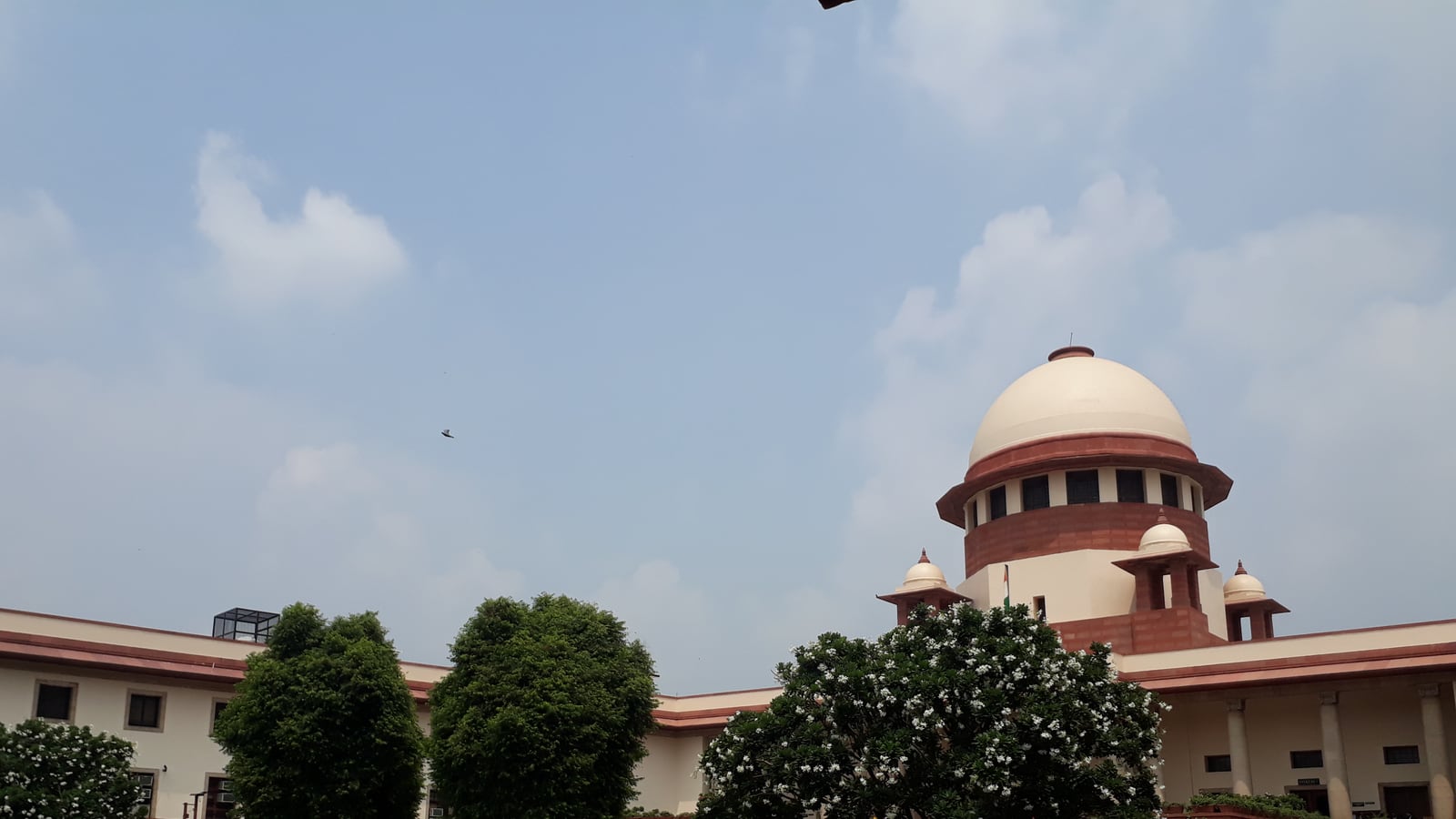
Photo: Pinakpani / Wikimedia Commons, CC BY-SA 4.0 (cropped). File photo.
A tenant who has run a shop or lived in a flat for decades can still lose it in a single morning when the owner's lender takes possession under the SARFAESI Act, 2002. On 15 July 2025, in PNB Housing Finance Ltd v. Manoj Saha (2025 INSC 847), a two-judge bench of the Supreme Court of India, P.S. Narasimha and Joymalya Bagchi JJ, set out exactly what such a tenant must prove and where the tenant must go. The answer on both counts is narrower than many occupiers assume.
The dispute concerned a 450 sq ft premises at 1 Allenby Road, Kolkata. The occupier claimed an unregistered five-year lease dating back to 1987. The owner had borrowed from PNB Housing Finance in 2017, and when the loan went bad the lender issued a Section 13(2) demand notice on 13 July 2021 for about Rs 3.09 crore. The judgement, arising from SLP (C) 7288 of 2024, sent the tenant back to the Debt Recovery Tribunal (DRT) with a clear evidentiary test and a two-month deadline.
This playbook explains the statutory route, the procedure a tenant or borrower actually faces, the defences that survive the 2025 ruling, and the evidence that decides most of these cases. It is general information from the Oquilia Research Desk, not legal advice on any individual matter.
The Statutory Position
The SARFAESI Act lets a secured creditor enforce its security interest without first going to a civil court, and it builds the borrower's and occupier's remedies around a small number of sections. The SARFAESI glossary entry gives the background; the five provisions that matter for a tenant are set out below.
| Provision | What it does | Time limit or condition |
|---|---|---|
| Section 13(2) | Demand notice to the borrower after the account is classified as non-performing | Notice in Manoj Saha issued 13 Jul 2021 for about Rs 3.09 crore |
| Section 13(4) | Measures the lender may take, including taking possession | Symbolic possession in Manoj Saha on 2 Dec 2021 |
| Section 14 | Application to the Chief Metropolitan Magistrate or District Magistrate for physical possession | 30-day disposal mandate after the 2016 amendment |
| Section 17 and 17(4A) | Application to the DRT against Section 13(4) measures; 17(4A) lets a tenant claiming a lease approach the DRT | 45-day limitation; 17(4A) in force from 1 Sep 2016 |
| Section 18 | Appeal from the DRT to the Appellate Tribunal (DRAT) | 30 days; 50% pre-deposit, reducible to not less than 25% |
Section 17 is the gateway. The Oquilia statute brief records it as the borrower's appeal to the DRT against measures under Section 13(4), with a 45-day limitation period, where a deposit is not mandatory but the tribunal may direct one. In practice occupiers, guarantors and tenants all end up before the same forum, as Manoj Saha itself shows.
Section 17(4A), which came into force on 1 September 2016, was added specifically for tenants. As the Supreme Court read it at paragraph 12 of Manoj Saha, a person claiming a tenancy or lease right in the secured asset can approach the DRT, and the DRT has the power to restore possession if it finds the claim made out. In other words, the statute already gives the tenant a complete remedy; the tenant does not need to begin in a High Court.
Section 18 then provides the next tier. Under the statute brief, an appeal lies from a DRT order under Section 17 to the DRAT within 30 days, but no appeal is entertained unless 50% of the debt due (as claimed by the secured creditor or determined by the DRT, whichever is less) is deposited, which the Appellate Tribunal may reduce to not less than 25% for reasons recorded in writing.
Procedure Step by Step
The Manoj Saha timeline is a useful template because every date is on the record. It ran for just over two years between the demand notice in July 2021 and physical possession in August 2023.
| Date | Event in PNB Housing v Manoj Saha |
|---|---|
| 1987 | Occupier's claimed start date of an unregistered five-year lease |
| 2017 | Owner-borrower takes loans from PNB Housing Finance |
| 13 Jul 2021 | Section 13(2) demand notice for about Rs 3.09 crore |
| 2 Dec 2021 | Symbolic possession taken under Section 13(4) |
| 2022 | The only rent deposits the occupier could show |
| 2 Aug 2023 | Physical possession taken under Section 14 |
| 15 Jul 2025 | Supreme Court decides 2025 INSC 847 and remits to DRT |
From the occupier's side, the procedure that the Act and the 2025 judgement contemplate runs in the following order:
- Demand notice under Section 13(2). The notice goes to the borrower, not the tenant, so an occupier often learns of it late. In Manoj Saha it was dated 13 July 2021. This date matters to the tenant because, as paragraph 18 of the judgement holds, an oral or unregistered tenancy does not survive beyond one year from it.
- Symbolic possession under Section 13(4). The lender records possession and usually affixes a notice on the property. Here that happened on 2 December 2021, under five months after the demand notice.
- Section 14 application. For physical possession the lender applies to the Chief Metropolitan Magistrate or District Magistrate, who has a 30-day disposal mandate under the post-2016 provision.
- Physical possession. The occupier is dispossessed. In this case that happened on 2 August 2023, about 25 months after the Section 13(2) notice.
- Application to the DRT under Section 17, including 17(4A). The tenant files within the 45-day limitation period, sets out the lease, and produces documentary proof of it. The DRT can restore possession if the claim is established.
- Appeal to the DRAT under Section 18. Whichever side loses at the DRT may appeal within 30 days, subject to the pre-deposit rule for the borrower.
- High Court only in exceptional cases. Paragraph 11 of Manoj Saha holds that the High Court should not have entertained an Article 227 petition when a Section 18 appeal was available.
A borrower facing the same notices, rather than a tenant, should also run the numbers early. The loan foreclosure calculator shows what clearing the outstanding balance in full costs, and the debt consolidation calculator shows whether refinancing several liabilities into one could cure the default before the Section 13(4) stage.
Borrower Defences Available
The 2025 ruling does not remove the defences open to a tenant or borrower; it channels them into the DRT and raises the evidentiary bar for an unregistered tenancy. The table below summarises the main grounds against the statutory deposits and limits in the Oquilia statute briefs.
| Ground | Who can raise it | Forum | Limit or deposit |
|---|---|---|---|
| Genuine tenancy pre-dating the mortgage | Tenant | DRT under Section 17(4A) | 45 days; deposit discretionary |
| Defective or irregular Section 13(4) measure | Borrower, guarantor, occupier | DRT under Section 17 | 45 days; deposit discretionary |
| Challenge to the DRT's order | Either side | DRAT under Section 18 | 30 days; 50% pre-deposit, minimum 25% |
| No alternative remedy exists | Rare cases | High Court, Article 226 or 227 | Barred where Section 18 appeal lies (para 11) |
Proof of tenancy is the first line of defence. Following Bajarang Shyamsunder Agarwal, the Supreme Court in Manoj Saha (para 18) held that a tenant claiming under an oral or unregistered lease must prove the tenancy with documents such as rent receipts, tax receipts and electricity bills. A bare assertion of a 1987 tenancy, without a continuous paper trail, will not carry weight.
The one-year ceiling for unregistered tenancies. Paragraph 18 also holds that an oral or unregistered tenancy does not survive beyond one year from the Section 13(2) notice. On the Manoj Saha dates, that window would have closed on 13 July 2022, more than a year before physical possession was taken on 2 August 2023.
Timing of the evidence. The occupier in Manoj Saha could show only rent deposits from 2022, which post-date the 13 July 2021 demand notice. Evidence created after a lender's notice is weak proof of a tenancy that is said to have begun 34 years earlier, in 1987.
Procedural defects in the Section 13(4) measure. A borrower or occupier can still challenge the manner in which possession was taken before the DRT, within the 45-day limitation under Section 17. The tribunal may direct a deposit, but the statute brief records that a deposit is not mandatory at this stage.
Pre-deposit at the appellate stage. If the DRT goes against the borrower, the Section 18 appeal requires 50% of the debt due. On a demand of about Rs 3.09 crore, that would be roughly Rs 1.55 crore; the DRAT's power to reduce it to 25% would bring it to about Rs 77 lakh. These figures are an illustration based on the notice amount only, because the statute uses the lower of the creditor's claim and the DRT's determination.
Negotiated exit. For a borrower, the most practical defence is often a settlement before Section 14 proceedings. The personal loan EMI calculator and home loan EMI calculator help test what instalment a restructured or refinanced balance would carry, and the balance transfer calculator shows the saving from moving the loan to another lender at a lower rate.
Recent Tribunal/HC Position
PNB Housing Finance Ltd v. Manoj Saha, 2025 INSC 847, decided on 15 July 2025, is now the leading authority on how an unregistered tenant should contest a SARFAESI dispossession. The full text is available on Indian Kanoon, and the governing statute can be read on India Code.
The High Court route was the wrong one. The tenant had taken the dispute to the High Court in proceedings under Article 227 of the Constitution. At paragraph 11 the Supreme Court held that the High Court should not have entertained that petition, because a statutory appeal under Section 18 was available. The ruling reinforces a consistent line: writ jurisdiction is not a substitute for the SARFAESI forums.
The DRT can give the tenant back the premises. At paragraph 12 the bench pointed to Section 17(4A), in force from 1 September 2016, which allows a tenant to approach the DRT. The court noted that the DRT can restore possession, so a tenant who wins on the facts is not left with only a damages claim.
The evidentiary test. At paragraph 18 the bench applied Bajarang Shyamsunder Agarwal and held that rent receipts, tax receipts and electricity bills are the kind of proof required for an oral or unregistered lease, and that such a tenancy does not outlast one year from the Section 13(2) notice. The occupier in this case showed only 2022 rent deposits.
Outcome and deadline. The Supreme Court did not decide the tenancy itself. It remitted the matter to the DRT and directed it to decide within two months. For any occupier in a similar position, this means the case will be won or lost on documents placed before the tribunal, not on arguments made in a writ court.
The table below sets out what the 2025 ruling changes in practice for the three parties involved.
| Party | Position after 15 Jul 2025 |
|---|---|
| Tenant on unregistered lease | Must go to DRT under Section 17(4A) and prove tenancy with receipts and bills |
| Borrower-owner | Cannot use a tenant's writ to stall possession where a Section 18 appeal lies |
| Lender | Can rely on the one-year limit from the Section 13(2) notice for unregistered tenancies |
Practical Checklist for Occupiers
A tenant or occupier who receives a possession notice should assemble the documents the Supreme Court named in paragraph 18 before the 45-day limitation under Section 17 runs out. The list below follows that paragraph.
- Rent receipts covering the entire claimed period, especially the years before the Section 13(2) notice.
- Municipal or property tax receipts showing the occupier's name or the rented premises.
- Electricity bills in the occupier's name for the premises, ideally year by year.
- The written lease, even if unregistered, and any renewal letters.
- Proof of the date the occupier learned of the possession measure, to establish when the 45-day period began.
A borrower in default should also check whether a loan can be refinanced against a fresh valuation using the loan eligibility calculator, and should read up on collateral and foreclosure before entering settlement talks.
FAQ
Can a tenant stop a bank from taking possession under SARFAESI?
A tenant cannot stop the Section 13(4) measure in advance, but under Section 17(4A), in force from 1 September 2016, the tenant can apply to the DRT, which can restore possession if the tenancy is proved. The Supreme Court confirmed this at paragraph 12 of PNB Housing v Manoj Saha on 15 July 2025.
Does an unregistered lease protect a tenant against the lender?
Only to a limited extent. Paragraph 18 of 2025 INSC 847 holds that an oral or unregistered tenancy must be proved by rent receipts, tax receipts and electricity bills, and does not survive beyond one year from the Section 13(2) notice.
Should a tenant file a writ petition in the High Court?
Generally not. At paragraph 11 of Manoj Saha, the Supreme Court held that the High Court should not have entertained an Article 227 petition when a Section 18 appeal was available under the SARFAESI Act.
How long does a tenant or borrower have to approach the DRT?
The Section 17 application must be filed within 45 days. Under the Oquilia statute brief, a deposit is not mandatory at this stage, although the DRT may direct one.
What does it cost to appeal a DRT order?
A Section 18 appeal must be filed within 30 days and requires a pre-deposit of 50% of the debt due, as claimed by the creditor or determined by the DRT, whichever is less. The DRAT may reduce this to not less than 25% for reasons recorded in writing.
How quickly must a magistrate decide a Section 14 application?
The post-2016 provision sets a 30-day disposal mandate for the Chief Metropolitan Magistrate or District Magistrate. In Manoj Saha, physical possession under Section 14 was taken on 2 August 2023.
What happened to the tenant in PNB Housing v Manoj Saha?
The Supreme Court set aside the High Court route and sent the case to the DRT with a direction to decide within two months. The occupier had shown only 2022 rent deposits against a claimed lease from 1987.