

Do You Need an Income-Tax Clearance Before Leaving India? What Section 420 of the 2025 Act Actually Requires and From Whom
Section 420 of the Income-tax Act 2025 sets three different departure duties: an employer undertaking for expatriates, a PAN declaration for domiciled travellers, and a rare clearance certificate.
Key points
- Section 420 of the Income-tax Act, 2025 replaces Section 230 of the 1961 Act and sets the tax rules for leaving India.
- A full clearance certificate under Section 420(5) is needed only where an income-tax authority records reasons and gets Chief Commissioner approval.
- Expatriate employees leave on an employer undertaking, while most domiciled Indians need only furnish PAN, purpose of visit and length of stay.
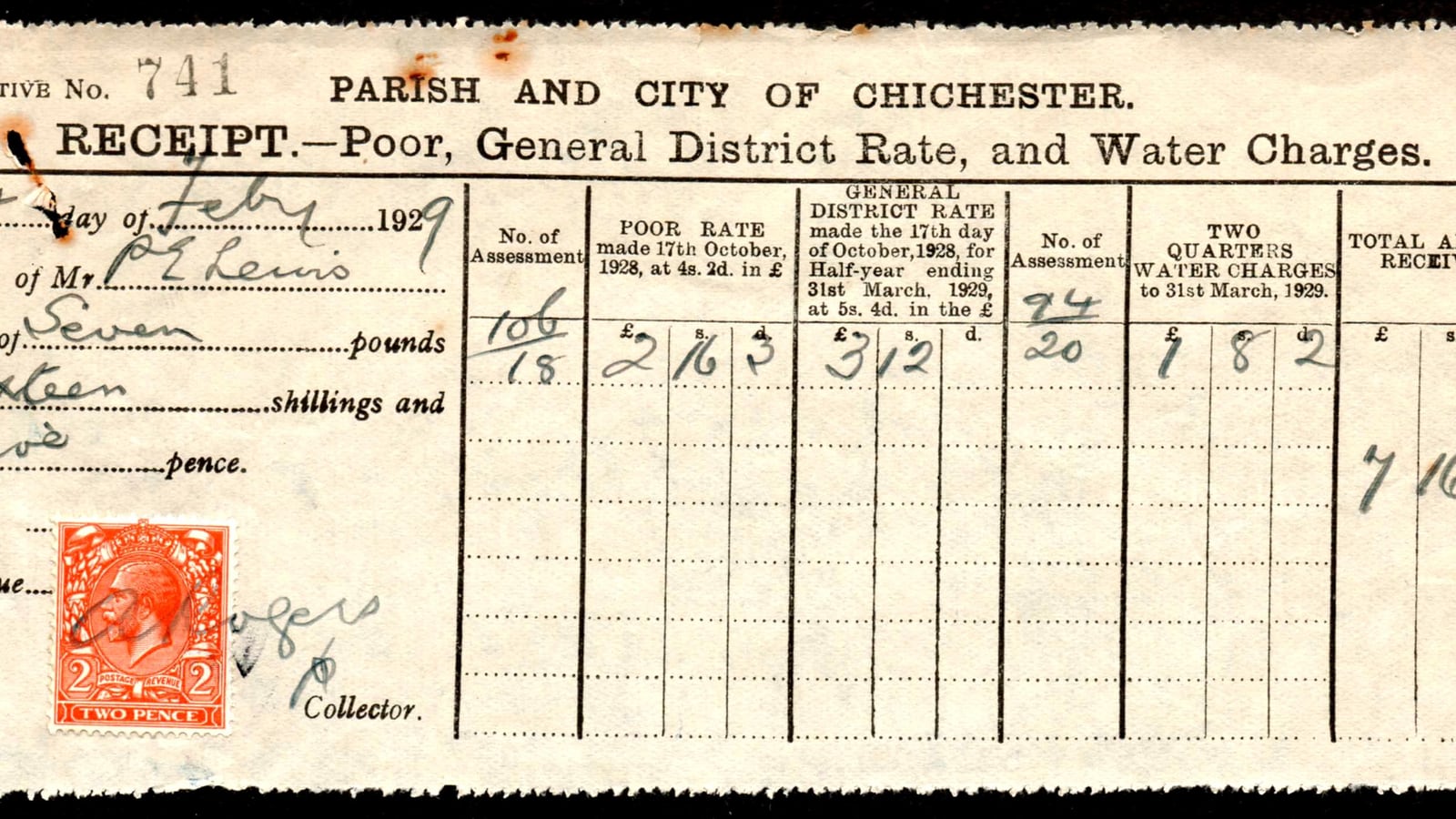
Photo: City of Chichester / Wikimedia Commons, public domain (cropped). Representational image.
Every year, a familiar worry circulates among Indians preparing to take up a job overseas and among foreign professionals finishing an Indian posting: "Will the immigration counter stop me without an income-tax clearance certificate?" The answer sits in Section 420 of the Income-tax Act, 2025, titled "Tax clearance certificate", which carries forward the scheme of Section 230 of the Income-tax Act, 1961. Read carefully, its 10 sub-sections create three very different obligations for three very different groups of travellers, and only one of them is a certificate that most people will never be asked for.
This explainer sets out what each sub-section of Section 420 requires, who it binds, and how it sits alongside the FEMA and treaty rules that NRIs already navigate. The statutory text quoted here is from the published Section 420 on Indian Kanoon, checked against the Act as hosted on India Code.
Section 420 at a glance
Before turning to the required sections, the table below maps each of the 10 sub-sections to the person it binds. Sub-sections (1), (3) and (5) are the operative duties; (2), (4) and (6) narrow or qualify them; (7) to (10) deal with carriers and rule-making.
| Sub-section | Who it binds | What it requires |
|---|---|---|
| 420(1) | A person not domiciled in India, who came for business, profession or employment, and has Indian-source income | An undertaking from the employer (or the payer of income) that the tax will be paid; a no objection certificate then issues "immediately" |
| 420(2) | Foreign tourists and non-business visitors | Exempts them from 420(1) |
| 420(3) | Every person domiciled in India at departure (subject to notified exceptions) | Furnish PAN (Section 262), purpose of visit and estimated period of stay, in prescribed form |
| 420(4) | Domiciled persons with no PAN, non-taxable income, or no PAN obligation | Furnish a certificate in prescribed form instead |
| 420(5) | A domiciled person where an income-tax authority forms the opinion it is necessary | Obtain a certificate of no liability, or of satisfactory payment arrangements, under 6 named statutes |
| 420(6) | The income-tax authority | Must record reasons and obtain prior approval of the Principal Chief Commissioner or Chief Commissioner |
| 420(7)-(8) | Owners and charterers of ships and aircraft | Personal liability, and "assessee in default" status, if they carry a person lacking a required certificate |
| 420(9)-(10) | The Board (CBDT) | Rule-making power; definition of "owner" and "charterer" |
Two words in that table do most of the work: "domiciled" and "opinion". Section 420 does not key off residential status under the 182-day style tests that decide how much of your income India taxes. It keys off domicile, a separate concept. And the full clearance certificate in sub-section (5) is triggered only by an authority's recorded opinion, not by the mere act of emigrating.
FEMA / DTAA Position
Section 420 is an income-tax provision, not a foreign-exchange one. The Foreign Exchange Management Act, 1999 governs whether money can leave India and through which account; it does not decide whether a person may physically leave. Equally, none of India's Double Taxation Avoidance Agreements (DTAA) displaces Section 420(5), because the certificate concerns liability under 6 Indian statutes: the Income-tax Act 2025, the Wealth-tax Act 1957, the Gift-tax Act 1958, the Income-tax Act 1961, the Expenditure-tax Act 1987 and the Black Money (Undisclosed Foreign Income and Assets) and Imposition of Tax Act 2015.
Where the treaty does matter is in what that liability is. A treaty can cap the Indian tax on certain income flowing to a resident of the other country, and that cap feeds into any "satisfactory arrangements" an emigrant or expatriate makes. Using the India-US treaty (in force from 12 September 1991) as an illustration, the rates on Oquilia's treaty table are:
| Income type (India-US DTAA) | Treaty rate in India | Note |
|---|---|---|
| Long-term capital gains | 12.5% | India retains taxing rights; not exempt |
| Interest | 15% | Treaty ceiling |
| Dividends (portfolio holding) | 25% | 15% only with 10% or more of voting stock, Article 10 |
| Royalties and fees for technical services | 15% | Article 12 "make available" test for FTS |
The point for anyone leaving is simple: a DTAA does not make capital gains disappear. India keeps the right to tax long-term gains at 12.5% under the treaty table above, so a person who sells Indian shares or property around the time of departure should expect any assessment to include that gain. The DTAA benefit calculator compares treaty and domestic rates for a given income stream.
Tax Treatment in India
The expatriate-employee route: Section 420(1)
The first duty falls on foreign nationals and other persons not domiciled in India. All 3 conditions in clauses (a) to (c) must be met: the person is not domiciled in India, came to India in connection with business, profession or employment, and has income from any source in India. Such a person may not leave India by land, sea or air unless he furnishes to the prescribed authority an undertaking in the prescribed form, either from his employer under clause (i) or from the person through whom he receives the income under clause (ii), that the tax payable will be paid by them.
The design matters. The departing expatriate does not need to prove that every rupee of tax has already been paid. The employer, which usually has already been deducting TDS on salary, gives the undertaking, and sub-section (1) says the prescribed authority "shall, on receipt of the undertaking, immediately give to such person a no objection certificate". The word "immediately" is in the statute; the authority has no discretion to sit on a complete undertaking.
Sub-section (2) then carves out 2 groups entirely: a non-domiciled person visiting India as a foreign tourist, and one visiting for any other purpose not connected with business, profession or employment. A US citizen who holidays in Goa for 3 weeks, or attends a family wedding, is outside 420(1) even if they happen to earn interest on an Indian bank deposit, because the visit itself was not connected with business, profession or employment.
Domiciled travellers: the information duty in 420(3) and (4)
Sub-section (3) applies to "every person, who is domiciled in India at the time of his departure", subject to exceptions the Central Government may notify. Such a person must furnish 3 items: (a) the Permanent Account Number allotted under Section 262, (b) the purpose of the visit outside India, and (c) the estimated period of stay outside India, to the income-tax authority or other authority in the prescribed form.
Sub-section (4) covers 3 situations where a PAN cannot be quoted: no PAN has been allotted, total income is not chargeable to income-tax, or the person is not required to obtain a PAN under the Act. In each case a certificate in prescribed form is furnished instead. This is a declaration, not a tax clearance; nothing in 420(3) or (4) makes departure conditional on proving nil liability.
The real clearance certificate: 420(5) and (6)
Sub-section (5) is the provision people fear, and it has 2 cumulative conditions. The person must be (a) domiciled in India at departure, and (b) someone "in respect of whom circumstances exist which, in the opinion of an income-tax authority render it necessary" to obtain a certificate. Only then must the person obtain a certificate stating either that he has no liability under the 6 statutes listed earlier, or that satisfactory arrangements have been made for paying all or any of those taxes.
Sub-section (6) adds a procedural brake: no income-tax authority may make the certificate necessary unless it (a) records its reasons and (b) obtains the prior approval of the Principal Chief Commissioner or Chief Commissioner. A routine emigrant with salary income, settled TDS and filed returns does not fall into 420(5) by default. Under the corresponding Section 230 of the 1961 Act, CBDT had clarified that the requirement was meant for cases involving serious financial irregularities or large outstanding demands; Oquilia has not verified a fresh clarification under the 2025 Act, so treat that only as the earlier position.
What an outstanding liability looks like in rupees
Because the 420(5) certificate turns on "liability", the size of any unpaid tax is what an authority looks at. The figures that set that liability for FY 2025-26 under the new regime are:
| Element | FY 2025-26 figure | Source |
|---|---|---|
| Nil-tax slab | Up to Rs 4 lakh | New regime slabs |
| Top slab | 30% above Rs 24 lakh | New regime slabs |
| Section 87A rebate | Up to Rs 60,000 (income up to Rs 12 lakh) | New regime |
| Surcharge | 10% (Rs 50 lakh-1 crore), 15% (Rs 1-2 crore), 25% above Rs 2 crore | Capped at 25% in new regime |
| Health and education cess | 4% of tax plus surcharge | All regimes |
| Equity LTCG | 12.5% above Rs 1.25 lakh | Budget 2024 |
| Equity STCG | 20% | Budget 2024 |
The NRI income-tax calculator applies the non-resident rules, and the rental income calculator handles the common case of a flat let out after emigration.
Tax Treatment Abroad
Section 420 does not create a new tax; it secures payment of tax that already exists. Whatever an emigrant pays in India to clear a liability, or to satisfy an undertaking given by an employer under 420(1), remains Indian tax for the purposes of the new country of residence. That is where the foreign-tax-credit article of the treaty comes in.
Article 24 of the India-US DTAA provides for a foreign tax credit in the country of residence. A US-resident former Indian employee who pays Indian tax on Indian-source salary for the final months of an Indian posting, or on a gain taxed at 12.5% in India, would generally look to Article 24 to credit that Indian tax against US tax on the same income. The foreign tax credit calculator models how much of the Indian tax is creditable.
Two points follow. Indian tax settled under a 420(5) arrangement, or paid by an employer after a 420(1) undertaking, is the figure a foreign credit claim will rely on, so keep the Indian payment and TDS records. And treaty-rate figures such as 15% on interest or 25% on portfolio dividends are only the Indian ceiling; how the foreign country then taxes the same income depends on its own law, which Oquilia does not cover here.
Repatriation Mechanics
Leaving India and moving money out of India are governed by different laws. Section 420 decides whether a person may board; FEMA and RBI's account rules decide what happens to the money left behind. For an NRI, the NRO account is the hub for Indian-source income such as rent, interest and dividends, and the 3 account types below carry different repatriation rules.
| Account | Typical source of funds | Repatriability | Oquilia reference |
|---|---|---|---|
| NRO | Indian-source income and pre-departure savings | Within the USD 1 million remittance-of-assets limit per financial year, after tax | Repatriation calculator |
| NRE | Foreign earnings remitted to India | Freely repatriable | NRE account |
| FCNR(B) | Foreign-currency deposits | Freely repatriable | FCNR deposit |
The USD 1 million ceiling on remittance of assets from NRO is where the tax link reappears. Remittance from NRO is permitted after tax, so the same liability a 420(5) certificate would look at is the liability that must be settled before the money moves. Under the FEMA Deposit (Sixth Amendment) 2026, NRO balances can also be transferred to NRE or SNRR accounts, but only within the same remittance-of-assets limit.
FAQ
Does every Indian moving abroad need an income-tax clearance certificate?
No. Section 420(5) of the Income-tax Act, 2025 requires a certificate only where an income-tax authority forms the opinion that circumstances make it necessary, and Section 420(6) requires that authority to record reasons and obtain prior approval of the Principal Chief Commissioner or Chief Commissioner. Most domiciled travellers face only the information duty in 420(3): PAN, purpose of visit and estimated period of stay, in prescribed form.
I am a foreign national ending an Indian job. What do I need?
If you are not domiciled in India, came for employment and have Indian-source income, Section 420(1) requires an undertaking from your employer, or the person paying your income, that your tax will be paid. On receipt, the prescribed authority must immediately issue a no objection certificate. Foreign tourists and non-business visitors are excluded by Section 420(2).
Is Section 420 based on residential status or domicile?
Domicile. Section 420(1), (3) and (5) all use the words "domiciled in India", which is a different test from the residential-status rules that decide your Indian tax base. A person can be non-resident for tax and still domiciled in India, so the 420(3) declaration can still apply.
Which taxes does the 420(5) certificate cover?
Six statutes: the Income-tax Act 2025, the Wealth-tax Act 1957, the Gift-tax Act 1958, the Income-tax Act 1961, the Expenditure-tax Act 1987 and the Black Money (Undisclosed Foreign Income and Assets) and Imposition of Tax Act 2015. The certificate states either no liability under them or that satisfactory payment arrangements have been made.
Can an airline refuse to carry me?
Section 420(7) makes the owner or charterer of a ship or aircraft personally liable for the tax of a person covered by 420(1) or (5) whom it carries without first checking that the person holds the required certificate. Under 420(8) the carrier is treated as an assessee in default for that sum. The provision therefore gives carriers a reason to check, but only for persons to whom 420(1) or (5) actually applies.
Does a DTAA exempt me from Section 420?
No. A DTAA such as the India-US treaty can limit the rate India charges, for example 15% on interest or 12.5% on long-term capital gains, but it does not remove the domestic procedure in Section 420, and it does not make capital gains exempt.
Can I still repatriate money after I leave?
Yes, under FEMA rather than Section 420. Funds in an NRO account can be remitted within the USD 1 million per financial year remittance-of-assets limit after tax is paid, while NRE and FCNR(B) balances are freely repatriable. The NRO-to-NRE calculator walks through a transfer.
This explainer summarises Section 420 of the Income-tax Act, 2025 as published. It is not legal or tax advice. The prescribed forms, notified exceptions and rules under Section 420(9) should be checked on the Income Tax Department portal before travel.
Sources & Citations
- Section 420 in The Income Tax Act, 2025 — Indian Kanoon
- India Code: Income-tax Act, 2025 — India Code
- Income Tax Department e-filing portal — Income Tax Department