

RDB Act Section 30: The 30-Day Appeal Against a DRT Recovery Officer's Order That No Tribunal Can Extend
Section 30 of the RDB Act gives 30 days to appeal a DRT Recovery Officer's order. The Supreme Court held in Gadgil (2021) that no tribunal can condone even a day's delay.
Key points
- The Supreme Court held on 24 November 2021 in Avneesh Chandan Gadgil that delay in a Section 30 RDB Act appeal cannot be condoned.
- An appeal against a DRT Recovery Officer's order must reach the DRT within 30 days of the order copy being issued; the bank in this case was 31 days late.
- Borrowers and guarantors facing attachment, sale or arrest orders must file within 30 days, and can rely on the same bar when a lender files late.
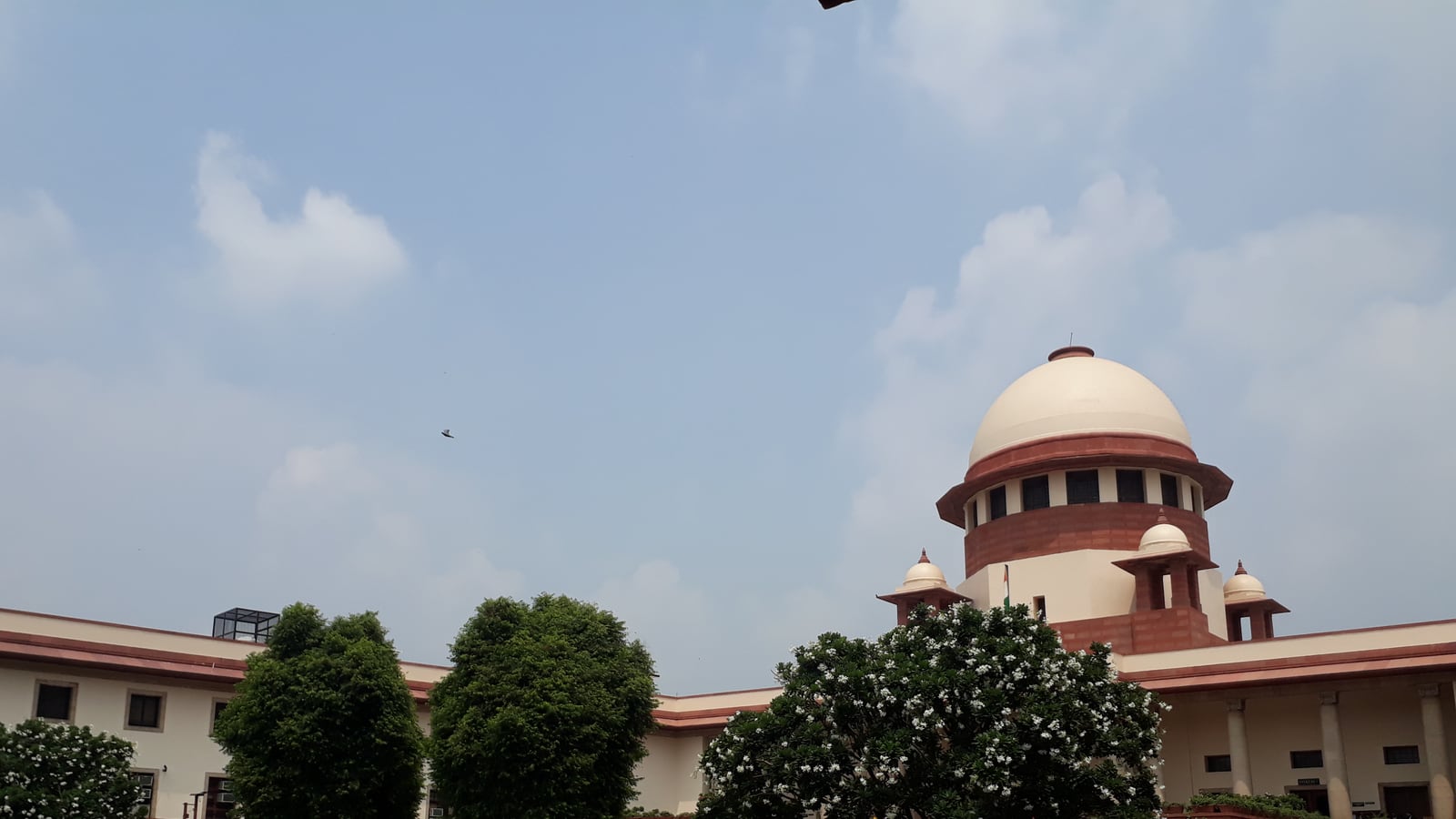
Photo: Pinakpani / Wikimedia Commons, CC BY-SA 4.0 (cropped). File photo.
A Recovery Officer of a Debts Recovery Tribunal can attach a bank account, put a house up for sale or order the arrest of a defaulter once a recovery certificate has been issued under Sections 25 to 28 of the Recovery of Debts and Bankruptcy Act, 1993 (the RDB Act). The law gives any person aggrieved by such an order exactly 30 days to appeal under Section 30(1), counted from the date on which a copy of the order is issued to that person. On 24 November 2021, in Avneesh Chandan Gadgil & Anr. v. Oriental Bank of Commerce & Ors. (Civil Appeal No. 6898 of 2021), the Supreme Court of India confirmed that this 30-day window cannot be extended by any tribunal, however good the reason for the delay.
The ruling cuts both ways. In Gadgil, the bank filed its Section 30 appeal 31 days late, and the borrowers won. For a borrower or guarantor, the 2021 case is both a warning about their own deadline and a defence when the lender misses its deadline.
The Statutory Position
Section 30(1) of the RDB Act, in the form substituted by Act 1 of 2000, provides that any person aggrieved by an order of the Recovery Officer may, within thirty days from the date on which a copy of the order is issued to him, prefer an appeal to the Tribunal. "The Tribunal" here means the Debts Recovery Tribunal (DRT) itself, not the Debts Recovery Appellate Tribunal (DRAT). The appeal therefore travels one step up, from the Recovery Officer who executes the certificate to the Presiding Officer of the same DRT.
The 30-day period has to be read against four other provisions of the 1993 Act and one provision of the Limitation Act, 1963. The table below sets out how each one treats time.
| Provision | What it governs | Time limit | Can delay be condoned? |
|---|---|---|---|
| Section 19, RDB Act | Original application by a bank or financial institution before the DRT | Limitation Act applies through Section 24 | Yes, Limitation Act applies to Section 19 proceedings |
| Section 20, RDB Act | Appeal from a DRT order to the DRAT | 45 days | Yes, the DRAT has an express power under Section 20(3) |
| Section 21, RDB Act | Pre-deposit for a debtor's appeal to the DRAT | 75% of the debt determined by the DRT | Deposit may be waived or reduced for reasons recorded in writing |
| Section 30(1), RDB Act | Appeal against a Recovery Officer's order to the DRT | 30 days from issue of the order copy | No, Section 5 of the Limitation Act does not apply |
| Section 17, SARFAESI Act, 2002 | Borrower's application to the DRT against measures under Section 13(4) | 45 days | Separate statute, outside the scope of this ruling |
The structural point the Supreme Court relied on is visible in the fourth column. Parliament gave the DRAT an express power to condone delay beyond 45 days under Section 20(3), and it applied the Limitation Act to original applications under Section 19 through Section 24. It wrote no comparable power into Section 30. Quoting paragraph 13 of International Asset Reconstruction Company of India Ltd. v. Official Liquidator of Aldrich Pharmaceuticals Ltd., (2017) 16 SCC 137, the Court in Gadgil repeated that "The RDB Act is a special law" and that the exclusion of any provision for extension of time under Section 30 "makes it manifest that the legislative intent for exclusion was express".
That reasoning also closes the usual back door through Section 29(2) of the Limitation Act, 1963. The 2017 judgement, approved in Gadgil, held that "the application of Section 5 of the Limitation Act by resort to Section 29(2) of the Limitation Act, 1963 therefore does not arise". The result is a hard 30-day limit.
This matters because Sections 25 to 29 cover attachment, sale, auction, garnishee proceedings and arrest, and each step is carried out through a Recovery Officer's order open to challenge only through the 30-day route in Section 30(1).
Procedure Step by Step
The recovery stage begins after the DRT decides the bank's original application under Section 19 and a recovery certificate issues. The sequence then typically runs as follows; only the marked periods are statutory.
- Recovery certificate issued. The DRT issues a certificate for the amount due, and the case moves to a Recovery Officer for execution under Sections 25 to 28 of the 1993 Act.
- Recovery Officer passes an order. This may be an order of attachment, a proclamation of sale, an order confirming an auction, a garnishee direction to a third party holding the debtor's money, or an order of arrest. Section 29 sets out these modes of recovery.
- Copy of the order is issued. The 30-day clock under Section 30(1) starts on the date on which a copy of the order is issued to the aggrieved person. Note that date in writing the day the copy reaches you, and keep the envelope, email header or certified-copy stamp that proves it.
- Decide within the first 7 to 10 days whether to appeal. Waiting until day 29 leaves no margin for a filing defect.
- File the appeal before the DRT within 30 days. The appeal lies to the Tribunal, that is, the DRT whose Recovery Officer passed the order, not to the DRAT.
- DRT hears the appeal. The Presiding Officer hears both sides and decides the Section 30 appeal; until it is decided, the 30-day bar remains the most important protection against a late challenge.
- Further challenge to the DRAT. A DRT order can be taken to the DRAT under Section 20 within 45 days. In Gadgil itself, the DRT's order condoning the bank's delay was challenged before the DRAT, which set it aside. If the debtor is the appellant before the DRAT, Section 21 requires a pre-deposit of 75% of the debt determined by the DRT, which the DRAT may waive or reduce for recorded reasons.
The table below lays the deadlines side by side, using a hypothetical order copy issued on 1 December 2026.
| Stage | Statutory period | If copy or order dated 1 December 2026, last day falls around | Condonation |
|---|---|---|---|
| Section 30 appeal to DRT against Recovery Officer's order | 30 days | 31 December 2026 | None |
| Section 20 appeal to DRAT against a DRT order | 45 days | 15 January 2027 | Available under Section 20(3) |
| Section 17 SARFAESI application against a 13(4) measure | 45 days | 15 January 2027 | Different statute; take advice |
The third-column dates are illustrative; how the day of issue and holidays are counted should be confirmed with counsel. With no condonation available for the 30 days, file well before day 30.
Borrowers working out whether to fight a recovery order or settle should also run the numbers first. Oquilia's loan foreclosure calculator shows the cost of closing an outstanding balance early, and the debt consolidation calculator helps compare a refinanced EMI against the cost of continuing litigation over 12, 24 or 36 months.
Borrower Defences Available
The Gadgil ruling shapes defence strategy at the recovery stage in 5 concrete ways.
1. The limitation defence against a late lender. In Gadgil, the bank's appeal against a Recovery Officer's order was 31 days out of time. The borrowers resisted the DRT's condonation order before the DRAT and then before the Supreme Court, and on 24 November 2021 the Court restored the DRAT's order and quashed the condonation. Any borrower facing a Section 30 appeal by a bank, an asset reconstruction company or an auction purchaser should check the filing date against the date the order copy was issued. If the appeal is even one day beyond 30 days, paragraph 9 of Gadgil holds that "Section 5 of the Limitation Act shall not be applicable".
2. Your own appeal must be in time. The same rule binds the borrower and the guarantor. An order attaching a secured loan asset, a salary account or a property held by a guarantor has to be challenged within 30 days of the copy being issued. A condonation application filed with a late appeal is, after the 2017 and 2021 rulings, not a reliable safety net.
3. Choose the right forum. Section 30(1) sends the appeal to the DRT, not the DRAT. A Section 30 appeal wrongly lodged at the DRAT, or a writ petition before a High Court in place of a statutory appeal, can consume most of the 30 days. In Gadgil, the High Court's order of 16 February 2016 in W.P.(C) No. 4207 of 2015 was itself set aside by the Supreme Court.
4. Do not confuse the Section 30 route with the SARFAESI route. A bank may proceed under the SARFAESI Act, 2002 as well as under the RDB Act. Measures under Section 13(4) of the SARFAESI Act are challenged under Section 17 of that Act within 45 days, before the DRT. Orders of a Recovery Officer executing a DRT certificate are challenged under Section 30 of the RDB Act within 30 days. The two periods differ by 15 days, and the condonation position under the 2021 ruling applies to Section 30.
5. Pre-deposit planning for the next step. If the DRT dismisses a Section 30 appeal and the debtor wants to go to the DRAT under Section 20, Section 21 requires a deposit of 75% of the amount of debt due as determined by the Tribunal, subject to waiver or reduction for recorded reasons. That figure should enter the cash-flow plan before the first appeal is filed, not after.
The following table sums up the grounds a borrower or guarantor can raise, and where.
| Situation | Defence or ground | Forum | Deadline |
|---|---|---|---|
| Bank's Section 30 appeal filed after 30 days | Appeal barred; Section 5 of Limitation Act inapplicable (Gadgil, 2021; IARC, 2017) | DRT, then DRAT | Raise at the first hearing |
| Recovery Officer orders attachment or sale of your asset | Appeal under Section 30(1) on the merits of the order | DRT | 30 days from issue of copy |
| DRT dismisses your Section 30 appeal | Appeal under Section 20 | DRAT | 45 days; condonable under Section 20(3) |
| You cannot meet the DRAT pre-deposit | Apply for waiver or reduction under Section 21 | DRAT | With the appeal |
| Bank takes possession under SARFAESI Section 13(4) | Application under SARFAESI Section 17 | DRT | 45 days |
Where settlement is a realistic option, a borrower can sometimes use the recovery stage to negotiate. Oquilia's home loan EMI calculator is useful for testing what restructured instalments a household budget can actually carry before an offer is made to the bank.
Recent Tribunal/HC Position
The controlling authority is the Supreme Court's judgement of 24 November 2021 in Avneesh Chandan Gadgil & Anr. v. Oriental Bank of Commerce & Ors., Civil Appeal No. 6898 of 2021, decided by a Bench of Sanjiv Khanna and M.R. Shah JJ., with the judgement written by M.R. Shah J. The full text is available on Indian Kanoon.
The facts. Oriental Bank of Commerce challenged an order of a Recovery Officer under Section 30, but its appeal was filed with a delay of 31 days. The DRT condoned the delay by applying Section 5 of the Limitation Act, 1963. The DRAT set the condonation aside, holding that Section 5 did not apply to a Section 30 appeal. The Delhi High Court, by its order dated 16 February 2016 in W.P.(C) No. 4207 of 2015, reversed the DRAT, relying on A.R. Venugopal v. Jotheeswaran, (2016) 16 SCC 588.
The question. Paragraph 3 of the judgement framed the issue as "whether Section 5 of the Limitation Act shall be applicable to the appeal against the order of Recovery Officer under Section 30 of the Act, 1993". Paragraph 2 described it as "a very narrow compass".
The answer. The Court held that the question was no longer open in view of International Asset Reconstruction Company of India Ltd. v. Official Liquidator of Aldrich Pharmaceuticals Ltd., (2017) 16 SCC 137. Paragraph 8 recorded that A.R. Venugopal, the 2016 decision on which the High Court had relied, "has been expressly overruled" by the 2017 judgement. Paragraph 13 of the 2017 ruling, quoted in full in Gadgil, held that "the prescribed period of 30 days under Section 30(1) of the RDB Act for preferring an appeal against the order of the Recovery Officer therefore cannot be condoned by application of Section 5 of the Limitation Act".
The outcome. Under paragraph 10, the appeal was allowed. The High Court's judgement and the DRT's condonation order were quashed and set aside, the DRAT's order was restored, and there was no order as to costs. The net effect was that the bank's late appeal against the Recovery Officer's order stood dismissed as time-barred.
| Forum | Date or citation | Decision on the 31-day delay |
|---|---|---|
| Debts Recovery Tribunal | Not stated in the judgement | Condoned under Section 5, Limitation Act |
| Debts Recovery Appellate Tribunal | Not stated in the judgement | Condonation set aside; Section 5 inapplicable |
| Delhi High Court | 16 February 2016, W.P.(C) No. 4207 of 2015 | DRAT reversed, relying on (2016) 16 SCC 588 |
| Supreme Court of India | 24 November 2021, C.A. No. 6898 of 2021 | High Court and DRT orders quashed; DRAT order restored |
For DRTs and DRATs, the 2021 ruling leaves no discretion: a Recovery Officer's order not appealed within 30 days of the copy being issued cannot be reopened under Section 30. In paragraph 9 the Court relied both on the 2017 precedent and on its own reading of Section 30, "even otherwise considering Section 30 of the Act, 1993". The bare text of the Act is available on India Code, and the 2017 IARC judgement can be traced through Indian Kanoon.
The Oquilia Research Desk does not practise before any court or tribunal. This playbook explains the 2021 judgement and the 1993 Act for general information; a borrower or guarantor with a live Recovery Officer order should take advice from an advocate who appears before the DRT concerned, and should do so inside the first week of the 30-day window.
FAQ
What is the time limit to appeal against a DRT Recovery Officer's order?
Section 30(1) of the RDB Act, 1993 allows 30 days from the date on which a copy of the Recovery Officer's order is issued to the aggrieved person. The Supreme Court confirmed on 24 November 2021 in Avneesh Chandan Gadgil that this period cannot be extended.
Can the DRT condone delay in a Section 30 appeal if I have a good reason?
No. Following International Asset Reconstruction Company v. Official Liquidator of Aldrich Pharmaceuticals, (2017) 16 SCC 137, the Court held in paragraph 9 of Gadgil that Section 5 of the Limitation Act, 1963 does not apply to a Section 30 appeal, so even a delay of 31 days could not be condoned.
Where is a Section 30 appeal filed, the DRT or the DRAT?
The appeal lies to "the Tribunal", which is the Debts Recovery Tribunal whose Recovery Officer passed the order. Appeals from DRT orders to the DRAT are a separate route under Section 20, with a 45-day limit.
Does the same rule apply to banks?
Yes. In Gadgil, it was Oriental Bank of Commerce whose appeal was 31 days late, and the Supreme Court restored the DRAT order that refused to condone that delay. A borrower can raise the 30-day bar against a lender's late appeal.
How is this different from a SARFAESI Section 17 application?
A Section 17 application under the SARFAESI Act, 2002 challenges measures under Section 13(4) and must be filed with the DRT within 45 days. A Section 30 appeal under the RDB Act challenges a Recovery Officer's order executing a DRT certificate and must be filed within 30 days.
Do I need to deposit money to appeal against a Recovery Officer's order?
The 75% pre-deposit in Section 21 of the RDB Act applies to a debtor's appeal to the DRAT under Section 20, and it can be waived or reduced for reasons recorded in writing. Section 21 does not appear in the 2021 judgement, so take advice on any deposit the DRT may direct in a Section 30 appeal.
Which Recovery Officer orders can be challenged under Section 30?
Any order of the Recovery Officer, including attachment, sale, auction, garnishee and arrest orders made while recovering a certificate amount under Sections 25 to 29 of the 1993 Act. The 30-day limit applies to each order separately from the date its copy is issued.
Sources & Citations
- Avneesh Chandan Gadgil vs Oriental Bank Of Commerce on 24 November, 2021 — Indian Kanoon (Supreme Court of India)
- Recovery of Debts and Bankruptcy Act, 1993 — India Code