

PHR Invent v UCO Bank: How Withdrawing a DRT Case on an Unaccepted OTS Offer Cost a Borrower His Mortgaged Property
Supreme Court in PHR Invent v UCO Bank (10 April 2024) upheld a Rs 5.72 crore SARFAESI auction after the borrower withdrew his DRT case on an OTS offer the bank never accepted.
Key points
- The Supreme Court on 10 April 2024 restored a confirmed UCO Bank auction sale and dismissed the borrower's writ with costs of Rs 1,00,000.
- The borrower withdrew his DRT case on 21 September 2020 citing a settlement, though his Rs 3.75 crore OTS offer was never accepted by the bank.
- Borrowers should meet DRT deposit conditions, keep cases pending until an OTS is accepted in writing, and appeal under Section 18 rather than file a writ.
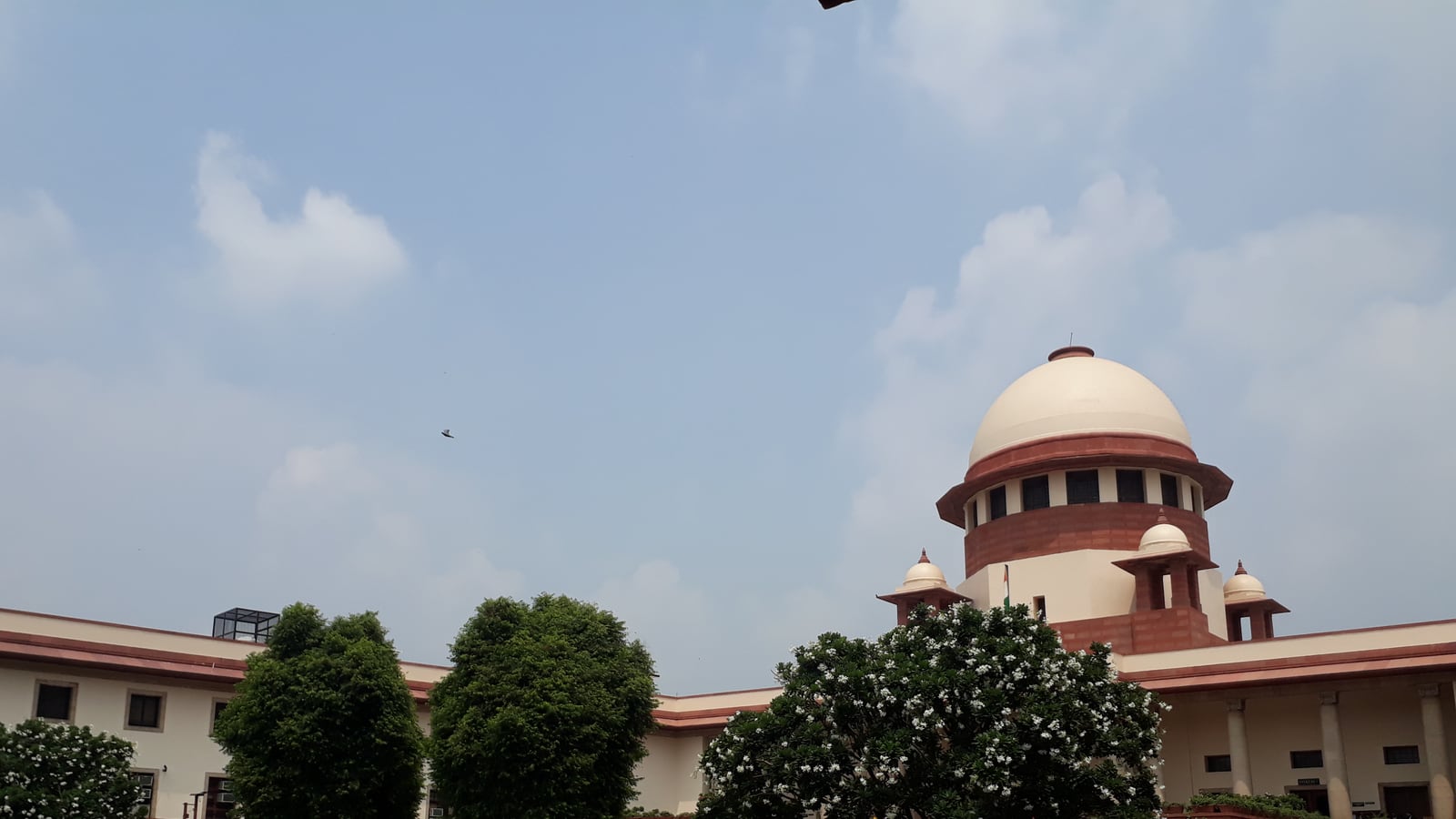
Photo: Pinakpani / Wikimedia Commons, CC BY-SA 4.0 (cropped). File photo.
On 10 April 2024, a three-judge Bench of the Supreme Court of India (B.R. Gavai, Rajesh Bindal and Sandeep Mehta JJ.) decided PHR Invent Educational Society v. UCO Bank & Ors., 2024 INSC 297, and restored a confirmed and registered auction sale of four mortgaged properties in Vijayawada. The borrower had won back his securitisation application in the Telangana High Court in February 2022; the Supreme Court set that order aside, dismissed his writ petition and imposed costs of Rs 1,00,000 on him. The full judgement is available on Indian Kanoon.
The case matters because the borrower did not lose on the merits of the bank's recovery. He lost on procedure: he let a Debt Recovery Tribunal (DRT) deposit condition lapse, withdrew his own case on the strength of a one-time settlement (OTS) offer the bank had never accepted, and then chose a writ petition under Article 226 instead of the statutory appeal under Section 18 of the SARFAESI Act, 2002. This playbook walks through each of those 3 decisions and what a borrower facing a SARFAESI notice should do differently.
The Statutory Position
The secured creditor in this case, UCO Bank, enforced its mortgage under the Securitisation and Reconstruction of Financial Assets and Enforcement of Security Interest Act, 2002 (SARFAESI Act), the text of which is published on India Code. The Act lets a bank take possession of and sell a secured asset without first filing a civil suit, but it builds in a ladder of remedies for the borrower. The 4 provisions that decided PHR Invent are set out below.
| Provision | What it does | Time limit or condition |
|---|---|---|
| Section 14, SARFAESI Act 2002 | Bank applies to the Chief Metropolitan Magistrate or District Magistrate to take physical possession of the secured asset | Magistrate to dispose of the application within 30 days (post-2016 amendment) |
| Section 17, SARFAESI Act 2002 | Borrower's application (S.A.) to the DRT against measures under Section 13(4) | 45 days; pre-deposit not mandatory, but the DRT may direct one |
| Section 18, SARFAESI Act 2002 | Appeal against a DRT order to the Debts Recovery Appellate Tribunal (DRAT) | 30 days; 50% of the debt due must be deposited, reducible to not less than 25% for recorded reasons |
| Section 20, RDB Act 1993 | Appeal to the DRAT from a DRT order in a recovery application | 45 days; the pre-deposit requirement sits in Section 21 |
The statutory scheme is a closed loop: Section 17 to the DRT, Section 18 to the DRAT, and only then the High Court in exceptional cases. In paras 14-15 of PHR Invent, the Supreme Court, citing its earlier ruling in Satyawati Tondon, held that High Courts should ordinarily not entertain Article 226 petitions where this remedy exists, and that the rule applies "with greater rigour" when the dues belong to banks and financial institutions.
The second statutory point concerns the borrower's right to redeem the mortgage, that is, to pay up and take the property back. At para 27, the Court held that in this case the borrower's right of redemption came to an end on registration of the sale, which happened on 11 November 2020. After that date, no OTS offer, deposit or restored application could undo the transfer to the auction purchaser.
The third point is about finality. Relying on its earlier decision in Valji Khimji, the Court held at para 26 that "the confirmed auction sale could have been interfered with only when there was a fraud or collusion". The borrower alleged neither, so the sale confirmed on 2 November 2020 stood.
Procedure Step by Step
The timeline below is drawn from paras 3.5 to 3.8 and paras 10 to 12 of the judgement. It covers roughly 6 years and 7 months, from the auction notice of 2 September 2017 to the Supreme Court's decision of 10 April 2024.
| Date | Event | Consequence |
|---|---|---|
| 2 September 2017 | UCO Bank issues the auction sale notice for 4 Vijayawada properties | Borrower's Section 17 clock is running |
| 14 December 2017 | Auction held; PHR Invent is the highest bidder at Rs 5,72,22,200 and deposits 25% | DRT refuses to stop the sale but orders the borrower to deposit 30% of dues in 2 instalments |
| After 14 December 2017 | Borrower does not make the 30% deposit | Interim protection lapses (paras 3.5, 10) |
| 28 December 2017 | Auction purchaser pays the balance of Rs 4,29,16,650 | Full price of Rs 5,72,22,200 is now with the bank |
| 29 March 2019 | Borrower offers an OTS of Rs 3.75 crore with 10% upfront | Bank never accepts the offer |
| 12 May 2020 | Bank asks for settlement with contractual interest | Confirms that no OTS has been agreed (paras 3.7, 11) |
| 21 September 2020 | DRT dismisses S.A. No. 1476 of 2017 as withdrawn, on the borrower's claim of an out-of-court settlement that the bank denied | Borrower has no live challenge left (paras 3.8, 12) |
| 2 November 2020 | Sale certificate issued, sale confirmed | Confirmed sale can be reopened only for fraud or collusion |
| 11 November 2020 | Sale registered | Right of redemption ends (para 27) |
| 2 February 2021 | DRT dismisses restoration application M.A. No. 97 of 2020 | Borrower files writ, not a Section 18 appeal |
| 4 February 2022 | Telangana High Court (WP No. 5275 of 2021) restores the S.A. | Auction purchaser appeals by SLP(C) No. 8867 of 2022 |
| 10 April 2024 | Supreme Court allows the appeal | Writ dismissed with costs of Rs 1,00,000 (para 34) |
Read as a procedural sequence, the case shows the stages through which every SARFAESI enforcement moves, and the point at which each borrower option closes:
- Demand and possession under Section 13. The bank issues its demand and, if the dues are not paid, takes measures under Section 13(4). Where physical possession is resisted, the bank goes to the Magistrate under Section 14, who is required to dispose of the application within 30 days.
- Securitisation application under Section 17. The borrower has 45 days to approach the DRT against the Section 13(4) measure. Here the borrower did file S.A. No. 1476 of 2017, so this step was taken in time.
- Interim relief and deposit conditions. On 14 December 2017 the DRT declined to stay the sale outright but offered protection on deposit of 30% of the dues in 2 instalments. Missing that condition is what allowed the purchaser to pay the remaining Rs 4,29,16,650 within 14 days and complete the purchase.
- Settlement talks running in parallel. The OTS offer of 29 March 2019 came about 15 months after the auction. A settlement proposal does not stop the statutory process unless the bank accepts it or a tribunal orders a stay.
- Withdrawal or continuation of the S.A. On 21 September 2020 the borrower withdrew. Within 42 days, on 2 November 2020, the sale was confirmed.
- Confirmation and registration. Confirmation on 2 November 2020 and registration on 11 November 2020, 9 days apart, moved the case into what the Supreme Court called an irreversible stage (para 24).
- Appeal under Section 18. Against the DRT's order of 2 February 2021 refusing restoration, the statutory route was a 30-day appeal to the DRAT with a deposit of 50% of the debt due, reducible to 25%. The borrower skipped it.
- Writ jurisdiction as a last resort. Article 226 is available only in the narrow exceptions listed in para 29, discussed below.
Borrowers who want to model how much an early settlement or part-payment would actually save, before a sale notice is ever issued, can run the numbers on the loan foreclosure calculator or the home loan EMI calculator.
Borrower Defences Available
PHR Invent does not take away any defence the SARFAESI Act gives a borrower. What it does is show that each defence has a window, and the window shuts at a fixed procedural point. The table below maps the main options against the stage at which they are realistically available.
| Stage | Defence or remedy | Statutory basis | What PHR Invent shows |
|---|---|---|---|
| After Section 13(4) measure | Securitisation application to DRT | Section 17, 45 days | Filing in time is not enough; the case must be kept alive |
| Before the auction | Interim stay on terms | Section 17; DRT may direct a deposit | The 30% deposit ordered on 14 December 2017 was the borrower's best chance |
| Any time before confirmation | OTS or compromise | Contract with the bank | An offer of Rs 3.75 crore with 10% upfront had no legal effect because it was never accepted |
| After a DRT order | Appeal to DRAT | Section 18, 30 days, 50% deposit (min 25%) | The borrower chose a writ instead and lost on maintainability |
| After confirmation | Setting aside the sale | Fraud or collusion only (para 26) | No fraud or collusion was pleaded |
| After registration | Redemption | Ended on registration (para 27) | Right extinguished on 11 November 2020 |
Comply with deposit conditions. On 14 December 2017 the DRT gave the borrower a route to stop the sale: deposit 30% of the dues in 2 instalments. The interim protection lapsed because he did not pay (paras 3.5, 10). A borrower who cannot meet a deposit condition should go back to the tribunal and seek modification before the deadline, rather than let the order lapse silently.
Do not withdraw on an unaccepted settlement. The OTS offer of 29 March 2019 was a proposal, not a contract. The bank's letter of 12 May 2020 asked for settlement with contractual interest, which made clear there was no agreement. When the borrower told the DRT on 21 September 2020 that an out-of-court settlement had been reached, the bank denied it, and the S.A. was dismissed as withdrawn (paras 3.8, 12). The practical rule is simple: keep the S.A. pending until the bank's acceptance letter, with the settlement amount and payment schedule, is in hand and filed on record.
Use the Section 18 appeal. Against the DRT's order of 2 February 2021, the Act gave the borrower 30 days to appeal to the DRAT. The deposit is 50% of the debt due, as claimed by the secured creditor or determined by the DRT, whichever is less, and the DRAT may reduce it to not less than 25% for reasons recorded in writing. Skipping that deposit by filing a writ cost the borrower 3 years of litigation and Rs 1,00,000 in costs.
Know the narrow writ exceptions. Para 29 of the judgement lists the situations in which a High Court may still entertain a writ despite the statutory remedy. At para 31, the Court found that none of them applied here.
| Para 29 exception | Did it apply in PHR Invent? (para 31) |
|---|---|
| The authority has not acted in accordance with the provisions of the enactment | No |
| The authority has acted in defiance of fundamental principles of judicial procedure | No |
| The authority has invoked provisions that are repealed | No |
| The order was passed in total violation of the principles of natural justice | No |
Weigh the cost of delay. The auction fetched Rs 5,72,22,200. The borrower's OTS offer 15 months later was Rs 3.75 crore, Rs 1,97,22,200 less than what the bank had already received from a third-party buyer. Once the purchaser had paid in full on 28 December 2017, the bank had little commercial reason to accept a lower figure. Borrowers considering refinancing an outstanding facility to fund a settlement can compare options on the debt consolidation calculator and the balance transfer calculator.
Recent Tribunal/HC Position
The governing authority on these facts is now the Supreme Court's own decision of 10 April 2024 in PHR Invent Educational Society v. UCO Bank & Ors., 2024 INSC 297, which binds every DRT, DRAT and High Court under Article 141 of the Constitution. The Telangana High Court order of 4 February 2022 in WP No. 5275 of 2021, which had restored S.A. No. 1476 of 2017, no longer stands.
At para 24, the Court faulted the High Court on 2 counts: it ignored the borrower's own conduct, including the lapsed deposit condition and the disputed withdrawal of 21 September 2020, and it ignored that the sale had reached an irreversible stage after confirmation on 2 November 2020 and registration on 11 November 2020. The 9-day gap between those 2 dates did not matter; once both had happened, the purchaser's title was secure.
At paras 14-15, the Court reaffirmed Satyawati Tondon on the maintainability of writs in bank recovery matters. At para 26, it applied Valji Khimji on the finality of confirmed sales. At para 27, it held the right of redemption had ended on registration. And at para 34 it allowed the appeal, set aside the High Court order, dismissed the writ petition and directed the borrower to pay costs of Rs 1,00,000.
The ruling sits alongside a recurring theme in recent High Court decisions on where and how a SARFAESI challenge may be brought; Oquilia covered one such forum question in Allahabad High Court lets DRT Lucknow hear borrower's SARFAESI case against SBI. The common thread is that the DRT under Section 17 is the first and proper forum, and the High Court is not a substitute for the Section 18 appeal.
FAQ
What did the Supreme Court decide in PHR Invent v UCO Bank?
On 10 April 2024, in 2024 INSC 297, the Supreme Court allowed the auction purchaser's appeal, set aside the Telangana High Court's order of 4 February 2022, dismissed the borrower's writ petition and imposed costs of Rs 1,00,000 on him (para 34). The confirmed and registered auction sale of 4 Vijayawada properties for Rs 5,72,22,200 was upheld.
Can a borrower withdraw a DRT case once an OTS has been offered?
A borrower can, but PHR Invent shows the risk. The OTS offer of 29 March 2019 for Rs 3.75 crore was never accepted, and the S.A. withdrawn on 21 September 2020 left the borrower with no protection when the sale was confirmed 42 days later on 2 November 2020. Keep the case pending until a written acceptance is on record.
Can a confirmed SARFAESI auction sale be set aside?
According to para 26 of the judgement, relying on Valji Khimji, a confirmed auction sale can be interfered with only when there is fraud or collusion. Neither was alleged in PHR Invent, so the sale confirmed on 2 November 2020 stood.
When does the borrower's right of redemption end?
In PHR Invent, the Court held at para 27 that the borrower's right of redemption ended on registration of the sale, which took place on 11 November 2020. After that, paying the dues could not bring the property back.
Why could the borrower not file a writ in the High Court?
Paras 14-15 of the judgement, following Satyawati Tondon, hold that High Courts should ordinarily not entertain Article 226 petitions where the SARFAESI and RDB Act remedies are available, and should apply this with greater rigour in bank dues cases. None of the 4 exceptions in para 29 applied (para 31).
What deposit is needed to appeal a DRT order to the DRAT?
Under Section 18 of the SARFAESI Act, the appeal must be filed within 30 days, and the borrower must deposit 50% of the debt due, as claimed by the bank or determined by the DRT, whichever is less. The DRAT may reduce this to not less than 25% for reasons recorded in writing.
What happens if a borrower misses a DRT deposit condition?
In PHR Invent, the DRT on 14 December 2017 directed a deposit of 30% of dues in 2 instalments. Because the borrower did not pay, the interim protection lapsed (paras 3.5, 10), and the purchaser paid the balance of Rs 4,29,16,650 on 28 December 2017.
This article is a factual explainer prepared by the Oquilia Research Desk from the Supreme Court's judgement of 10 April 2024 and the text of the SARFAESI Act, 2002. It is not legal advice. Borrowers facing a SARFAESI demand or sale notice should take advice from an advocate on the facts of their own case, and should check the original judgement on Indian Kanoon and the Act on India Code.
Sources & Citations
- PHR Invent Educational Society v. UCO Bank & Ors., 2024 INSC 297 — Indian Kanoon
- SARFAESI Act, 2002 — India Code