

The NRI Who Need Not File a Return: Section 216's Exemption for Investment Income and Long-Term Gains Fully Taxed at Source
Section 216 of the Income-tax Act, 2025 lets an NRI skip the return if income is only investment income or long-term gains from foreign exchange assets, with TDS deducted. Here is when it applies.
Key points
- Section 216 of the Income-tax Act, 2025, successor to section 115G of the 1961 Act, waives the return for certain non-resident Indians.
- Both conditions must hold in the tax year: income consists only of investment income or long-term gains on foreign exchange assets, and TDS has been deducted.
- Any rent, salary or short-term gain breaks the waiver, and NRIs owed a TDS refund or using the section 218 opt-out still need to file.
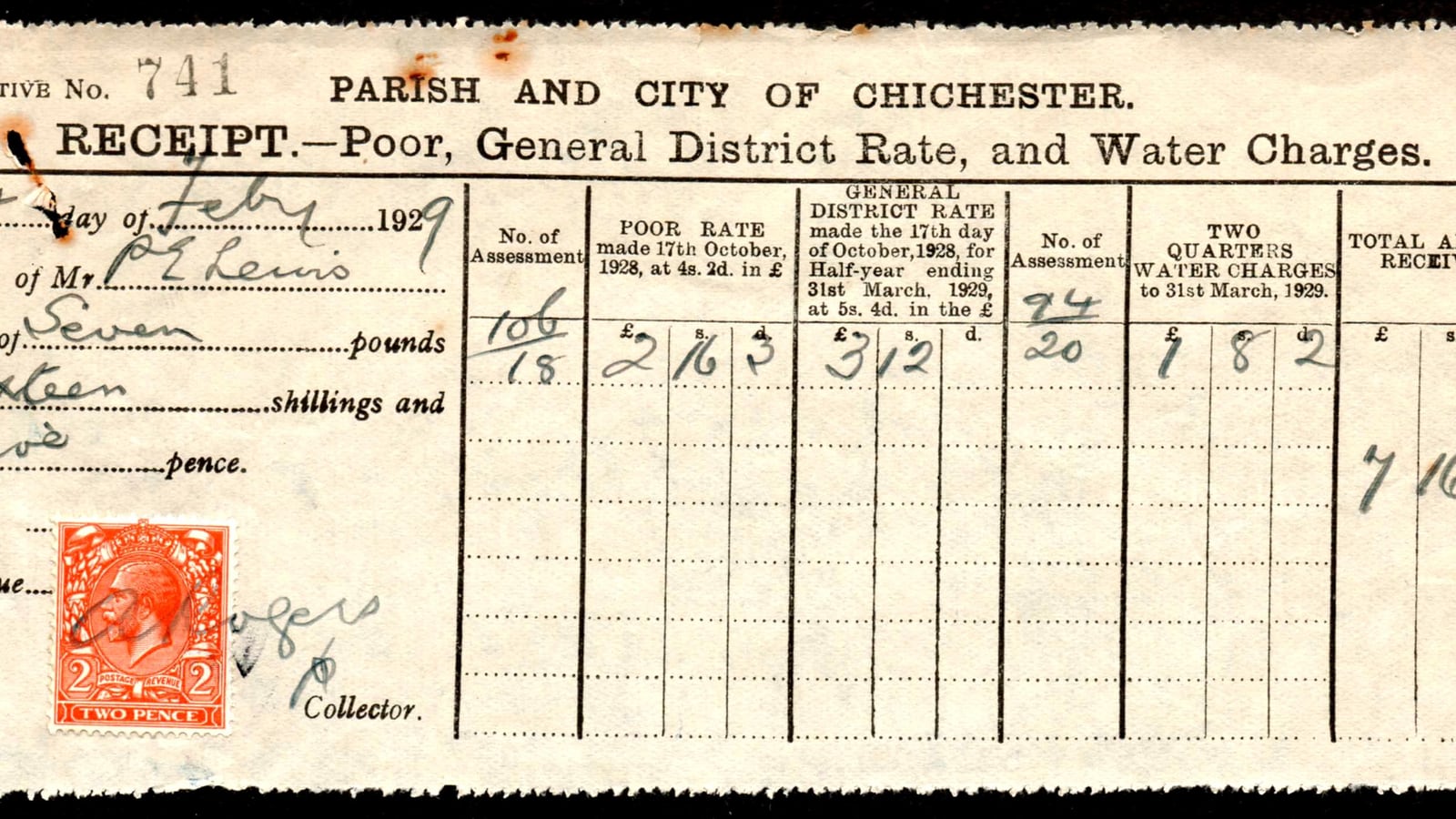
Photo: City of Chichester / Wikimedia Commons, public domain (cropped). Representational image.
Most non-resident Indians assume that any rupee earned in India means a return must be filed in India. Section 216 of the Income-tax Act, 2025 says otherwise for one narrow group. It provides that "it shall not be necessary for a non-resident Indian to furnish a return of his income under section 263(1)" if two conditions are both met in the tax year. The provision is the successor to section 115G of the Income-tax Act, 1961, and it sits inside the special-provisions block for non-resident Indians, sections 212 to 218, which apply from 1 April 2026 (tax year 2026-27).
The relief is tightly drawn: it covers only income from "foreign exchange assets" defined in section 212, and only where tax has already been deducted at source. Below are the text, the definitions, the section 218 opt-out and the cases where filing still pays.
| Provision (2025 Act) | 1961 Act equivalent | What it does |
|---|---|---|
| Section 212 | Section 115C | Definitions: foreign exchange asset, investment income, long-term capital gains, non-resident Indian, specified asset |
| Section 215 | Section 115F | Long-term gains on a foreign exchange asset not charged if net consideration is reinvested in a specified asset within 6 months |
| Section 216 | Section 115G | No return needed if income is only investment income or long-term capital gains (or both) and TDS has been deducted |
| Section 217 | Section 115H | Benefits can continue after the person becomes resident, by declaration in the return |
| Section 218 | Section 115I | The NRI may choose not to be governed by sections 212 to 217 for a tax year |
FEMA / DTAA Position
Section 216 is a domestic-law filing rule, not a treaty concession, so the starting point is the text of the Act itself. Under section 216, a non-resident Indian need not file a return under section 263(1) if "(a) his total income during the tax year consisted only of investment income or income by way of long-term capital gains or both; and (b) tax deductible at source under the provisions of Chapter XIX-B has been deducted from such income." Both limbs must be satisfied; meeting one is not enough.
The words "investment income" and "long-term capital gains" do not carry their everyday meaning here. Section 212 defines them for the purposes of sections 213 to 218, and every definition is tied to a "foreign exchange asset". Section 212(a) defines a foreign exchange asset as a specified asset that the assessee acquired or subscribed to using convertible foreign exchange. Section 212(b) defines investment income as income derived from a foreign exchange asset. Section 212(c) defines long-term capital gains as capital gains on a foreign exchange asset that is not a short-term capital asset.
Section 212(e) then lists the specified assets. There are five categories in the text:
| Section 212(e) category | Notes |
|---|---|
| Shares in an Indian company | Must be acquired with convertible foreign exchange to be a foreign exchange asset |
| Debentures of an Indian company | Only a company that is not a private company under the Companies Act, 2013 |
| Deposits with an Indian company | Same condition: not a private company |
| Government of India securities | As defined in section 2(f) of the Government Securities Act, 2006 |
| Other notified assets | Any asset the Central Government specifies by notification |
Section 212(d) defines a non-resident Indian as a non-resident individual who is either a citizen of India or a person of Indian origin. A resident Indian, a Hindu undivided family or a company cannot use section 216, whatever its income profile.
The FEMA angle matters because the "convertible foreign exchange" test is a question of where the money came from. Funds remitted from abroad or held in an NRE account are the typical trail; an Oquilia explainer on the NRE account notes that NRE principal and interest are fully repatriable. Shares bought out of rupee income earned in India, for example rent credited to an NRO account, would not meet the section 212(a) test, and the income from them would fall outside section 216.
Treaties do not change the filing rule, but they do shape the tax that is deducted. Under every one of India's six treaties held in Oquilia's DTAA table, India retains its right to tax long-term capital gains at 12.5%, so the treaty never takes those gains out of the Indian tax net. The DTAA rates on interest and dividends vary by country:
| Treaty country | Interest (treaty cap) | Portfolio dividends | Long-term capital gains in India |
|---|---|---|---|
| United States | 15% | 25% | Taxed in India at 12.5% |
| United Kingdom | 15% | 15% | Taxed in India at 12.5% |
| UAE | 12.5% | 10% | Taxed in India at 12.5% |
| Singapore | 15% | 15% | Taxed in India at 12.5% |
| Canada | 15% | 25% | Taxed in India at 12.5% |
| Australia | 15% | 15% | Taxed in India at 12.5% |
Tax Treatment in India
Section 216 does not reduce the tax; it removes only the obligation to file. The tax on investment income and long-term capital gains is still collected, through deduction at source under Chapter XIX-B of the 2025 Act. Condition (b) of section 216 is the reason the law can safely waive the return: the deductor has already taken the tax before the money reaches the NRI. Oquilia's TDS glossary entry explains how deduction works in general.
The briefing note behind this piece is specific on one point that readers often get wrong: section 216 does not cover rent, salary, pension or business income. Those are not "investment income" as defined in section 212(b), because they do not derive from a foreign exchange asset. An NRI who earns even one rupee of rent from an Indian flat in tax year 2026-27 fails condition (a), because total income no longer consists "only" of investment income or long-term capital gains. Our rental income tax calculator shows how that income is taxed in its own right.
The same is true of short-term capital gains. Section 212(c) counts only gains on a foreign exchange asset "that is not a short-term capital asset". If an NRI sells listed shares within the short-term holding period, the gain is outside the definition and section 216 stops applying for that year. For comparison, Oquilia's rate table records general rates under Budget 2024 of 12.5% on long-term gains from listed equity (with a Rs 1,25,000 annual threshold) and 20% on short-term gains from listed equity, effective 23 July 2024.
Surcharge and cess still apply to the tax that is deducted. Health and education cess is 4% of tax plus surcharge. Surcharge runs at 10% where income exceeds Rs 50 lakh and up to Rs 1 crore, 15% above Rs 1 crore and up to Rs 2 crore, and 25% above Rs 2 crore; in the new regime it is capped at 25% even above Rs 5 crore. The NRI tax calculator lets you model these layers on a given income.
Three related provisions sit beside section 216:
- Section 215 (reinvestment relief). Where an NRI earns long-term capital gains on transferring a foreign exchange asset and invests the net consideration in a specified asset within 6 months, the whole gain is not charged under section 67 if the new asset costs at least the net consideration. If it costs less, a proportionate part is relieved: gain multiplied by (cost of new asset divided by net consideration). If the new asset is transferred or converted into money within 3 years, the relieved gain becomes taxable in that year.
- Section 217 (becoming resident). An NRI who becomes resident in a later year can keep the benefits of sections 212 to 218 for investment income from foreign exchange assets other than shares in an Indian company, by filing a written declaration with the return under section 263. The benefit continues until the assets are transferred or converted into money.
- Section 218 (opt-out). A non-resident Indian "may choose not to be governed by the provisions of sections 212 to 217" for a tax year, by declaring so in the return under section 263. Total income is then computed under the other provisions of the Act.
Section 218 has a practical consequence for section 216. Because the opt-out is exercised in the return, an NRI who wants the general provisions to apply in a given year, for instance because they would give a lower liability, must file. Skipping the return under section 216 leaves the person inside sections 212 to 217 for that year.
When filing is still worth it
The table below sets out the common cases for tax year 2026-27. "Not compulsory" refers only to the section 216 waiver; it does not override any other filing trigger in the Act.
| Situation in the tax year | Section 216 waiver | Why you might file anyway |
|---|---|---|
| Only interest on a foreign exchange asset, TDS deducted | Available | Claim a refund if TDS exceeds the final tax |
| Only long-term gains on a foreign exchange asset, TDS deducted | Available | Use section 218 opt-out or section 215 claim properly documented |
| Long-term gains where TDS was not deducted | Not available | Condition (b) fails; the return is the way to pay and report |
| Any rent, salary or pension from India | Not available | Condition (a) fails; income is outside section 212(b) |
| Any short-term capital gain | Not available | Section 212(c) covers only long-term gains |
| Capital loss to carry forward | Available if conditions met | A loss carry-forward is claimed through the return |
| Shares bought from rupee funds in India | Not available for that income | Not a foreign exchange asset under section 212(a) |
The refund case is the most common reason to file voluntarily. Where tax deducted at source on an NRI's investment income is higher than the treaty cap in the table above (for example 15% on interest under the India-UK treaty) or higher than the final liability, the excess comes back only through a return under section 263. The ITR glossary entry explains the forms.
Tax Treatment Abroad
The country of residence will usually tax the same income on a worldwide basis, so the real question is how the Indian tax deducted under Chapter XIX-B is credited there. The DTAA data held by Oquilia records the mechanisms: Article 24 of the India-US treaty provides a foreign tax credit in the country of residence; Canada gives credit through section 126 of its Income Tax Act; and Article 23 of the India-Australia treaty uses the credit method, where both countries tax and the residence country then offsets.
Not filing an Indian return under section 216 does not remove the need for proof abroad. A foreign tax authority will want evidence of the Indian tax actually paid, and that evidence is the TDS certificate issued by the deductor in India. Keeping those certificates for each tax year, together with the Tax Residency Certificate required for treaty rates, is the paper trail. The UAE treaty notes in Oquilia's data specifically record that a TRC requires proof of UAE establishment.
The credit available abroad is generally capped at the treaty rate. If an Indian payer deducted tax above the treaty cap of 15% on interest for a UK resident, the foreign authority may credit only the treaty amount, and the excess is recoverable only from India. That is the second reason why the section 216 waiver can cost money: without a return there is no claim for the difference. Oquilia's DTAA benefit calculator compares the domestic and treaty rates for a given country.
Repatriation Mechanics
Section 216 is an income-tax rule; it says nothing about moving money out of India. Repatriation follows the FEMA account rules, and the account into which the income lands decides how freely it can leave. Oquilia's repatriation calculator models the steps for each account.
| Account | Repatriability | Tax note (from Oquilia's glossary) |
|---|---|---|
| NRE (Non-Resident External) | Principal and interest fully repatriable | Interest tax-free in India |
| FCNR(B) deposit | Deposit and interest fully repatriable; held in foreign currency for 1 to 5 years | Interest tax-free in India |
| NRO (Non-Resident Ordinary) | Up to USD 1 million per financial year after tax compliance | Interest taxable in India at 30% plus surcharge and cess before DTAA relief |
Because NRE interest is already tax-free in India, it does not create the kind of investment income that section 216 is designed for; the waiver matters chiefly for dividends, interest on qualifying company deposits or debentures, Government securities and long-term gains on foreign exchange assets. Where sale proceeds or dividends land in an NRO account, the USD 1 million annual ceiling applies, and the remittance needs the Form 15CA and 15CB process explained in our Form 15CA/15CB glossary entry.
A worked example shows how the pieces fit. Suppose an NRI living in Singapore bought listed shares of an Indian company in 2019 with money remitted from abroad, and in tax year 2026-27 receives only dividends on those shares and a long-term gain on selling part of the holding, with TDS deducted on both. Both items derive from a foreign exchange asset under section 212(a); both conditions of section 216 are met; no return is compulsory. If the same person also lets out a flat in Pune, condition (a) fails and a return under section 263 becomes necessary for the whole year.
FAQ
Does section 216 mean NRIs do not pay tax on investment income?
No. Section 216 only removes the obligation to file a return under section 263(1). The tax is still collected by deduction at source under Chapter XIX-B, and condition (b) of section 216 requires that this deduction has actually been made.
Can an NRI with rental income use section 216?
No. Condition (a) requires that total income for the tax year consist only of investment income or long-term capital gains or both. Rent is not "investment income" under section 212(b), which covers only income derived from a foreign exchange asset, so any rent in the year breaks the condition.
Which assets count as foreign exchange assets?
Under section 212(a) and (e), a foreign exchange asset is a specified asset acquired with convertible foreign exchange. The five categories are shares in an Indian company, debentures of and deposits with a non-private Indian company, Government of India securities under section 2(f) of the Government Securities Act, 2006, and other notified assets.
What if no tax was deducted on my long-term gain?
Then section 216 does not apply. Condition (b) requires that tax deductible under Chapter XIX-B has been deducted from the income. Without that deduction, the return under section 263 is the route to report and pay the tax.
Can I choose not to be governed by these special provisions?
Yes. Section 218 lets a non-resident Indian choose not to be governed by sections 212 to 217 for a tax year, by declaring so in the return under section 263. Because the choice is made in the return, using it means giving up the section 216 waiver for that year.
Sources: Sections 212, 215, 216, 217 and 218 of the Income-tax Act, 2025, as published on Indian Kanoon; India's DTAA rates as held in Oquilia's treaty data. This article is general information, not tax advice; confirm the position for your own facts with the Income Tax Department or a qualified adviser.
Sources & Citations
- Section 216 in The Income Tax Act, 2025 — Indian Kanoon
- Section 212 in The Income Tax Act, 2025 — Indian Kanoon
- Section 218 in The Income Tax Act, 2025 — Indian Kanoon
- Income Tax Department e-filing portal — Income Tax Department