

RBI Pre-payment Charges Directions 2025: When Your Lender Cannot Charge You for Closing a Floating Rate Loan Early
RBI's Pre-payment Charges Directions 2025 bar foreclosure fees on floating rate loans to individuals and many MSE loans sanctioned from 1 January 2026. Paragraph-by-paragraph borrower guide.
Key points
- The RBI issued the Pre-payment Charges on Loans Directions, 2025 on 2 July 2025, replacing its 2012, 2014 and 2019 foreclosure circulars.
- The Directions apply to loans sanctioned or renewed on or after 1 January 2026, and bar charges on floating rate non-business loans to individuals.
- Borrowers can cite paragraphs 5, 8 and 9 to resist foreclosure fees, including on balance transfers, with no minimum lock-in period.
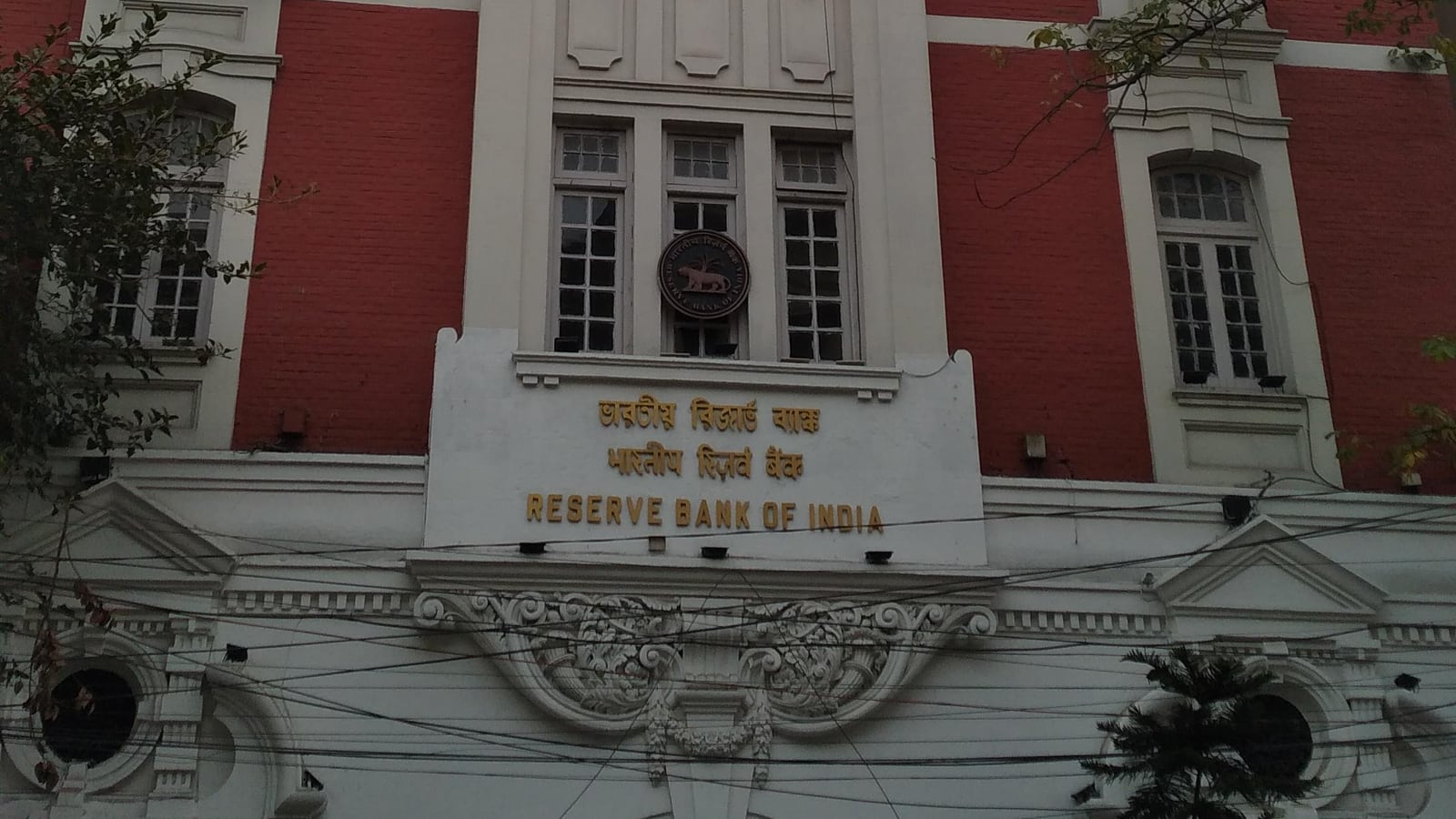
Photo: सुबोध कुलकर्णी / Wikimedia Commons, CC BY-SA 4.0 (cropped). File photo.
On 2 July 2025 the Reserve Bank of India issued the Reserve Bank of India (Pre-payment Charges on Loans) Directions, 2025 (RBI/2025-26/64, DoR.MCS.REC.38/01.01.001/2025-26). The instrument replaces a patchwork of foreclosure circulars from 2012, 2014 and 2019 with a single rulebook, and it applies to loans sanctioned or renewed on or after 1 January 2026. For a borrower holding a floating rate loan, the practical question is simple: when does a lender lose the right to charge you for closing the loan early? This playbook sets out the statutory position paragraph by paragraph, the procedure for prepaying, the defences you can raise if a charge is levied anyway, and the regulatory history that the 2025 Directions now supersede.
The official text is published on the RBI website at rbi.org.in (Notification Id 12878). Everything below is drawn from that notification as summarised in paragraphs 3 to 11 of the Directions.
The Statutory Position
The 2025 Directions are issued by the RBI under its regulatory powers over banks, co-operative banks, NBFCs and All India Financial Institutions. They are not a SARFAESI or RDDB Act provision, but for a borrower facing a lender they carry the same practical weight: under paragraph 9, a charge that the Directions prohibit, or that the lender failed to disclose, cannot be levied.
Who is bound (paragraph 4)
Paragraph 4 lists the regulated entities. The table below sets out each category and how paragraph 5 treats it.
| Regulated entity (para 4) | Non-business floating loan to individual (para 5(i)) | Business floating loan to individual / MSE (para 5(ii)) |
|---|---|---|
| Commercial banks (excluding payments banks, SFBs, RRBs, LABs) | No pre-payment charge | No charge, any amount (5(ii)(a)) |
| Small Finance Banks (SFBs) | No pre-payment charge | No charge up to Rs 50 lakh sanctioned (5(ii)(b)) |
| Regional Rural Banks (RRBs) | No pre-payment charge | No charge up to Rs 50 lakh sanctioned (5(ii)(b)) |
| Local Area Banks (LABs) | No pre-payment charge | Board policy under para 6 |
| Tier 4 Urban Co-operative Banks | No pre-payment charge | No charge, any amount (5(ii)(a)) |
| Tier 3 Urban Co-operative Banks | No pre-payment charge | No charge up to Rs 50 lakh sanctioned (5(ii)(b)) |
| State and Central Co-operative Banks (StCBs, CCBs) | No pre-payment charge | No charge up to Rs 50 lakh sanctioned (5(ii)(b)) |
| NBFC - Upper Layer (NBFC-UL) | No pre-payment charge | No charge, any amount (5(ii)(a)) |
| NBFC - Middle Layer (NBFC-ML) | No pre-payment charge | No charge up to Rs 50 lakh sanctioned (5(ii)(b)) |
| All India Financial Institutions (AIFIs) | No pre-payment charge | No charge, any amount (5(ii)(a)) |
Payments banks are excluded from the scope of paragraph 4 altogether. Where a lender category is not named in paragraph 5(ii), business-loan prepayment falls back to the lender's board-approved policy under paragraph 6, which must still meet the disclosure test in paragraph 9.
The core prohibitions (paragraph 5)
Paragraph 5 applies only to floating rate loans. It contains three limbs:
- Paragraph 5(i) - no pre-payment charge on any loan to an individual for a purpose other than business, whether the individual borrows alone or with co-obligants. This covers floating rate home loans, loans against property for personal purposes, and floating rate personal loans.
- Paragraph 5(ii) - business loans to individuals and to Micro and Small Enterprises (MSEs). Under 5(ii)(a), commercial banks (other than SFBs, RRBs and LABs), Tier 4 UCBs, NBFC-UL and AIFIs cannot charge at all. Under 5(ii)(b), SFBs, RRBs, Tier 3 UCBs, StCBs, CCBs and NBFC-ML cannot charge where the sanctioned amount is up to Rs 50 lakh.
- Paragraph 5(iii) - the waiver applies irrespective of the source of funds used to prepay, and with no minimum lock-in period.
Paragraph 5(iii) closes two arguments a lender might otherwise raise against a borrower prepaying a floating rate loan: that the waiver depends on where the money comes from (for example, a balance transfer to a competing lender), and that it applies only after a minimum period. For loans covered by paragraph 5, neither condition can be imposed.
What sits outside paragraph 5 (paragraphs 6 to 8)
| Situation | Governing paragraph | Rule |
|---|---|---|
| Fixed rate loans of any type | Para 6 | Lender's board-approved policy applies |
| Floating business loans above Rs 50 lakh from 5(ii)(b) lenders | Para 6 | Lender's board-approved policy applies |
| Term loan partly prepaid where a charge is permitted | Para 6 | Charge only on the amount prepaid |
| Cash credit / overdraft closed before term | Para 6 | Charge on an amount not exceeding the sanctioned limit |
| CC/OD not renewed after borrower notice | Para 7 | No charge if notice given within agreed period and account closes on due date |
| Prepayment at the lender's instance | Para 8 | No charge at all |
| Charge not disclosed in sanction letter, agreement and KFS | Para 9 | Cannot be levied |
| Charge earlier waived by the lender | Para 10 | Cannot be levied retrospectively |
A fixed rate loan therefore remains open to a prepayment penalty, but only under paragraph 6 policy and only if that charge was disclosed as paragraph 9 requires.
What the Directions repeal (paragraph 11)
Paragraph 11 repeals the RBI's 2012, 2014 and 2019 foreclosure circulars, paragraph 85.7 of the Housing Finance Companies Master Direction 2021, and paragraph 45.7.4 of the NBFC Scale Based Regulation Master Direction 2023. For any loan sanctioned or renewed on or after 1 January 2026, the 2025 Directions are the single source. For loans sanctioned before that date, paragraph 3(ii) means the new Directions do not apply by their own force; the terms of your sanction letter, read with the instructions in force when the loan was sanctioned, govern.
Procedure Step by Step
The procedure below assumes a floating rate loan sanctioned or renewed on or after 1 January 2026. Before you begin, run the numbers through the loan foreclosure calculator and the prepayment benefit calculator to see the interest you save under each option.
- Confirm the date of sanction or renewal. Paragraph 3(ii) makes 1 January 2026 the cut-off. A renewal on or after that date brings an older facility within the Directions, so check the most recent renewal letter, not only the original sanction.
- Confirm the rate type. Paragraph 5 covers floating rate loans only. Your sanction letter and Key Facts Statement (KFS) should state whether the rate is linked to an external benchmark, MCLR or another floating reference, or is fixed.
- Classify the purpose. Identify whether the loan is non-business (paragraph 5(i)) or a business loan to an individual or MSE (paragraph 5(ii)). For business loans, note the sanctioned amount against the Rs 50 lakh threshold in paragraph 5(ii)(b).
- Identify the lender category. Use the paragraph 4 table above. A Tier 3 UCB and a Tier 4 UCB, or an NBFC-ML and an NBFC-UL, are treated differently for business loans.
- Read the KFS and sanction letter for charges. Paragraph 9 requires every pre-payment charge to be disclosed in the sanction letter, the loan agreement and the KFS issued under the RBI's KFS circular of 15 April 2024.
- Write to the lender. Give written notice of full or part prepayment, cite paragraph 5 of the Directions (RBI/2025-26/64 dated 2 July 2025), and ask for a closure statement showing principal, accrued interest and any charge with its basis.
- For cash credit or overdraft, time your notice. Paragraph 7 waives the charge where you notify non-renewal within the agreed notice period and the account closes on the due date.
- Pay and obtain closure documents. Ask for the no-dues certificate and, for a secured loan, the release of original title documents and satisfaction of charge.
- If a charge appears, dispute it in writing. Quote the paragraph that bars it and ask for a reversal. Keep copies of the sanction letter, KFS and closure statement.
- Escalate if unresolved. If the lender does not reverse the charge, escalate through the lender's grievance redress mechanism and then to the RBI's complaint channels published on rbi.org.in.
For a balance transfer, compare the new lender's offer in the balance transfer calculator. Paragraph 5(iii) means the outgoing lender cannot charge you merely because the money comes from another bank.
Borrower Defences Available
If a lender levies a pre-payment or foreclosure charge on a loan sanctioned on or after 1 January 2026, these are the grounds the Directions give you.
| Defence | Source in Directions | What you must show |
|---|---|---|
| Non-business floating loan | Para 5(i) | Individual borrower, floating rate, non-business purpose |
| Business floating loan, unrestricted lender | Para 5(ii)(a) | Lender is a commercial bank (not SFB/RRB/LAB), Tier 4 UCB, NBFC-UL or AIFI |
| Business floating loan up to Rs 50 lakh | Para 5(ii)(b) | Lender is SFB, RRB, Tier 3 UCB, StCB, CCB or NBFC-ML; sanctioned amount up to Rs 50 lakh |
| Balance transfer or borrowed funds | Para 5(iii) | Waiver applies irrespective of source of funds |
| Early prepayment | Para 5(iii) | No minimum lock-in period |
| Charge on whole loan for part prepayment | Para 6 | Charge, if permitted, limited to amount prepaid |
| CC/OD charge above limit | Para 6 | Charge base cannot exceed sanctioned limit |
| CC/OD non-renewal notice | Para 7 | Notice given within agreed period; account closed on due date |
| Lender-initiated prepayment | Para 8 | Prepayment was at the lender's instance |
| Undisclosed charge | Para 9 | Charge absent from sanction letter, agreement or KFS |
| Retrospective charge | Para 10 | Lender had earlier waived the charge |
Ground 1 - the paragraph 5 prohibition
The cleanest defence is that paragraph 5 prohibits the charge outright. For an individual with a floating rate home loan sanctioned in, say, February 2026, no lender within paragraph 4 may levy any pre-payment charge, whether the borrower closes the account in month 2 or year 15, and whether the funds come from savings, a sale of property or a balance transfer.
Ground 2 - the paragraph 9 disclosure bar
Even where paragraph 6 lets a lender charge (for example, on a fixed rate loan), paragraph 9 makes disclosure a precondition. The charge must appear in all three documents: the sanction letter, the loan agreement and the KFS mandated by the 15 April 2024 circular. A charge that appears only in a general schedule of charges on the lender's website, and not in your KFS, fails paragraph 9.
Ground 3 - the paragraph 6 computation limits
Where a charge is permitted, paragraph 6 limits the base. On a term loan, the charge can be calculated only on the amount prepaid, not on the original sanction or the full outstanding. On a cash credit or overdraft closed before its term, the base cannot exceed the sanctioned limit. A demand computed on a larger base is open to challenge on the face of paragraph 6.
Ground 4 - lender-initiated closure
Paragraph 8 bars any charge where prepayment is at the lender's instance. If a lender recalls a facility, asks you to shift the account, or demands closure, any foreclosure charge it then levies conflicts with paragraph 8.
Ground 5 - no retrospective reinstatement
Paragraph 10 prevents a lender from levying a charge it had earlier waived. If a lender waived foreclosure fees under a festive offer or a written concession, it cannot later reinstate them for the same loan.
Pre-2026 loans
For loans sanctioned before 1 January 2026, paragraph 3(ii) means the 2025 Directions do not apply by their own terms. Your defence then rests on the sanction letter, the agreement and the RBI instructions in force at the time of sanction, including the 2012, 2014 and 2019 circulars now repealed by paragraph 11 for the future. Check whether your loan was renewed on or after 1 January 2026, because renewal brings it within paragraph 3(ii).
Recent Tribunal/HC Position
The briefing for this playbook does not identify a tribunal or High Court judgement interpreting the 2025 Directions, and the Oquilia Research Desk does not cite case law it has not verified. The operative authority is therefore the regulatory text itself: RBI/2025-26/64 dated 2 July 2025, read with the KFS circular of 15 April 2024. Any borrower or adviser relying on case law should check the current position on indiankanoon.org before citing a ruling.
The regulatory line from 2012 to 2025
What the record does show is how the RBI position has moved through the instruments that paragraph 11 now repeals.
| Instrument | Status after 2 July 2025 | Effect for loans sanctioned on or after 1 January 2026 |
|---|---|---|
| RBI foreclosure circular, 2012 | Repealed by para 11 | Replaced by para 5 |
| RBI foreclosure circular, 2014 | Repealed by para 11 | Replaced by para 5 |
| RBI foreclosure circular, 2019 | Repealed by para 11 | Replaced by para 5 |
| HFC Master Direction 2021, para 85.7 | Repealed by para 11 | Housing finance prepayment now under the 2025 Directions |
| NBFC SBR Master Direction 2023, para 45.7.4 | Repealed by para 11 | NBFC prepayment now under the 2025 Directions |
| KFS circular, 15 April 2024 | In force | Para 9 requires charges to appear in the KFS |
Three changes stand out across this line. First, paragraph 5(ii) extends the prohibition beyond individual borrowers to Micro and Small Enterprises, with a Rs 50 lakh ceiling for smaller lender categories. Second, paragraph 5(iii) removes source-of-funds and lock-in conditions. Third, paragraph 4 brings commercial banks, co-operative banks, NBFCs and AIFIs under one instrument, rather than leaving HFCs and NBFCs under separate master directions.
How the Directions interact with recovery proceedings
The 2025 Directions regulate charges on voluntary prepayment. They do not alter the procedure under the SARFAESI Act 2002 or the Recovery of Debts and Bankruptcy Act 1993 when an account turns non-performing. A borrower negotiating a settlement or redeeming a secured asset should, however, check whether the lender's settlement figure includes a pre-payment charge on a floating rate loan sanctioned on or after 1 January 2026, because paragraph 5 contains no exception for accounts in default. Where the closure is pressed by the lender, paragraph 8 is also relevant. The statutory texts are available on indiacode.nic.in.
FAQ
Do the RBI prepayment charges directions 2025 apply to my existing home loan?
Only if the loan was sanctioned or renewed on or after 1 January 2026, under paragraph 3(ii). For older loans, the sanction letter and the instructions in force at the time of sanction govern.
Can my bank charge foreclosure fees if I move my floating rate home loan to another bank?
No, for loans within paragraph 5(i). Paragraph 5(iii) states that the waiver applies irrespective of the source of funds, so a balance transfer does not revive the charge.
Is there a lock-in before I can prepay without charges?
No. Paragraph 5(iii) provides that there is no minimum lock-in period for loans covered by paragraph 5.
My business loan from a Small Finance Bank is Rs 75 lakh. Is prepayment free?
Not under paragraph 5(ii)(b), which caps the waiver for SFBs at a sanctioned amount of Rs 50 lakh. Above that, the lender's board policy under paragraph 6 applies, subject to disclosure under paragraph 9.
Are fixed rate loans covered?
No. Paragraph 5 covers floating rate loans only. Fixed rate loans fall under the lender's policy in paragraph 6, and any charge must be disclosed in the sanction letter, agreement and KFS under paragraph 9.
What if the charge was never mentioned in my KFS?
Paragraph 9 provides that charges not disclosed in the sanction letter, loan agreement and KFS cannot be levied. The KFS requirement comes from the RBI circular of 15 April 2024.
Can a lender charge me if it asked me to close the loan?
No. Paragraph 8 bars any pre-payment charge where prepayment is at the lender's instance.
This article explains the RBI Directions dated 2 July 2025 for general information. It is not legal advice; check your sanction letter and KFS, and the current text on rbi.org.in, before acting.
Sources & Citations
- Reserve Bank of India (Pre-payment Charges on Loans) Directions, 2025 — Reserve Bank of India
- Indian Kanoon - case law search — Indian Kanoon
- India Code - central statutes — Government of India