

Sending money abroad through a fintech app: RBI's May 2026 rules on FX mark-up disclosure, invoices and grievance contacts
RBI's 13 May 2026 circular ended approvals for remittance-app tie-ups and made banks show the FX mark-up separately, issue an invoice per transfer and name a grievance officer.
Key points
- RBI's circular of 13 May 2026 ended its specific approval for non-bank remittance tie-ups and set 11 instructions for banks using online third parties.
- Apps must show the interbank rate and the mark-up separately, the rate's timestamp and validity, all charges, and issue an invoice for every transfer.
- The bank behind the app is fully liable for its acts, must ringfence remitter funds and let NRIs and residents track any delayed transfer.
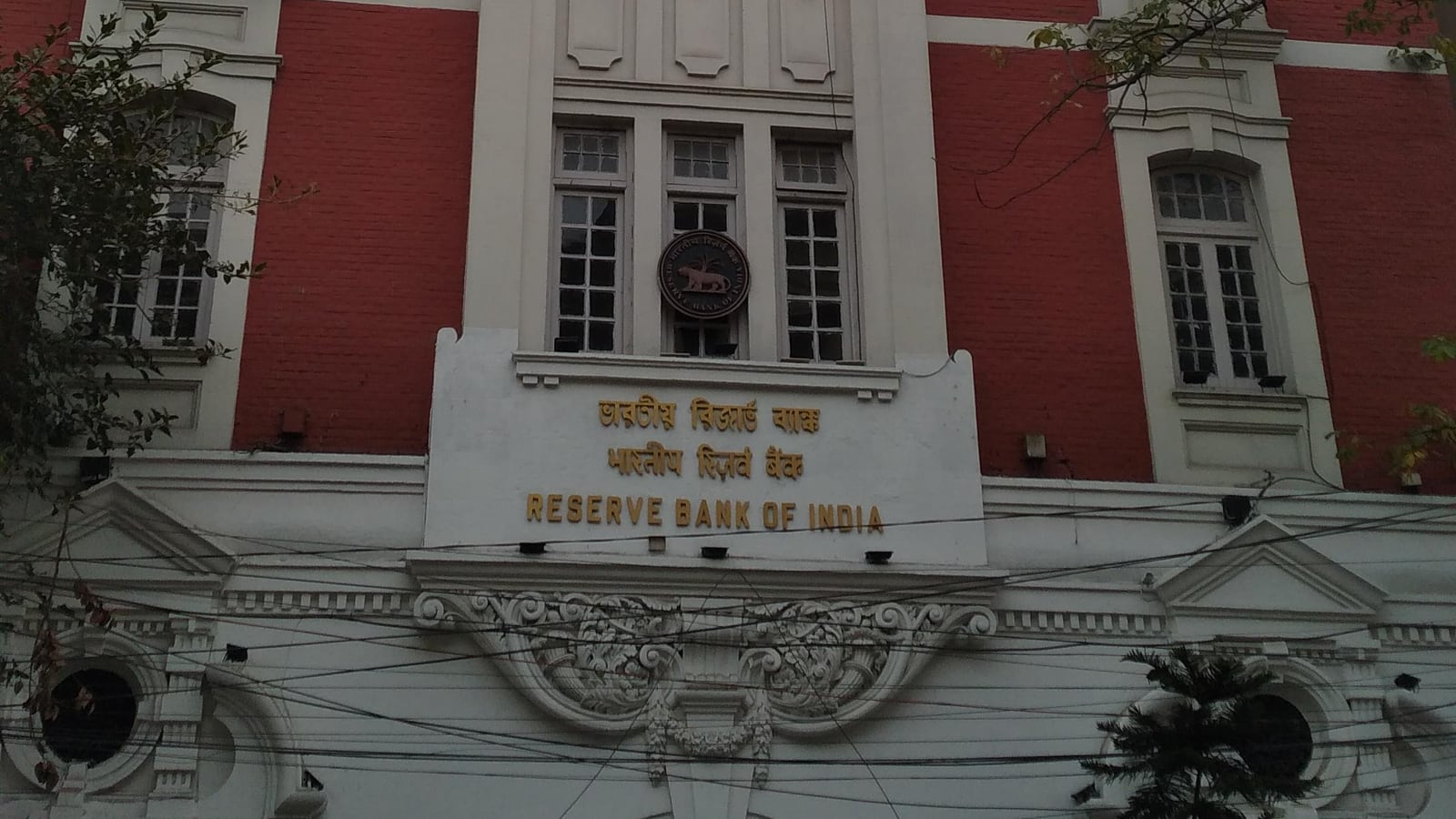
Photo: सुबोध कुलकर्णी / Wikimedia Commons, CC BY-SA 4.0 (cropped). File photo.
On 13 May 2026 the Reserve Bank of India issued A.P. (DIR Series) Circular No. 10 (RBI/2026-27/82), titled "Operating framework for facilitating Outward Remittance services by non-bank entities through Authorized Dealer (Category I) banks in India". It changes how every fintech app, website or software interface that helps you send money out of India must behave, and it moves the legal burden squarely onto the bank behind the app. For an NRI sending funds from an Indian account, or a resident family member paying an NRI child's bills abroad, the practical result is simple: the exchange-rate mark-up can no longer be hidden inside a single "all-in" rate.
This explainer sets out what the circular on rbi.org.in actually requires, how the Foreign Exchange Management Act, 1999 frames it, where income tax does and does not enter the picture, and what the new invoice should show you on every transfer. The worked numbers in the tables use a hypothetical exchange rate of Rs 100 per unit of foreign currency so that the arithmetic is easy to check; they are illustrations, not market quotes.
What changed on 13 May 2026
Before the circular, paragraph 10 of the Master Direction - Miscellaneous (Master Direction No. 19/2015-16 dated 1 January 2016) let a non-bank entity seek specific approval from RBI for a tie-up with an Authorised Dealer (AD) Category-I bank to offer outward remittance. Paragraph 3 of the May 2026 circular states that "on a review, it has been decided to dispense with the process of granting of the approvals", and paragraph 10 of the Master Direction "stands deleted with immediate effect".
In place of case-by-case approval, RBI published an Annex of 11 numbered instructions (plus a Part B on doorstep forex cards and currency notes) that every AD must follow when it uses a third party "in online mode (website/ online platform/ software application/ mobile application/ any other interface)" for cross-border outward remittance of funds for non-trade current account transactions.
FEMA / DTAA Position
The circular's legal base is stated in its paragraph 4: the directions are issued "under sections 10(4) and 11(1)" of the Foreign Exchange Management Act, 1999 (42 of 1999), the text of which is on indiacode.nic.in. Section 10 deals with authorised persons and section 11 with RBI's power to give them directions, which is why the obligations fall on the bank rather than directly on the app. Under section 5 of FEMA, current account transactions are generally permitted, with a short list of restricted items such as gambling and lotteries; the circular does not widen or narrow that list. A plain-English primer on the statute is in our FEMA glossary entry.
Three scope limits in the Annex matter for NRIs. First, the framework covers "non-trade current account transactions" only, so an online transfer for maintenance of a relative or a tuition payment falls inside it, while trade payments do not. Second, under Annex para 10, remittances are permitted "only for fund transfers originated from the remitter's bank account and ending at the beneficiary's bank account": cash pick-up or wallet-to-wallet routes are outside the channel. Third, under para 11, if the app operator is resident outside India it must be licensed by the regulator of the destination jurisdiction, where a licence is required there.
KYC remains the bank's job. Annex para 1 says the AD "shall remain solely responsible" for FEMA compliance and for KYC under A.P. (DIR Series) Circular No. 16 dated 28 November 2025.
Double taxation avoidance agreements (DTAAs) do not regulate the act of sending money; they allocate taxing rights over income. They become relevant only when the money being remitted is income earned in India, such as interest or capital gains, which is covered in the next section. The rates below come from the treaty figures held in Oquilia's research database; India retains the right to tax long-term capital gains under each of them, and none of these treaties makes such gains exempt in India. See our DTAA glossary entry for background.
| Treaty country | Interest (treaty rate) | Portfolio dividends | Long-term capital gains (India's rate) | Note from treaty data |
|---|---|---|---|---|
| United States (in force 12 Sep 1991) | 15% | 25% | 12.5% | Article 24: foreign tax credit in country of residence |
| United Kingdom (in force 26 Oct 1993) | 15% | 15% | 12.5% | Article 4 tie-breaker for dual residents |
| UAE (in force 22 Sep 1993) | 12.5% | 10% | 12.5% | TRC requires proof of UAE establishment |
Tax Treatment in India
The May 2026 circular contains no tax provision at all: none of its 4 paragraphs or 11 Annex instructions mentions income tax, TDS or TCS. Moving your own money through a compliant app does not by itself create taxable income. What tax law looks at is the character of the funds, so the questions are whether the money was income earned in India and whether the right tax was withheld or collected before it left.
Withholding on payments to non-residents. Section 195 of the Income-tax Act, 1961 governs withholding on sums paid to a non-resident; per Oquilia's statute catalogue the rule is withholding "under DTAA rates or rates in IT Act, whichever is lower". The Income-tax Act, 2025 replaced the 1961 Act from 1 April 2026, so readers dealing with tax year 2026-27 should confirm the corresponding section in the new Act on incometax.gov.in. For an NRI resident in the US, that means interest paid on an NRO deposit can be withheld at the 15% treaty rate instead of the domestic rate, provided treaty eligibility (including a tax residency certificate) is established.
NRO versus NRE income. Our NRO account glossary entry records that NRO interest is taxable in India at 30% plus surcharge and cess before DTAA relief, whereas the NRE account entry records NRE interest as tax-free in India. That difference decides whether tax must be cleared before a transfer, not the app you use.
Surcharge and cess. Where Indian income is taxed at slab or special rates, surcharge and a 4% health and education cess sit on top. The surcharge slabs held in Oquilia's rate configuration are:
| Total income band | Surcharge on tax | Cess on (tax + surcharge) |
|---|---|---|
| Rs 50 lakh to Rs 1 crore | 10% | 4% |
| Rs 1 crore to Rs 2 crore | 15% | 4% |
| Rs 2 crore to Rs 5 crore | 25% | 4% |
| Above Rs 5 crore, new regime | 25% (capped) | 4% |
Capital gains being remitted. If the money leaving India is the proceeds of selling listed equity, the gain was taxable in India before remittance: 12.5% on long-term gains above the Rs 1,25,000 annual exemption and 20% on short-term gains (Budget 2024 rates, effective 23 July 2024). Our NRI tax calculator runs those figures on your own numbers.
Tax collected at source on resident remitters. Resident individuals sending money abroad under the Liberalised Remittance Scheme, which has a USD 250,000 per financial year ceiling, may face TCS above a threshold. The thresholds and rates have been revised since the October 2023 changes, so check the current figures on incometax.gov.in before a large transfer; TCS is an advance tax that can be adjusted against your liability when you file.
The mark-up is a cost, not a tax. The FX mark-up and service charges an app levies are commercial charges. Paragraph 3(a) of the Annex now requires them to be itemised on the invoice "with descriptions without any ambiguity", which gives you a written record of the true cost of each transfer for your own accounts.
Tax Treatment Abroad
Your country of residence usually taxes its residents on worldwide income, and the treaties answer the overlap. In the US treaty data, Article 24 provides that a foreign tax credit is available in the country of residence, so Indian tax withheld on NRO interest at 15% can generally be claimed against US tax on the same income, subject to US limits. Our foreign tax credit calculator and DTAA benefit calculator model that interaction.
Two practical points follow from the circular. First, the per-transaction invoice required by Annex para 3 shows "the amount remitted by remitter and amount that will be credited in the beneficiary account" and "the name of the AD quoting the FX rate". If a foreign tax authority or bank asks you to evidence the source and conversion of funds received from India, that invoice is a cleaner document than an app screenshot.
What the invoice does not do is prove that Indian tax was paid. Evidence of tax withheld in India comes from your TDS certificates and the remittance forms filed through the income-tax portal (see our Form 15CA / 15CB entry) and keep those alongside the app invoice for every transfer made from an NRO balance, since the USD 1 million annual NRO limit is tracked per financial year.
Repatriation Mechanics
The circular deals with how a transfer is presented and settled; it does not change which Indian account balances you may send abroad. Those limits come from the account rules. Per our glossary, NRE and FCNR(B) balances, principal and interest, are fully repatriable, while NRO balances can be repatriated up to USD 1 million per financial year after tax clearance. Our repatriation calculator and NRO-to-NRE tool walk through the steps.
| Account | Repatriability | Tax on interest in India | Relevance to app transfers |
|---|---|---|---|
| NRE | Fully repatriable | Tax-free | App must still disclose rate, mark-up and charges |
| FCNR(B) | Fully repatriable | Tax-free | Held in foreign currency, so less conversion |
| NRO | Up to USD 1 million per financial year, after tax | Taxable (30% plus surcharge and cess before DTAA relief) | Tax clearance and forms come before the app transfer |
What you must see before you press "send". Annex para 2 requires five items to be "displayed prominently": (2.1) the name of the AD, its role, its authorisation status (Category-I or II) and the AD whose rate is used; (2.2) the rate quoted with timestamp and validity period; (2.3) total estimated cost with the interbank rate and the mark-up shown separately, plus service and other charges; (2.4) the exact foreign-currency amount to be credited and the maximum time to credit; and (2.5) the grievance officer's telephone number and email address, with dispute timelines.
How much the mark-up costs. The table below uses a hypothetical interbank rate of Rs 100 per unit and a Rs 5,00,000 transfer to show why RBI wanted the mark-up broken out. The "zero fee" offer is the most expensive of the three.
| Offer (hypothetical) | Fixed fee | Mark-up | Rate applied | Foreign currency credited | Mark-up cost | Total cost |
|---|---|---|---|---|---|---|
| A | Rs 500 | 0.5% | Rs 100.50 | 4,970.15 | Rs 2,485 | Rs 2,985 |
| B | Rs 500 | 1.5% | Rs 101.50 | 4,921.18 | Rs 7,382 | Rs 7,882 |
| C, "zero fee" | Rs 0 | 2.0% | Rs 102.00 | 4,901.96 | Rs 9,804 | Rs 9,804 |
Offer C costs Rs 6,819 more than Offer A on the same Rs 5,00,000, even though it advertises no fee. You can run your own quotes through our remittance cost calculator.
Where your money sits in transit. Annex para 9 requires the AD to "ringfence" remitter funds "from any kind of insolvency risks" and to ensure that funds "do not, at any stage, flow into the account of the third party in India". Para 8 requires the AD to ensure the remittance reaches the beneficiary's bank account within the timeline promised, and that the remitter can track the transfer if it runs late.
Who to complain to. Annex para 4.1 requires each AD to list on its homepage every third party it works with for online remittance, each one's role, and a grievance officer's telephone and email. Para 6 requires a formal grievance redressal framework under RBI guidelines. Because para 5.1 makes the AD liable for the app's acts and omissions, a complaint about a delayed or mispriced transfer can be taken to the bank named on your invoice.
For context on related 2026 changes for NRIs, see our pieces on rupee loans after becoming an NRI and the June 2026 FCNR(B) swap window.
FAQ
Does RBI still approve fintech remittance apps individually?
No. Paragraph 3 of the 13 May 2026 circular dispensed with RBI approval for non-bank tie-ups and deleted paragraph 10 of Master Direction No. 19/2015-16 with immediate effect. The bank (AD) using the app must instead comply with the 11 instructions in the Annex.
What exactly must the app show me about the exchange rate?
Under Annex paras 2.2 and 2.3, the quoted rate with its timestamp and validity period, and the total cost with the interbank rate and mark-up shown separately, plus every other charge.
Will I get an invoice for every transfer?
Yes. Annex para 3 requires one for every transaction, with the same rate and charges break-up, the amount credited, the maximum credit time in hours and the AD's name.
Who is responsible if the app delays or loses my money?
The bank. Annex para 5.1 makes the AD "fully responsible and liable for all acts and omissions of the third party", para 9 requires remitter funds to be ringfenced from insolvency risk, and para 8 requires tracking for delayed transfers. The grievance officer's telephone and email must be shown under para 2.5.
Does the circular change NRO repatriation limits or tax on remittances?
No. The circular contains no tax provision and does not alter account rules. NRO repatriation remains capped at USD 1 million per financial year after tax clearance, per our glossary, and withholding on payments to non-residents follows the lower of the DTAA rate or the domestic rate (section 195, IT Act 1961).
Can I send money from a wallet or pay cash to the app?
Not under this framework. Annex para 10 permits remittances "only for fund transfers originated from the remitter's bank account and ending at the beneficiary's bank account".
Sources & Citations
- Operating framework for facilitating Outward Remittance services by non-bank entities through Authorized Dealer (Category I) banks in India (A.P. (DIR Series) Circular No. 10, 13 May 2026) — Reserve Bank of India
- Foreign Exchange Management Act, 1999 — India Code
- Income Tax Department e-filing portal — Income Tax Department