

Overstayed the company flat after retirement? When penal rent can be deducted from gratuity, per the Supreme Court in ONGC v. Warrier
In ONGC v. Warrier (2005), the Supreme Court let ONGC take a retiree's entire Rs 1 lakh gratuity for loan dues and penal rent, because a statutory rule allowed it. What it means for you.
Key points
- The Supreme Court on 20 April 2005 upheld ONGC's deduction of loan dues and penal rent from a retired officer's gratuity in ONGC v. Warrier.
- Penal rent of Rs 5,100 a month, 75% of basic pay, plus loan dues consumed his whole Rs 1,00,000 gratuity and left Rs 5,196 owing.
- The ruling rested on a statutory regulation allowing recovery, so retirees should check their own employer's rules before overstaying.
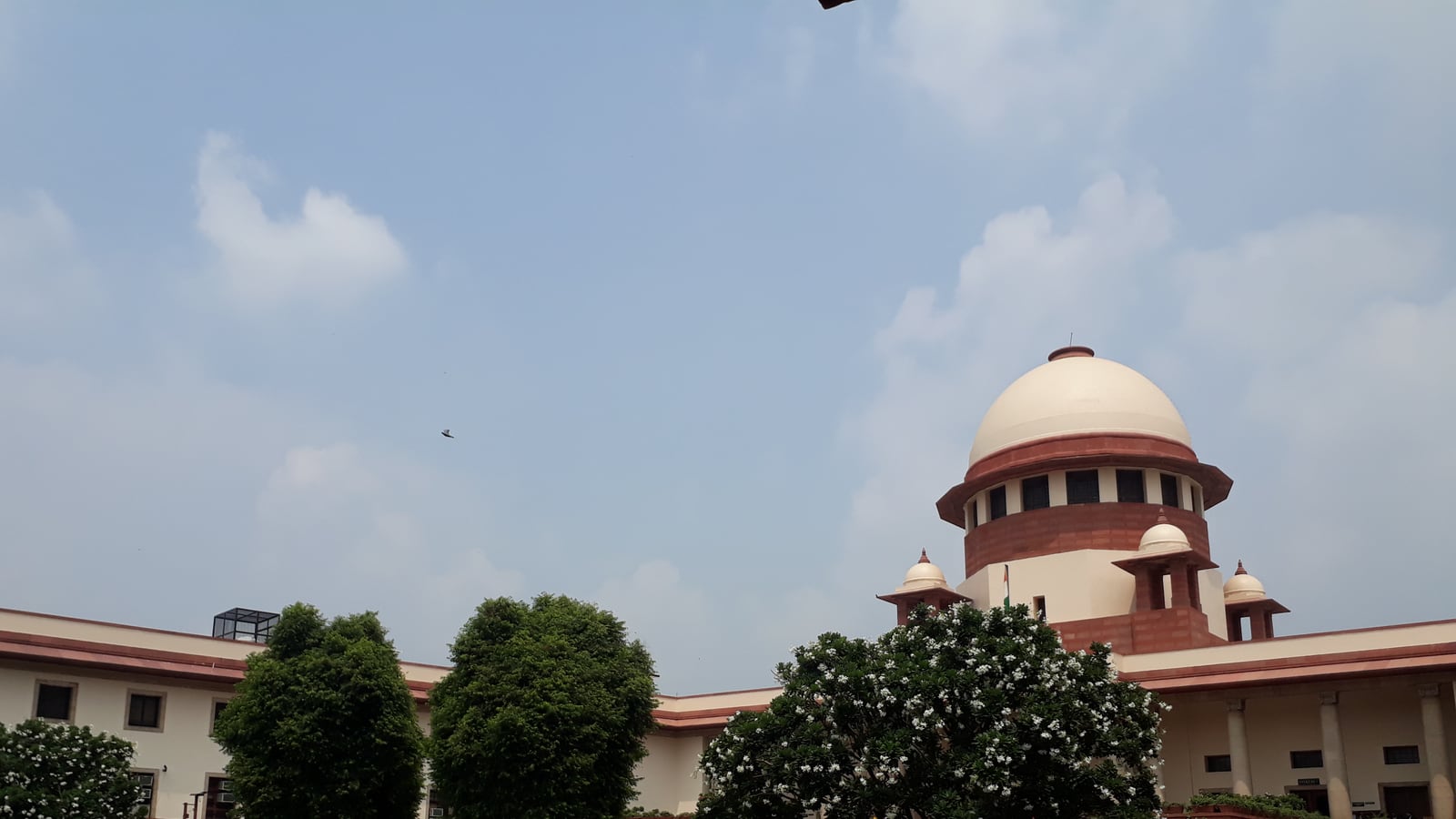
Photo: Pinakpani / Wikimedia Commons, CC BY-SA 4.0 (cropped). File photo.
Retiring from a company that housed you raises a question most exit checklists skip: what happens to your gratuity if you stay in the company flat beyond the date you were told to leave? On 20 April 2005, in Secretary, O.N.G.C. Ltd. v. V.U. Warrier, (2005) 5 SCC 245, a two-judge bench of the Supreme Court (Ruma Pal J and C.K. Thakker J, who wrote the judgment) answered it for one retiree: his entire gratuity of Rs 1,00,000 was lawfully swallowed by loan dues and penal rent, leaving him owing a further Rs 5,196. The full judgment is on Indian Kanoon.
The ruling is narrower than it first looks. It did not say any employer may help itself to gratuity. It said this employer could, because a statutory regulation gave it that power. This guide explains that distinction, the tax position on gratuity under the Income-tax Act, 2025, and what an overstay costs in a worked drawdown at the current Senior Citizens' Savings Scheme rate of 8.2%.
The Scheme Explained
Gratuity is a lump sum paid at the end of service. It reaches an employee through one of three routes, and which route applies decides whether an employer can deduct anything from it. You can estimate your own figure with the gratuity calculator, and the gratuity glossary entry sets out the terms.
| Route | Who it covers | Formula | Ceiling |
|---|---|---|---|
| Code on Social Security, 2020 (Chapter V), in force from 21 November 2025 | Employees of covered establishments | 15 days' wages per completed year (monthly wages / 26 x 15), section 53(2) | Rs 20 lakh as notified, section 53(3) |
| Government gratuity rules | Holders of a government post covered by other gratuity rules (Explanation 1 to section 53) | Under the relevant service rules | Under those rules |
| Contract or employer's own regulations | Everyone outside the Code, and anyone whose employer pays more under an award, agreement or contract (section 53(5)) | As the scheme or contract sets | As the scheme sets |
The Code repealed the Payment of Gratuity Act, 1972 through section 164, and carries the same core rules: five years' continuous service is needed (section 53(1)), except on death, disablement or the end of a fixed-term contract.
Why the route mattered for Mr Warrier
Mr Warrier retired as Additional Director (Finance and Accounts) of the Oil and Natural Gas Commission on 28 February 1990. His gratuity came from the ONGC (Death, Retirement and Terminal Gratuity) Regulations, 1969, framed under section 32(1) of the Oil and Natural Gas Commission Act, 1959. In 1975, in Sukhdev Singh v. Bhagatram Sardar Singh Raghuvanshi, [1975] 1 SCC 421, a Constitution Bench had held those regulations to be statutory and enforceable in court.
Regulation 5, quoted in the 2005 judgment, gave the appointing authority "the right to make recovery of Commission's dues before the payment of the death-cum retirement gratuity due in respect of an officer even without obtaining his consent". That single sentence decided the case.
The Payment of Gratuity Act did not help him. In 1990, section 2(e) of that Act covered only employees earning wages "not exceeding two thousand five hundred rupees per mensem", and excluded anyone "employed in a managerial or administrative capacity". His basic pay was about Rs 6,800 a month. The wage ceiling was removed by an amendment in 1994, which the court held was not retrospective, so the 1972 Act's protections never reached him.
What the Supreme Court Decided
The facts, taken from the judgment, run on a tight timeline.
| Date | Event |
|---|---|
| 10 December 1982 | Quarter allotted |
| 28 February 1990 | Retirement on superannuation |
| 30 June 1990 | Last date to vacate under ONGC's four-month policy |
| 1990-91 | Retention request rejected; warning that penal rent at 75% of basic pay would be charged; eviction proceedings under the Public Premises (Eviction of Unauthorised Occupants) Act, 1971 |
| 16 May 1991 | Quarter vacated after an undertaking given in those proceedings |
| 15 February 2003 | Bombay High Court (Writ Petition No. 3947 of 1994, ex parte) holds the deduction illegal and orders payment with 6% interest |
| 20 April 2005 | Supreme Court allows ONGC's appeals (Civil Appeal Nos. 2766-2767 of 2005) |
ONGC's arithmetic, reproduced in the judgment, consumed the whole gratuity.
| Item | Amount (Rs) |
|---|---|
| Gratuity payable under the 1969 Regulations | 1,00,000 |
| Less: outstanding house-building advance at 28 February 1990 | 23,000 |
| Less: overdue interest at 6% a year | 27,744 |
| Net after loan dues | 49,256 |
| Less: permissive occupation, 1 March to 30 June 1990 (Rs 205 x 4 months) | 820 |
| Less: unauthorised occupation, 1 July 1990 to mid-May 1991 at Rs 5,100 a month | 53,632 |
| Deficit recoverable from the retiree | 5,196 |
The Rs 5,100 monthly charge was 75% of his Rs 6,800 basic pay. ONGC explained the figure in its affidavit: it paid 30% of basic pay as house rent allowance to staff it could not house, recovered about 7.5% from those it did house, and charged double the 37.5% total, or 75%, as liquidated damages for unauthorised occupation.
The Bombay High Court had relied on State of Kerala v. M. Padmanabhan Nair, (1985) 1 SCC 429, and R. Kapur v. Director of Inspection (Painting & Publication), Income Tax, (1994) 6 SCC 589, which treat retirement benefits as a right rather than a "bounty". The Supreme Court accepted that principle in terms: gratuity "cannot be said to be 'bounty'" and "ordinarily, therefore, payment of benefit of gratuity cannot be withheld by an employer". It then held that Regulation 5 "leaves no room of doubt" that ONGC could recover its dues without consent, and that on these facts the action was not "arbitrary, unlawful or unreasonable".
On a second ground, the court held the High Court "wholly unjustified" in using its discretionary writ jurisdiction under Article 226 of the Constitution for a retiree who had ignored a written warning and left only after eviction proceedings. The appeals were allowed, the writ petition dismissed and no costs awarded.
The takeaway in one line
The result turned on a statutory recovery rule. Where an employer has no rule of that kind, the starting point is the general principle the court restated: gratuity is a right and ordinarily cannot be withheld. The 2005 judgment itself noted that the High Court had reserved ONGC's right to recover the occupation charges "in accordance with law", which is that separate route.
Tax on Withdrawal
Gratuity is not withdrawn in instalments like a provident fund, but it is taxed when received. From 1 April 2026, the exemptions sit in section 19(1) of the Income-tax Act, 2025, which replaced the old section 10(10). The table draws on the section 19 page on the Income Tax Department's portal; filing itself runs through incometax.gov.in.
| Who receives it | Table entry, section 19(1) | Exempt amount |
|---|---|---|
| Government servant (death-cum-retirement gratuity) | Serial 3 | Exempt in full |
| Employee covered by the gratuity law | Serial 5 | Amount worked out under that law, capped at Rs 20 lakh |
| Any other employee | Serial 6 | Least of the amount received, Rs 20 lakh and half a month's salary for each completed year |
Anything above the exempt figure is added to salary income and taxed at slab rates. Under the new regime for the tax year 2026-27 (section 202(1)), income up to Rs 4 lakh is taxed at 0%, Rs 4-8 lakh at 5%, Rs 8-12 lakh at 10%, Rs 12-16 lakh at 15%, Rs 16-20 lakh at 20%, Rs 20-24 lakh at 25% and above Rs 24 lakh at 30%, plus 4% cess. The rebate removes tax entirely where total income is up to Rs 12 lakh, to a maximum of Rs 60,000. The standard deduction on salary or pension is Rs 75,000 in the new regime and Rs 50,000 in the old.
Two points follow for anyone facing a deduction like Mr Warrier's.
- The judgment says nothing on tax. The 2005 ruling deals only with the right to recover. How a deduction is reported for tax is a separate question; the employer's Form 16 shows what it reported, and that is the first document to check.
- The Rs 20 lakh figure caps the exemption, not what every employer may pay. Section 53(5) of the Code lets an employer pay more under a contract. Any excess over Rs 20 lakh is taxable.
Worked Drawdown
The numbers below are illustrative and assume a private-sector employee covered by the Code who retires with gratuity at the Rs 20 lakh ceiling, invests the net amount in the Senior Citizens' Savings Scheme at the current 8.2% (rate for October-December 2026, next review 1 January 2027), and draws only the interest. The rate is assumed constant, which it will not be. For your own figures, try the retirement drawdown calculator or the SCSS calculator.
Assume the employer's rules, like ONGC's Regulation 5, allow it to recover dues from gratuity, and that the retiree overstays a company flat by 10 months at an assumed penal rent of Rs 60,000 a month. That is Rs 6 lakh recovered, leaving Rs 14 lakh.
| Year | Corpus, no overstay (Rs) | Interest at 8.2% (Rs) | Corpus after Rs 6 lakh deduction (Rs) | Interest at 8.2% (Rs) | Income lost (Rs) |
|---|---|---|---|---|---|
| 1 | 20,00,000 | 1,64,000 | 14,00,000 | 1,14,800 | 49,200 |
| 2 | 20,00,000 | 1,64,000 | 14,00,000 | 1,14,800 | 49,200 |
| 3 | 20,00,000 | 1,64,000 | 14,00,000 | 1,14,800 | 49,200 |
| 4 | 20,00,000 | 1,64,000 | 14,00,000 | 1,14,800 | 49,200 |
| 5 | 20,00,000 | 1,64,000 | 14,00,000 | 1,14,800 | 49,200 |
| Total | 8,20,000 | 5,74,000 | 2,46,000 |
Paid quarterly, the interest is Rs 41,000 in the first case and Rs 28,700 in the second. Over five years the overstay costs the Rs 6 lakh deducted plus Rs 2,46,000 of lost interest, or Rs 8,46,000 in all.
Compare that with moving out on time and renting privately. At an assumed Rs 40,000 a month, 10 months would cost Rs 4 lakh, paid from monthly cash flow while the full Rs 20 lakh earns Rs 1,64,000 a year. On these assumptions the overstay is Rs 2 lakh dearer before counting the lost interest, and Rs 4,46,000 dearer after five years.
Tax on the drawdown
SCSS interest is taxed at slab rates. In the first case the retiree's interest of Rs 1,64,000 is well inside the Rs 12 lakh rebate threshold in the new regime, so with no other income no tax is due. The gratuity itself, at Rs 20 lakh and under the gratuity law, is exempt under serial 5 of section 19(1). For a retiree with a pension as well, the annuity vs SWP calculator helps compare income routes, and the pension glossary entry explains the terms.
What to check before your last working day
- Find the recovery rule. Ask HR in writing which regulation, rule or contract clause, if any, lets the employer recover dues from gratuity. In Warrier it was Regulation 5 of the 1969 Regulations.
- Get the retention period in writing. ONGC allowed four months, to 30 June 1990. Know your date.
- Get the penal rate in writing. ONGC's was 75% of basic pay, set by an office order dated 30 January 1990.
- Clear or schedule loans. In Warrier, Rs 50,744 of the Rs 1,00,000 went on the house-building advance and its interest before rent was counted.
- If retention is refused, respond in writing. The court weighed the fact that representations were rejected and a warning ignored.
FAQ
Can my employer deduct penal rent from my gratuity?
Only where a rule allows it. In ONGC v. Warrier (20 April 2005), the Supreme Court upheld the deduction because Regulation 5 of ONGC's statutory 1969 Regulations allowed recovery of the Commission's dues without consent. Where no such rule exists, the general principle applies: the court accepted that gratuity is a right, not a bounty, and ordinarily cannot be withheld.
Is gratuity a "bounty" the employer can withhold at will?
No. The court said in terms that gratuity "cannot be said to be 'bounty'" and ordinarily cannot be withheld. The ONGC deduction survived only because of the statutory regulation.
How was the penal rent of Rs 5,100 a month worked out?
It was 75% of basic pay of Rs 6,800. ONGC paid 30% of basic pay as house rent allowance to staff it could not house, recovered about 7.5% from those it did, and doubled the 37.5% total as liquidated damages for unauthorised occupation.
Why did the Payment of Gratuity Act not protect Mr Warrier?
In 1990, section 2(e) of the 1972 Act covered only staff earning up to Rs 2,500 a month and excluded managerial or administrative staff. His basic pay was about Rs 6,800. The wage limit was removed in 1994, but not retrospectively.
Which law governs gratuity now?
The Code on Social Security, 2020, in force from 21 November 2025, which repealed the 1972 Act through section 164. Section 53 sets the 15-days-per-year formula and the Rs 20 lakh notified ceiling.
How much gratuity is tax-free?
From 1 April 2026, section 19(1) of the Income-tax Act, 2025 exempts a government servant's gratuity in full; gratuity under the gratuity law up to the amount worked out under it, capped at Rs 20 lakh; and other gratuity up to the least of the amount received, Rs 20 lakh and the half-month measure.
Will the High Court always step in if gratuity is withheld?
Not necessarily. Relief under Article 226 is discretionary. In Warrier, the Supreme Court held the High Court "wholly unjustified" in granting it to a retiree who ignored a warning and left only after eviction proceedings.
This article explains a court judgment and the law as published; it is not legal or tax advice. Your rights depend on the rules and contract that govern your own employment.
Sources & Citations
- Secretary, O.N.G.C. Ltd. and Anr. v. V.U. Warrier, 20 April 2005 — Indian Kanoon
- Income-tax Act, 2025, section 19 — Income Tax Department
- Income Tax e-Filing portal — Income Tax Department