

Form 19: how a semiconductor wafer fab gets notified as a specified business for the section 46 deduction
Form No. 19 gets a semiconductor wafer fab notified under section 46(11)(d)(xiii) of the Income-tax Act, 2025. Rule 36(6) conditions, the five panels, a worked example and common mistakes.
Key points
- The CBDT notifies a semiconductor wafer fabrication unit as a specified business under section 46(11)(d)(xiii) only after it applies in Form No. 19.
- Rule 36(6) of the Income-tax Rules, 2026 requires MSIPS approval, exclusive wafer fabrication, Indian facilities and production from 1 April 2014.
- Once notified, the unit can deduct the whole of its capital expenditure, excluding land and goodwill, but its assets must stay in the business for 8 years.
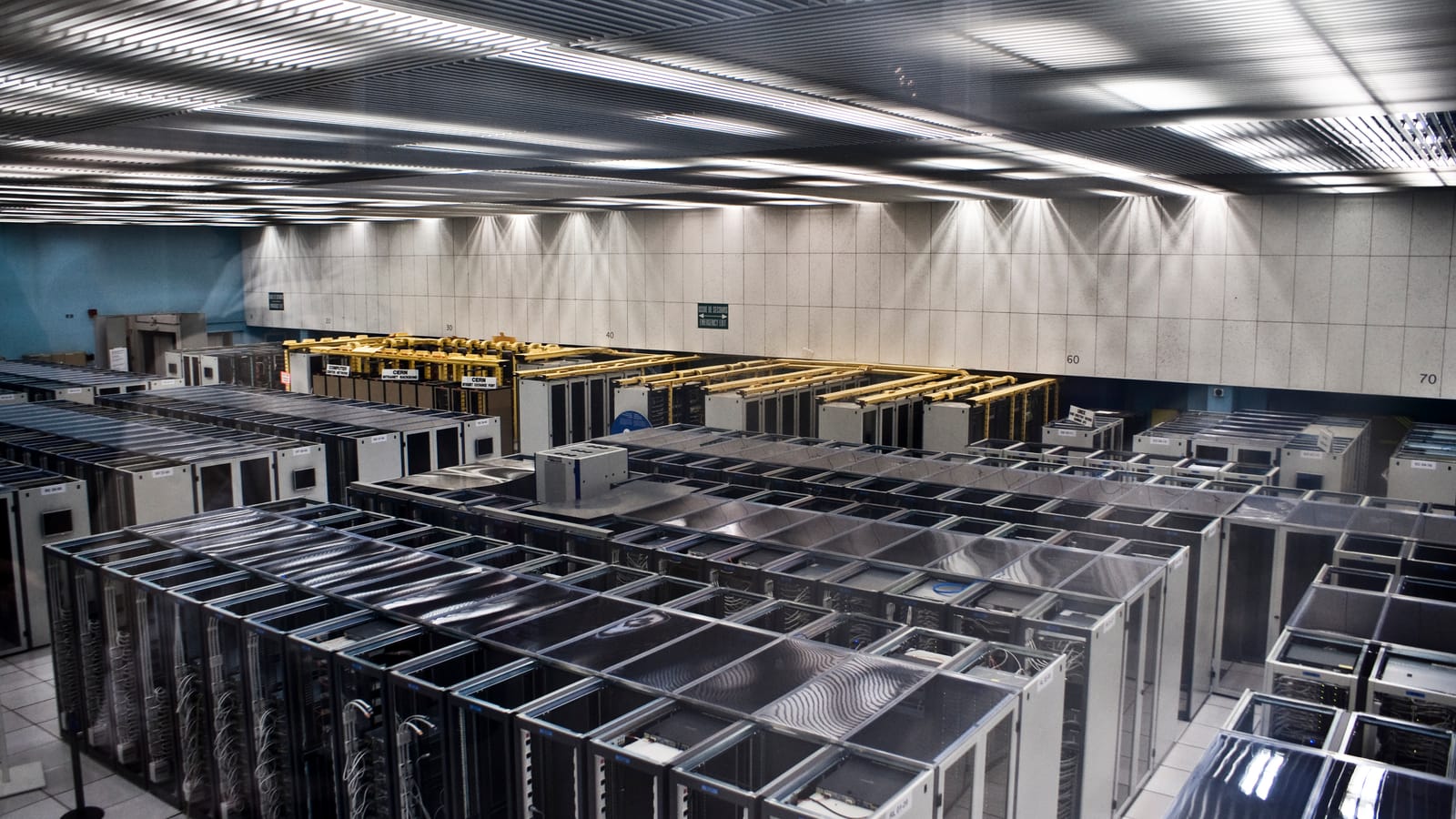
Photo: Florian Hirzinger - www.fh-ap.com / Wikimedia Commons, CC BY-SA 3.0 (cropped). Representational image.
A semiconductor wafer fabrication unit can deduct the whole of its qualifying capital expenditure under section 46 of the Income-tax Act, 2025, but only after the Central Board of Direct Taxes (CBDT) notifies it as a "specified business" under section 46(11)(d)(xiii). That notification starts with one filing: Form No. 19 on the e-filing portal. This guide covers what section 46 and rule 36 of the Income-tax Rules, 2026 require, how the five-panel form works, and the errors that most often hold up approval.
What the Section Says
Section 46(1) lets an assessee elect to deduct "the whole of the capital expenditure" incurred wholly and exclusively for a specified business in the tax year it is incurred. The specified businesses are listed in the table in section 46(6). Row 11 is "setting up and operating a semi-conductor wafer fabrication manufacturing unit", notified by the Board under prescribed guidelines, for operations starting on or after 1 April 2014.
The deduction comes with five statutory guardrails:
| Provision | What it requires |
|---|---|
| Section 46(3)(a) | The business must not be set up by splitting up or reconstructing an existing business |
| Section 46(3)(b) read with 46(11)(f) | It must not be set up by transferring used plant or machinery, but used items up to 20% of the total plant value are allowed |
| Section 46(4) | Once the deduction is claimed and allowed, no Chapter VIII-C deduction is available for that business in that or any other year |
| Section 46(5) | The same expenditure cannot be deducted again under any other section, or under section 46 in another year |
| Section 46(9) | Assets must be used only for the specified business for 8 years from the tax year of acquisition or construction |
Section 46(11)(g) defines "capital expenditure" so that it excludes spending on land, goodwill or a financial instrument. It also excludes any payment to a person in a day that goes over Rs 10,000 and is not made through the specified banking or online modes.
What rule 36(6) adds
Rule 36 of the Income-tax Rules, 2026 sets out how both affordable housing projects (section 46(11)(d)(vii)) and semiconductor wafer fabrication units (section 46(11)(d)(xiii)) get notified. Under rule 36(6), a unit qualifies for notification only if it meets all four of these conditions:
- It is set up exclusively to manufacture semiconductor wafer fabrications.
- It has prior approval from the competent authority, given on the recommendation of the Appraisal Committee under the Modified Special Incentive Package Scheme (MSIPS) notified by the Department of Electronics and Information Technology.
- Its commercial production starts on or after 1 April 2014.
- It may have one or more manufacturing facilities, but every one of them must be in India.
Rule 36(8) defines "semi-conductor wafer fabrications" as integrated circuits under NIC 2008, Division 26, Group 261, Class 2610, Sub-class 26103.
The procedure in rule 36(2)
The application goes in Form No. 19 to the Member (IT), CBDT, New Delhi. If the Board finds a deficiency, it serves a letter, and the applicant has one month from the end of the month in which the letter was served to fix it. The Board then notifies the unit or rejects the application, recording its reasons in writing. Approval can be withdrawn if the MSIPS approval is withdrawn, if the business stops, or if its activities are not genuine. Under rule 36(2)(i), the applicant must be heard before any rejection, invalidation or withdrawal.
Rule 36(3) requires separate books of account showing full details of capital expenditure for every tax year in which the deduction is claimed. It also requires the return to be filed on time.
Filing Form No. 19 on the portal
The Form No. 19 user manual on incometax.gov.in sets three prerequisites: a registered e-filing account, a PAN with "Active" status, and a valid DSC registered on the portal if you plan to verify with a DSC. The path is e-File, then Income Tax Forms, then File Income Tax Forms, then the "Forms as per Income Tax Act, 2025" tab, then Form No. 19, then "File now". You then pick the Tax Year.
| Panel | Contents |
|---|---|
| 1. Particulars of the Assessee | Partly prefilled from "My Profile"; if you edit the profile, delete the draft and start again |
| 2. Particulars of the Specified Business | Name and address of the business |
| 3. Details of Proposed Unit | Locations of up to 50 units, added with "Add Details" |
| 4. Fulfilment of Conditions | Field 13 lists the rule 36(6) conditions, each answered Yes or No; Fields 14(a) and 14(b) open only if Field 13(b) is Yes |
| 5. Attachment and Declaration | Supporting documents and the signed declaration |
When all 5 panels show "completed", click Preview, then "Proceed To E-Verify". You can verify by OTP, EVC or DSC, depending on the PAN that is logged in. The portal then issues a Transaction ID and an Acknowledgement Receipt Number (ARN). The filed form appears under View Filed Forms, in the Income Tax Act 2025 tab. The preview PDF is only a pre-filing copy. The portal's DSC registration guide explains how to register a signing certificate before you start.
Worked Example
The figures below are invented for illustration. Fab Co. Ltd. holds MSIPS approval and starts commercial production in tax year 2026-27. In that year it spends the following:
| Item | Amount (Rs crore) | Counts under section 46? |
|---|---|---|
| Land for the campus | 400 | No: land is excluded by section 46(11)(g) |
| Clean-room building | 1,200 | Yes |
| New lithography and etch tools | 6,000 | Yes |
| Used deposition tools imported from an overseas plant | 900 | Yes, if the 20% test is met |
| Goodwill paid on buying a design team | 50 | No: goodwill is excluded |
| Total spend | 8,550 |
Step 1: the 20% used-plant test. Total plant and machinery is Rs 6,000 crore plus Rs 900 crore, or Rs 6,900 crore. The used tools make up 900 / 6,900 = 13.04% of that, which is below the 20% ceiling in section 46(11)(f). The condition in section 46(3)(b) is therefore treated as met.
Step 2: the eligible capital expenditure. That is Rs 1,200 crore + Rs 6,000 crore + Rs 900 crore = Rs 8,100 crore. Of the Rs 8,550 crore spent, Rs 450 crore (land plus goodwill) is left out.
Step 3: the cash rule. Say a site contractor was paid Rs 18,000 in cash on a single day. That payment goes over the Rs 10,000 limit in section 46(11)(g)(i), so it comes out of the eligible pool.
Step 4: what if the used plant were larger? If Fab Co. had brought in Rs 2,000 crore of used tools alongside Rs 6,000 crore of new tools, the used share would be 2,000 / 8,000 = 25%. That is above the 20% limit, so the business would fail section 46(3)(b) and the deduction would be at risk.
Step 5: the 8-year rule. Suppose that in tax year 2030-31, within 8 years of acquisition, a tool costing Rs 300 crore is moved to a non-specified product line. Section 46(9)(b) then treats Rs 300 crore, minus the depreciation section 33 would have allowed, as business income for 2030-31. You can check depreciation concepts in the Oquilia glossary on depreciation.
Fab Co. must also file Form No. 19 and keep separate books under rule 36(3). Without the notification, none of the Rs 8,100 crore is deductible under section 46. Use the income tax calculator and the advance tax calculator to plan the instalments in the years before and after the claim.
Common Mistakes
These 9 errors most often delay or defeat a section 46 claim for a fab unit:
| Mistake | Why it hurts | Provision |
|---|---|---|
| Claiming the deduction before the unit is notified | Notification under 46(11)(d)(xiii) is what makes the unit a specified business | Section 46(6), row 11 |
| Answering "Yes" in Field 13 without MSIPS approval papers | Approval can be refused, or later withdrawn if MSIPS approval goes | Rule 36(6)(b), rule 36(2)(h) |
| Including land or goodwill in the capital expenditure | Both are excluded by definition | Section 46(11)(g) |
| Paying vendors over Rs 10,000 a day in cash | Those payments drop out of capital expenditure | Section 46(11)(g)(i) |
| Moving in used plant worth more than 20% of the total | Section 46(3)(b) is then breached | Section 46(11)(f) |
| Also claiming a Chapter VIII-C deduction for the same business | Section 46(4) bars it for the same and later years | Section 46(4) |
| Keeping one combined set of books | Rule 36(3) requires separate accounts with capital expenditure details | Rule 36(3) |
| Missing the one-month deficiency deadline | The deficiency stays uncured and the application can be rejected | Rule 36(2)(b)-(c) |
| Editing "My Profile" mid-draft | The manual says to delete the draft and file afresh | Form No. 19 user manual, Step 8 |
There is one more trap, and it is not on the form. Rule 36(6)(a) requires the unit to be "exclusively" for wafer fabrication. A plant that also runs assembly, testing or packaging lines needs careful structuring, because "exclusively" is a condition on the unit itself and not only on the expenditure. Use the Oquilia glossary on tax deductions for the general difference between a deduction and an exemption, and read about carrying forward losses if the year-one deduction is larger than your income.
FAQ
What is Form No. 19 under the Income-tax Act, 2025?
Form No. 19 is the application to have a semiconductor wafer fabrication manufacturing unit notified as a specified business under section 46(11)(d)(xiii). The Income Tax Department's user manual says filing it is necessary to claim the section 46 deduction.
Who approves a Form No. 19 application?
It goes to the Member (IT), CBDT, New Delhi, under rule 36 of the Income-tax Rules, 2026. The Board either notifies the unit or rejects the application with written reasons, and it must hear the applicant before any rejection.
Is MSIPS approval mandatory?
Yes. Rule 36(6)(b) requires the competent authority's prior approval, given on the Appraisal Committee's recommendation under the Modified Special Incentive Package Scheme. If that approval is withdrawn, the Board can withdraw the notification under rule 36(2)(h).
How many locations can one Form No. 19 cover?
Panel 3 accepts the locations of up to 50 units. Rule 36(6)(d) allows more than one manufacturing facility, but every facility must be in India.
How much can be deducted under section 46?
Section 46(1) allows the whole of the capital expenditure incurred wholly and exclusively for the specified business in that tax year. It excludes land, goodwill, financial instruments and non-banking payments over Rs 10,000 a day.
How do I verify and track Form No. 19?
Verify by OTP, EVC or DSC after Preview, then note the Transaction ID and the ARN. The filed form is under e-File, then View Filed Forms, in the Income Tax Act 2025 tab. The portal's e-verification guide covers each verification mode.
Does section 46 work differently from old section 35AD?
The structure matches section 35AD of the 1961 Act, and the semiconductor commencement date is still 1 April 2014. What changed is the numbering: the notification sits in section 46(11)(d)(xiii), and the conditions sit in rule 36 of the 2026 Rules.
This article explains the statutory position as of 27 November 2026. It is not tax advice. Check the current text of the Income-tax Act, 2025 and the Income-tax Rules, 2026 before you file.
Sources & Citations
- Form No.19 User Manual — Income Tax Department
- How to register DSC on the e-filing portal — Income Tax Department
- How to e-Verify — Income Tax Department