

NCLT Indore refuses to wind up Sai Prakash Properties, defers to SEBI
NCLT Indore dismissed a petition to wind up Sai Prakash Properties, holding that SEBI's refund process and a Supreme Court committee already cover investor claims.
Key points
- The NCLT Indore Bench on 5 November 2026 dismissed a shareholder's petition to wind up Sai Prakash Properties Development Ltd.
- SEBI's final order of 29 July 2019, as recorded by the NCLT, found the company collected at least Rs 111.55 crore through an unregistered collective investment scheme.
- Investor claims stay with SEBI's refund process and the Supreme Court's Special Committee, and the tribunal said winding up is a last resort.
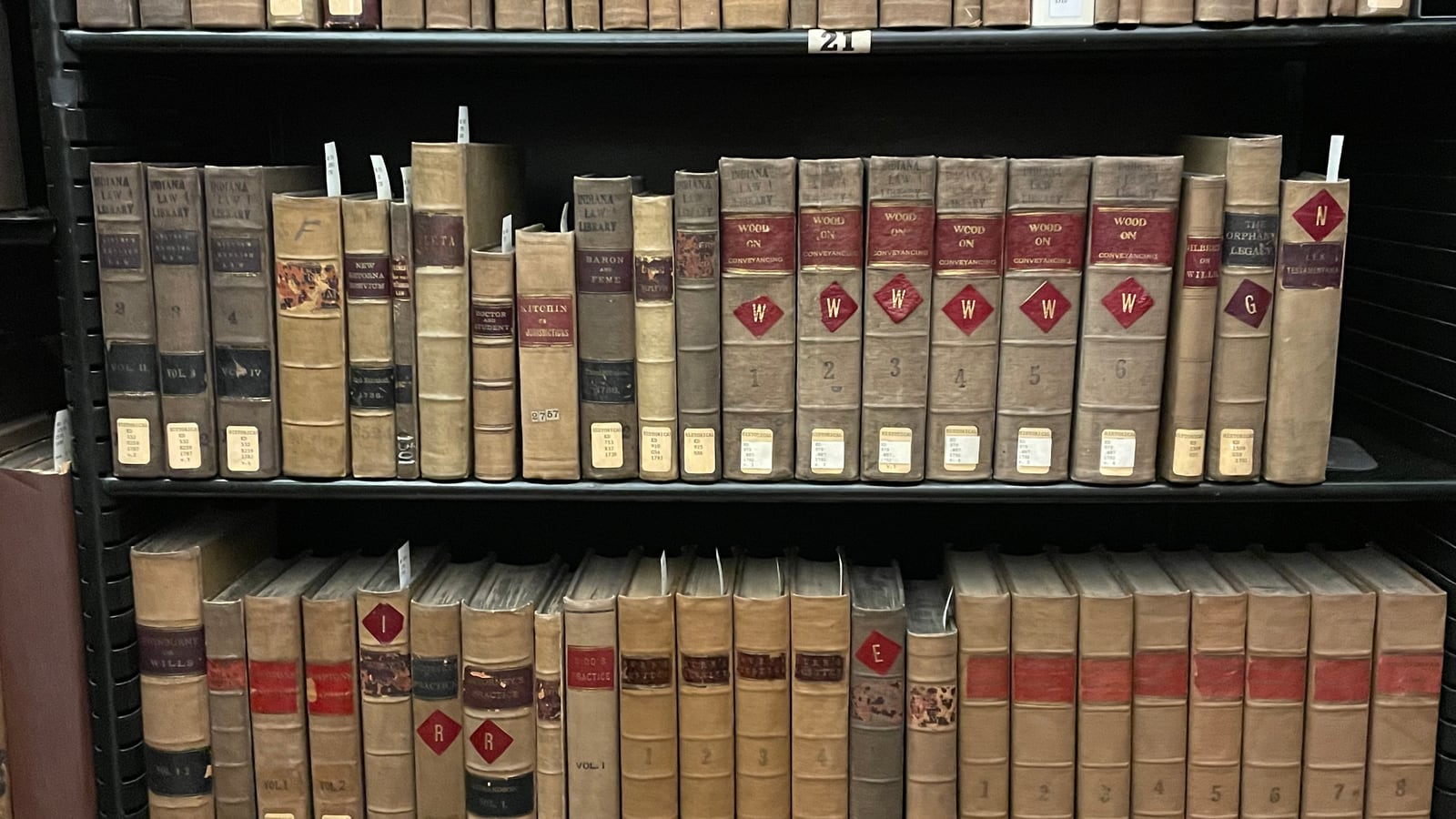
Photo: Dominic / Wikimedia Commons, CC0 1.0 (cropped). Representational image.
The Enforcement Action
The Indore Bench of the National Company Law Tribunal (NCLT) has refused to order the winding up of Sai Prakash Properties Development Ltd, a Bhopal-registered company that the Securities and Exchange Board of India (SEBI) found had run an unregistered collective investment scheme. In an order pronounced on 5 November 2026 in Company Petition No. 12 of 2023, a bench of Member (Judicial) Brajendra Mani Tripathi and Member (Technical) Man Mohan Gupta dismissed a petition filed by a shareholder under Sections 271 to 273 of the Companies Act, 2013.
The tribunal held that the petition was maintainable but declined to exercise its discretion. According to the order, SEBI's refund and recovery process, together with a Special Committee constituted by the Supreme Court for the wider Sai Prakash group, is already pursuing the same goal the petitioner sought: closing the scheme and returning money to investors. The bench said winding up "is a last resort, not a first one".
The underlying regulatory matter dates back to 2014. As the NCLT order records, SEBI's final order dated 29 July 2019 found, on a bank-statement analysis, that the company had collected at least Rs 111,54,96,435 (about Rs 111.55 crore) from the public. SEBI directed the company and its directors to wind up the schemes and refund investors with the returns due.
No one appeared for the company before the tribunal; the order lists "None" against the respondents' appearance. The company has not publicly responded to the order.
How the Scheme Worked
SEBI's involvement began with a tip-off from the Reserve Bank of India. According to SEBI's interim order dated 26 December 2014 (WTM/SR/CIS/WRO/119/12/2014), RBI informed SEBI on 12 December 2013 about fund mobilisation from the public by the company "under the garb of investment in land". RBI later forwarded complaints relating to the company's activities in Madhya Pradesh and noted that it was still raising money in Chhattisgarh.
The product at the centre of the case was a "Joint Ventureship Scheme". According to the interim order, investors paid a "participation amount", either in instalments or as a lump sum, under plans running from 60 to 108 months. SEBI gave one example: under the single-instalment plan "S4 for 60 months", a participation amount of Rs 6,000 was offered an "expected return of participation" of Rs 11,000 after five years. Investors received a letter allocating land as collateral, at a stated ratio of Rs 12,000 of participation to 500 sq ft, a ratio the company reserved the right to change at the management's discretion.
From the list of investors furnished by the company, SEBI observed that it had collected Rs 86.29 crore from 69,140 investors as "booking amount" up to 30 November 2011. The interim order also records a SEBI officer's visit, posing as an investor, to a group office in Jaipur, where a manager said deposits were now being taken through a multi-state credit cooperative society as daily, recurring and fixed deposits with assured returns.
SEBI's interim order barred the company and its directors from collecting fresh money, launching new schemes, disposing of assets or diverting funds. The final order of 29 July 2019 found that the plans were a collective investment scheme under Section 11AA of the SEBI Act, run without registration. It ordered refunds within three months, a winding-up and repayment report certified by two independent chartered accountants, and barred the company and directors from the securities market until refunds were complete and for seven years after.
According to the NCLT order, a SEBI adjudication order dated 29 October 2020 found that the company kept taking money after the 2014 interim order, including cash deposits of Rs 25,19,300 in 46 instances, and imposed a penalty of Rs 25,00,000, jointly and severally. The company's last financial statements on record are for 31 March 2014, the petition said.
The Law Invoked
The petition was filed under Sections 271 to 273 of the Companies Act, 2013. Section 271 sets out the grounds on which the tribunal may wind up a company, including default in filing financial statements, which the petitioner relied on under Section 271(d). Section 272 sets out who may petition; the tribunal accepted that the petitioner, as an original allottee of two shares, qualified as a contributory under Section 272(2). Section 273 gives the tribunal discretion to dismiss the petition, make an interim order, appoint a provisional liquidator or order winding up. The bench declined to decide the Section 271(d) ground because, it said, the petition failed at the stage of discretion.
On the SEBI side, the interim order was passed under Sections 11(1), 11B and 11(4) of the SEBI Act, 1992, read with Regulation 65 of the SEBI (Collective Investment Schemes) Regulations, 1999. These give SEBI power to protect investors through directions, including interim restraints. Section 11AA defines a collective investment scheme, and Section 12(1B) with Regulation 3 bars anyone from running one without SEBI registration. The 2020 penalty was imposed under Section 15HB, after an inquiry under Section 15-I.
The tribunal described the SEBI Act and the CIS Regulations as "special law" for such schemes, and the Companies Act winding-up provisions as general law.
What Happens Next
The dismissal leaves investor recovery with two processes. First, SEBI's directions remain in force, including the bar on selling assets except to make refunds and SEBI's power to start recovery proceedings under the SEBI Act if the refunds are not made. Second, the Supreme Court, by an order dated 29 May 2026 in a writ petition relating to the Sai Prakash group, constituted a Special Committee headed by Justice Manindra Mohan Shrivastava, a former Chief Justice of the Rajasthan and Madras High Courts. The committee is to identify investors, verify and settle claims, and resolve disputes about the group's companies, with SEBI added as a party and states asked to appoint nodal officers.
The tribunal directed its registry to send a copy of the order to the Registrar of Companies, Gwalior, and to SEBI. It said winding up could be "better considered" if the regulator's process and the Supreme Court's process were shown to be unable to repay investors. As a matter of standard procedure, an NCLT order can be challenged before the National Company Law Appellate Tribunal.
The bench stressed that its order does not decide any investor's claim and does not comment on the criminal cases against the directors. Those cases, which the petition said are being tried in different places, remain subject to due process.
What It Means
For investors in the Sai Prakash group, the order means there will be no separate liquidation, at least for now. The tribunal's reasoning was practical: a liquidator would step into the same attached assets, invite claims again and compete with the Special Committee over who gets paid first. "Investors who have waited since 2014 should not have to wait longer," the bench wrote. Affected investors should follow the Special Committee's process and SEBI's notices rather than expect relief from a parallel winding-up.
The case also follows a documented pattern in SEBI's collective investment scheme orders: money raised from small savers on the promise of land allotment and a fixed "expected return", spread through field agents and, later, a cooperative society. The land letter looks like security, but SEBI treated the arrangement as an investment scheme that needed registration.
The protective takeaway is simple. Any scheme that pools money for a promised return, whether described as land booking, a plantation or a joint venture, must be registered with SEBI as a collective investment scheme. Investors can check SEBI's list of registered intermediaries and its enforcement orders at sebi.gov.in before paying. Deposit-taking entities should appear on RBI's lists, and a cooperative society's registration does not make an assured-return product safe.
FAQ
What exactly did the NCLT order?
The NCLT Indore Bench dismissed Company Petition No. 12 of 2023, which sought the winding up of Sai Prakash Properties Development Ltd and the appointment of a provisional liquidator. It held the petition maintainable but refused to use its discretion under Section 273 of the Companies Act, citing SEBI's ongoing refund and recovery process and the Supreme Court's Special Committee for the group.
Does this mean the people named are guilty?
No. The NCLT expressly said it was not commenting on the criminal cases against the directors. SEBI's findings are regulatory, and the criminal complaints and FIRs mentioned in the order are separate. An FIR or chargesheet contains allegations, not findings of guilt; the accused are presumed innocent until proven guilty, and due process continues.
What did SEBI find against the company?
According to SEBI's final order of 29 July 2019, as recorded by the NCLT, the company's "Joint Venture" plans were a collective investment scheme run without registration, and it had collected at least Rs 111,54,96,435. SEBI ordered refunds with returns due and barred the company and its directors from the securities market.
What should affected investors do?
Investors should keep their certificates, receipts and payment records, and follow the claims process of the Special Committee constituted by the Supreme Court on 29 May 2026, which is tasked with identifying investors and settling claims. SEBI's notices on recovery against the company are published on its website.
How can I check whether an investment scheme is registered?
Search the name of the entity on SEBI's website for registered intermediaries and enforcement orders, and check RBI's website for deposit-taking NBFCs. A promise of a fixed return linked to land, plots or plantations is a reason to check registration before paying anything.
This report is based on the SEBI interim order dated 26 December 2014, SEBI's press release PR No. 181/2014 and the NCLT Indore order dated 5 November 2026. It was surfaced via coverage in TaxGuru on Google News.
This report describes enforcement actions and allegations on the public record, attributed to the officials cited. An order, FIR or chargesheet is not a conviction; parties are presumed innocent until proven guilty.
Named in this report, or spotted an error? Corrections and responses: editor@oquilia.com. We correct errors promptly and record responses from named parties.
Sources & Citations
- SEBI interim order WTM/SR/CIS/WRO/119/12/2014 against Sai Prakash Properties Development Ltd — SEBI
- PR No. 181/2014: Interim Order against Sai Prakash Properties Development Ltd. and its promoters/directors — SEBI
- NCLT Indore order in CP No. 12/MP/2023, pronounced 5 November 2026 — National Company Law Tribunal, Indore Bench