

NCDRC orders LIC to refund Rs 5.30 crore over agent's premium diversion
The NCDRC held LIC deficient in service and ordered a Rs 5.30 crore refund with 6% interest after an agent diverted a company's advance renewal premiums into fresh policies.
Key points
- The NCDRC held LIC deficient in service on 16 November 2026 and directed it to refund premiums its agent diverted into fresh policies, per the order.
- LIC must refund Rs 5,30,07,910 with 6% annual interest from 27 December 2013 within three months, or interest rises to 9%.
- Policyholders should pay premiums only to the insurer and check each receipt and policy directly; LIC can appeal to the Supreme Court.
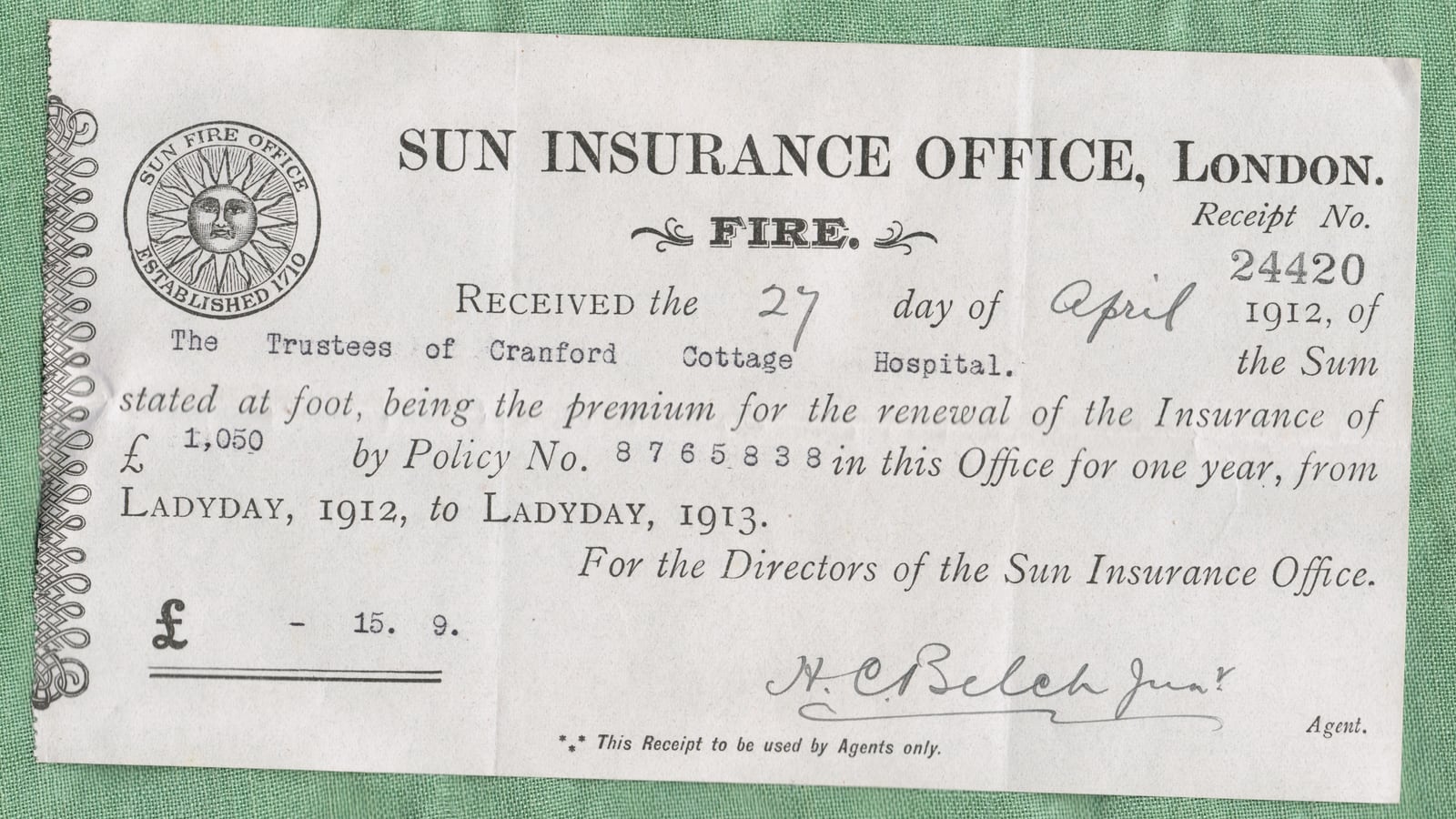
Photo: Sun Insurance Office (Life time: c. 1912) / Wikimedia Commons, public domain (cropped). Representational image.
The Enforcement Action
The National Consumer Disputes Redressal Commission (NCDRC) has held the Life Insurance Corporation of India (LIC) deficient in service and directed it to refund Rs 5,30,07,910 to a company whose advance renewal premiums, the Commission found, were diverted by an LIC agent into fresh policies the company never asked for. The order was pronounced on 16 November 2026 in consumer complaint NC/CC/454/2013, Goldstar Diamond Pvt. Ltd. v Life Insurance Corporation of India Ltd. & Ors., by a bench of President Justice A.P. Sahi and Member Bharatkumar Pandya.
The Commission directed LIC to pay interest at 6% a year on the refund from 27 December 2013, the date the complaint was filed, until actual payment. The money must be paid within three months of the order, failing which the interest rate rises to 9%. It also awarded Rs 1 lakh as costs of litigation, but declined the Rs 10 crore compensation the company had sought and did not accept its full claim of Rs 8,84,97,850.
The central holding is about responsibility. The Commission said LIC "cannot escape its liability" because the premiums were paid by cheque in LIC's name, were credited to LIC's account, and are still retained by it. In its words, by retaining the amount the Corporation "continues to ratify" the agent's conduct and is liable "directly as well as vicariously".
Before the Commission, LIC argued that the agent had deceived it too, that the policies it issued were genuine, and that the complainant had been complacent or had acted in connivance with the agent. The Commission rejected those arguments. LIC has not publicly responded to the order. The agent was proceeded against ex parte from 3 July 2018 and did not contest the complaint.
How the Scheme Worked
According to the order, the complainant took out life policies for its employees in 2005 under LIC's "Employer-Employee Scheme", acting through a licensed LIC agent. The company's board authorised the purchase by a resolution of 6 July 2005, and about Rs 86,28,820 was paid as premium for 2005-06 and 2006-07.
In about July 2007, the order records, the agent approached the company to pay "advance renewal premiums" on those existing policies, pitching tax benefits, loans against paid-up value and maturity returns. The board passed a resolution on 7 August 2007 and the company paid Rs 7,90,69,030 by cheques drawn in LIC's name, which were handed to the agent. All the cheques cleared into LIC's account.
The company says it later received consolidated "certificates of payment" for 2008-09, 2009-10 and 2010-11 on LIC branch letterhead. LIC denied these documents and alleged they were forged by the agent. At a meeting with the Senior Branch Manager in April 2012, the company says it learnt that instead of renewing its existing policies, fresh policies had been issued in its name, that the 5,715 policies it expected to be assigned to it could not be assigned because they had been issued on the wrong proposal form, and that most of the 2005-2007 policies had lapsed for non-payment.
The company complained to LIC on 15 May 2012. LIC's own investigation committee reported on 22 June 2012 and again on 12 November 2012. Per the order, those reports recorded large-scale manipulation, procedural lapses at Branch 91(Q), policies processed with no KYC, and the board resolution and related papers being untraceable at the branch. The report noted 68,052 policies issued under employer-employee insurance. The order also records that, in letters and an affidavit to LIC in 2012, the agent admitted to the manipulation and to using fake forms.
LIC terminated the agent's agency by an order dated 31 May 2014. The Commission totalled the three disputed certificates (Rs 1,36,71,800, Rs 2,84,95,110 and Rs 1,08,41,000) to arrive at the Rs 5,30,07,910 refund.
The Law Invoked
The complaint was decided under the Consumer Protection Act, 1986, because it was filed while that law was in force. The Commission relied on the Act's definitions of "consumer" (Section 2(1)(d)), "service" (Section 2(1)(o)) and "person" (Section 2(1)(m)) to hold that a company buying insurance for its employees is a consumer that can bring a complaint. It noted that insurance is also covered under Section 2(42) of the Consumer Protection Act, 2019. Its preliminary ruling of 15 January 2025, rejecting LIC's objections on maintainability, was confirmed.
On liability, the order turns on Section 182 of the Indian Contract Act, 1872, which defines an agent as a person employed to act for another in dealings with third parties. The Commission also discussed Sections 237 and 238, which deal with a principal being bound where it led a third party to believe an agent's acts were authorised, and with misrepresentation or fraud by an agent in the course of business.
The order also cites Regulation 8 of the LIC of India (Agents) Regulations, 1972, framed under Section 49 of the Life Insurance Corporation Act, 1956, which sets out an agent's duties to policyholders. LIC's termination of the agency was made under Rules 16(1)(a)(b)(d) and 19(1) of those Regulations, as quoted in the order.
What Happens Next
LIC has three months from 16 November 2026 to pay, or the interest rate on the refund rises from 6% to 9% a year. As a standard matter, an order passed by the NCDRC in its original jurisdiction can be appealed to the Supreme Court within the time the law allows. Neither side has publicly said whether it will appeal.
Two other proceedings continue separately. The order records that a criminal case was lodged through FIR No. 264/2013 dated 5 September 2013, that a chargesheet has been filed, and that the case is pending before the competent court. It also records an LIC complaint to the Economic Offences Wing registered as CR No. 81/2013 under sections of the Indian Penal Code dealing with forgery and cheating, including Sections 465, 467, 468, 471 and 420. A chargesheet contains allegations, not findings of guilt; the accused are presumed innocent until proven guilty, and due process continues.
LIC has also filed a civil suit, now Suit No. 2492/2024 before the Bombay City Civil Court, to recover Rs 3,72,87,635.78 in commission from the agent, a claim it puts at Rs 4,66,09,544.73 with interest. The Commission noted that the plaint makes no allegation of connivance against the complainant.
What It Means
The practical message is that a premium paid to an insurer's agent, by cheque in the insurer's name, is treated as paid to the insurer. The Commission refused to let LIC keep money credited to its own account while disowning the agent who brought it in. For policyholders, this strengthens the position that the insurer, not only the individual agent, answers for what happens to premiums it receives.
The order also shows how this kind of loss builds up quietly. The company received consolidated statements rather than individual premium receipts, never got many policy documents, and found out years later that policies had lapsed. Simple habits guard against this: always write cheques to the insurer, never the agent; insist on the insurer's own premium receipt for each payment; and check every policy's status directly on the insurer's portal or at a branch, not through the agent. You can check an agent's licence through the insurer, and IRDAI's consumer grievance channels are available if the insurer does not resolve a complaint.
Finally, the case took close to 13 years from complaint to final order. Keeping board resolutions, cheque copies and correspondence, as this company did, is what allowed the Commission to calculate the refund from the record.
FAQ
What exactly did the NCDRC order?
The Commission held LIC deficient in service and directed it to refund Rs 5,30,07,910 to the complainant company, with 6% annual interest from 27 December 2013 until payment. Payment is due within three months of the 16 November 2026 order, after which interest rises to 9%. It awarded Rs 1 lakh as litigation costs and declined the Rs 10 crore compensation claimed.
Does this mean any court has found the people named guilty?
No. The NCDRC decided a consumer complaint about LIC's liability as an insurer; it did not convict anyone. The criminal case against the agent is pending. A chargesheet contains allegations, not findings of guilt; the accused are presumed innocent until proven guilty, and due process continues.
Why was LIC held responsible for an agent's acts?
The Commission relied on the principal-agent relationship under Section 182 of the Indian Contract Act, 1872. The agent was licensed by LIC, the cheques were in LIC's name, and the money was credited to and kept by LIC. Because LIC retained the premiums, the Commission held it liable directly and vicariously for the agent's acts.
Can the order be appealed?
Yes. As a general rule, an order passed by the NCDRC in its original jurisdiction can be challenged before the Supreme Court within the time limit set by law. Neither LIC nor the complainant has publicly said whether it intends to appeal.
How can I protect premiums I pay through an agent?
Make every payment to the insurer itself, by cheque, transfer or the insurer's portal, never to the agent personally. Collect the insurer's own receipt for each premium, keep copies of proposal forms, and check each policy's status directly with the insurer. If a complaint is not resolved, you can escalate to IRDAI's grievance system or a consumer commission.
Where can I read the official order?
The full order in NC/CC/454/2013, pronounced on 16 November 2026, is available on Indian Kanoon, linked below.
This report is based on the official NCDRC order dated 16 November 2026 in Goldstar Diamond Pvt. Ltd. v Life Insurance Corporation of India Ltd. & Ors.. It was surfaced via coverage in Bar and Bench.
This report describes enforcement actions and allegations on the public record, attributed to the officials cited. An order, FIR or chargesheet is not a conviction; parties are presumed innocent until proven guilty.
Named in this report, or spotted an error? Corrections and responses: editor@oquilia.com. We correct errors promptly and record responses from named parties.
Sources & Citations
- M/s Goldstar Diamond Pvt. Ltd. v Life Insurance Corporation of India Ltd. & Ors., NC/CC/454/2013, NCDRC order dated 16 November 2026 — National Consumer Disputes Redressal Commission
- NCDRC holds LIC liable for its agent's fraud after premium paid by customer diverted, misutilised — Bar and Bench