

Bombay HC lets ED re-arrest accused in Mahadev betting app PMLA case
The Bombay High Court quashed a special court's refusal of transit remand and let the ED re-arrest an accused in the Mahadev betting app case; the Supreme Court has issued notice.
Key points
- The Bombay High Court on 23 November 2026 quashed a Mumbai special court's refusal to grant the ED transit remand in the Mahadev betting app case.
- The court held the accused was produced within the 24-hour limit under Article 22(2) and left the ED at liberty to arrest him again.
- The Supreme Court issued notice on his challenge on 27 November without interim protection; the ED's allegations remain untested at trial.
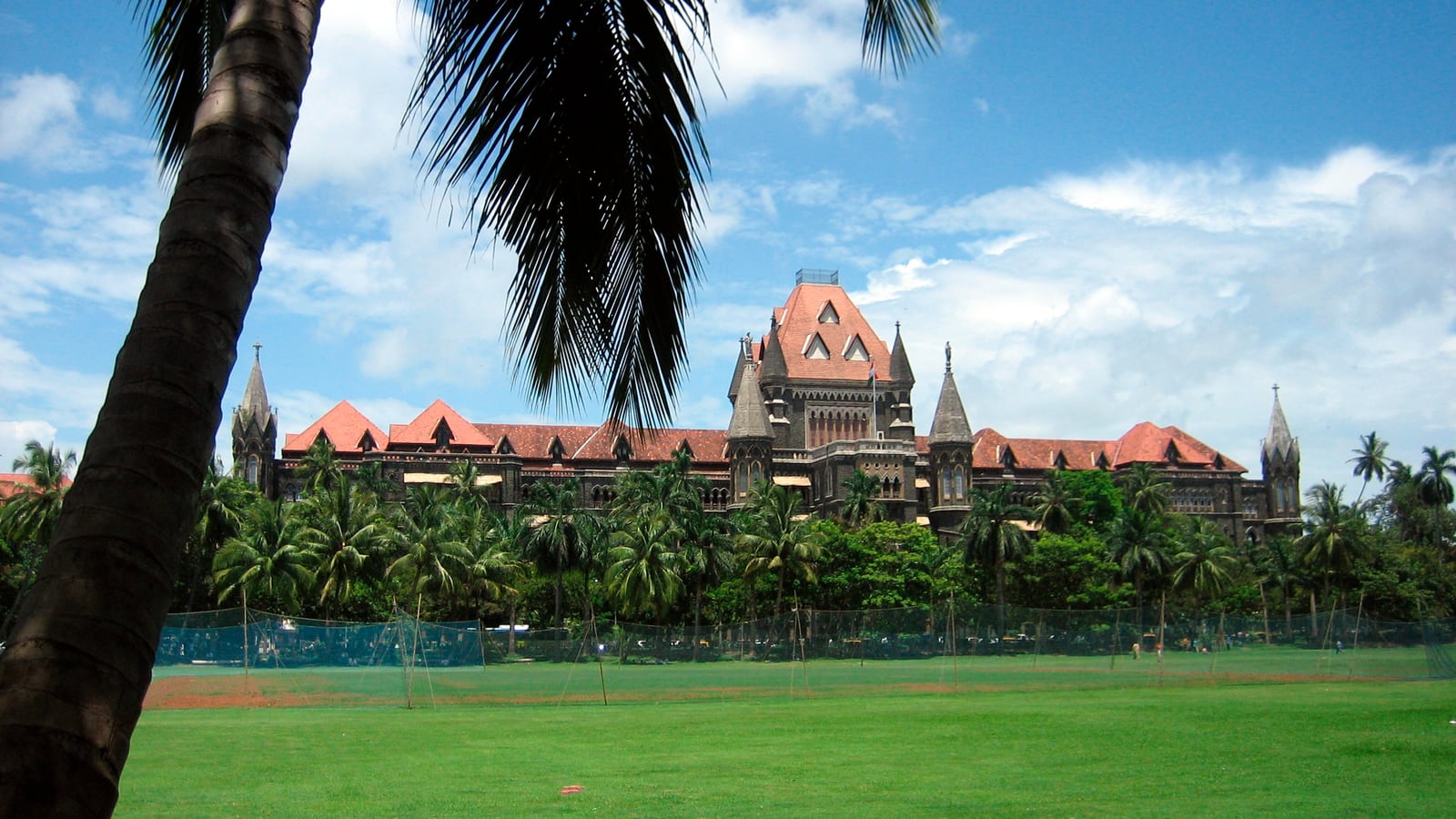
Photo: Michael Siegel AKA michaelj-siegel / Wikimedia Commons, CC BY-SA 2.0 (cropped). File photo.
The Enforcement Action
The Bombay High Court on 23 November 2026 set aside a Mumbai special court's refusal to grant the Enforcement Directorate (ED) transit remand of Himanshu Shekhar Alias Mohit, whom the agency describes as one of the accused in its Mahadev Betting App money laundering case. Justice Shivkumar Dige, sitting as a holiday court, allowed the ED's Criminal Revision Application (ST) No. 24142 of 2026 and held that the ED "is at liberty to arrest Respondent No.1 and produce him before the appropriate Court", according to the order on the official record.
The order quashed a decision dated 21 November 2026 passed by an Additional Sessions Judge designated as the Special Court under the Prevention of Money Laundering Act, 2002 (PMLA) in Transit Remand Application No. 1839 of 2026. That court had rejected the ED's request to take him to Raipur and had released him on an undertaking to appear before the agency there.
On 27 November 2026 the matter moved to the Supreme Court. According to Bar and Bench, a Bench of Justices MM Sundresh and PB Varale issued notice on his special leave petition challenging the High Court order, but declined to grant him interim protection.
He has publicly denied the ED's allegations, the same report states. The allegations have not been tested at trial, and the High Court order deals only with remand procedure, not with the merits of the case.
How the Scheme Worked
The High Court order does not set out the ED's case on the underlying betting operation. It records only that, according to the Solicitor General appearing for the agency, the respondent is "one of the accused in Mahadev Betting App", that the offence was registered at ED, Raipur, and that a Look Out Circular (LOC) had been issued against him. Oquilia is therefore not describing the alleged money trail here, because the official document before it does not.
What the order does lay out, in detail, is the chronology of the arrest that the courts have been asked to examine. According to the ED's submissions recorded in the order, he was detained by immigration officers at Mumbai International Airport at about 3.03 pm on 20 November 2026 on the strength of the LOC. ED officers from Raipur then travelled to Mumbai and took him into their custody at about 1.10 am. He was questioned and "shown arrested" at 12.51 pm on 21 November 2026, which the ED told the court followed due compliance with Section 19(2), (3) and (4) of the PMLA. He was produced before the Mumbai Special Court at 2.45 pm the same day, with an application for transit remand so that he could be taken to Raipur and produced before the Special Judge there.
The Special Court refused. As quoted in the High Court order, it held that the time of arrest should be counted from the airport detention on the LOC at 3.03 pm, "and not on the formal arrest by officers of ED, Raipur". It observed that the ED officers, who had him in custody through the night, should have produced him in the first session of court hours and "before 2.00 p.m.", rather than "at the nick of end of 24 hours". It directed his release on an undertaking to appear before ED, Raipur on 23 November 2026.
The ED challenged that order the same weekend. The Solicitor General argued that the Special Court had rejected the transit remand "on the flimsy ground and without application of mind", that his statement had been recorded while in custody, and that he had not appeared before the ED in Raipur on 23 November as directed. The order records that no one appeared for him at the High Court hearing, although the ED stated he had been served by email.
Justice Dige held that because he had been produced within 24 hours of detention, as Article 22(2) of the Constitution requires, the Special Court "should not have set her own notions" about which session he should have been produced in. The order describes the Special Court's decision as "apparently perverse". After the High Court order, Bar and Bench reports, he was produced before a special PMLA court in Raipur, which remanded him to ED custody until 28 November. Before the Supreme Court, his counsel contended that notice had not in fact been served before the High Court hearing; the Solicitor General responded that custody rested on a judicial remand order, according to the same report.
The Law Invoked
The High Court order cites two provisions. The first is Section 19 of the Prevention of Money Laundering Act, 2002, specifically sub-sections (2), (3) and (4), which the ED says it complied with when it formally arrested him. Section 19 is the PMLA's power of arrest: it allows an authorised ED officer to arrest a person where, on the basis of material in the officer's possession, there is reason to believe the person is guilty of an offence under the Act, and to record those reasons in writing. Among its safeguards, sub-section (2) requires the officer to forward a copy of the arrest order and the material to the Adjudicating Authority, and sub-section (3) requires the arrested person to be taken within 24 hours to the Special Court or a Judicial or Metropolitan Magistrate. The order records the ED's statement that it complied with these sub-sections and with sub-section (4).
The second is Article 22(2) of the Constitution, which requires that every person arrested and detained in custody be produced before the nearest magistrate within 24 hours of arrest, excluding the time needed for the journey, and not be held beyond that period without a magistrate's authority.
The dispute in this matter turns on when the 24-hour clock began, and whether production within that window was enough.
What Happens Next
The Supreme Court has issued notice on the special leave petition, which means the ED will now file its response before the court hears the challenge to the Bombay High Court order. The Bench declined interim protection, so the High Court order remains in force while the petition is pending. The Supreme Court may uphold the order, set it aside or pass other directions; Oquilia does not predict the outcome.
Separately, the investigation in the underlying case continues before the special PMLA court in Raipur, which deals with remand and, if the ED files a prosecution complaint, with taking cognizance and conducting the trial. Under the PMLA, the agency's allegations must be proved before that court, and any accused may seek bail under the Act's bail provisions.
Nothing in the High Court's 23 November order is a finding on whether any money laundering took place. It addresses only the lawfulness of refusing transit remand. The allegations against him remain allegations, subject to due process.
What It Means
For readers, the immediate takeaway is procedural. The order is a reminder that the 24-hour rule for producing an arrested person before a court is a constitutional safeguard, and that disputes over when an arrest actually began, at the airport or at the formal arrest, can decide whether a person stays in custody. Oquilia will report the Supreme Court's eventual ruling when it is on the record.
There is also a consumer angle. The case arises from an investigation into an online betting app, and enforcement agencies have repeatedly pursued money laundering cases linked to such apps. Online betting and gambling platforms are not registered with SEBI or RBI as investment products, and money placed on them has none of the protections that apply to a bank deposit, a mutual fund or a registered broker. Before putting money into any platform promising returns, check whether the entity appears in SEBI's intermediary search on sebi.gov.in or in RBI's list of regulated entities on rbi.org.in.
Be wary, too, of requests to route money through personal bank accounts or to "rent" your account to others. Agencies allege that such mule accounts are commonly used to move proceeds of illegal schemes, and account holders can find their accounts frozen.
FAQ
Does this mean the people named are guilty?
No. An arrest, a remand order or a provisional attachment by the ED contains allegations, not findings of guilt; the accused are presumed innocent until proven guilty, and due process continues. The Bombay High Court's order dealt only with transit remand, and the Supreme Court has so far only issued notice on the challenge to it.
What exactly did the Bombay High Court order?
On 23 November 2026, Justice Shivkumar Dige allowed the ED's revision application, quashed the Mumbai Special Court's order of 21 November 2026 in Transit Remand Application No. 1839 of 2026, and held that the ED was at liberty to arrest him and produce him before the appropriate court. A corrigendum dated 25 November 2026 only corrected the list of counsel appearing.
What did the Supreme Court do on 27 November?
According to Bar and Bench, a Bench of Justices MM Sundresh and PB Varale issued notice on his special leave petition against the High Court order and declined to grant interim protection. The ED will file its reply before the matter is heard further.
Why does the 24-hour rule matter?
Article 22(2) of the Constitution and Section 19(3) of the PMLA require an arrested person to be produced before a court within 24 hours; Article 22(2) excludes the time needed for the journey. The courts in this matter differed on whether the clock ran from the airport detention or the formal arrest.
Where can I read the official order?
The Bombay High Court order dated 23 November 2026 in Criminal Revision Application (ST) No. 24142 of 2026 is available on Indian Kanoon, along with the corrigendum dated 25 November 2026.
This report is based on the official Bombay High Court order dated 23 November 2026 in Criminal Revision Application (ST) No. 24142 of 2026. It was surfaced via coverage in Bar and Bench.
This report describes enforcement actions and allegations on the public record, attributed to the officials cited. An order, FIR or chargesheet is not a conviction; parties are presumed innocent until proven guilty.
Named in this report, or spotted an error? Corrections and responses: editor@oquilia.com. We correct errors promptly and record responses from named parties.
Sources & Citations
- Directorate of Enforcement v. Himanshu Shekhar Alias Mohit, Bombay High Court, Criminal Revision Application (ST) No. 24142 of 2026, order dated 23 November 2026 — Bombay High Court
- Directorate of Enforcement v. Himanshu Shekhar Alias Mohit, Bombay High Court, order dated 25 November 2026 (speaking to minutes) — Bombay High Court
- Mahadev betting app case: Supreme Court seeks ED response on Delhi lawyer's plea against re-arrest — Bar and Bench