

Supreme Court bars non-judicial PMLA benches from confirming ED attachments
The Supreme Court has held that only a PMLA Adjudicating Authority bench including its Judicial Member can confirm an ED attachment, and urged the Centre to add more authorities.
Key points
- The Supreme Court held on 26 November 2026 that ED attachments under the PMLA can be confirmed only by an Adjudicating Authority bench that includes its Judicial Member.
- An ED affidavit cited in the judgment shows 3,639 provisional attachment orders up to 31 August 2026, including 712 in 2025-26.
- Earlier orders stay valid but can be appealed on merits, and the Court asked the Centre to consider reverting to multiple Adjudicating Authorities.
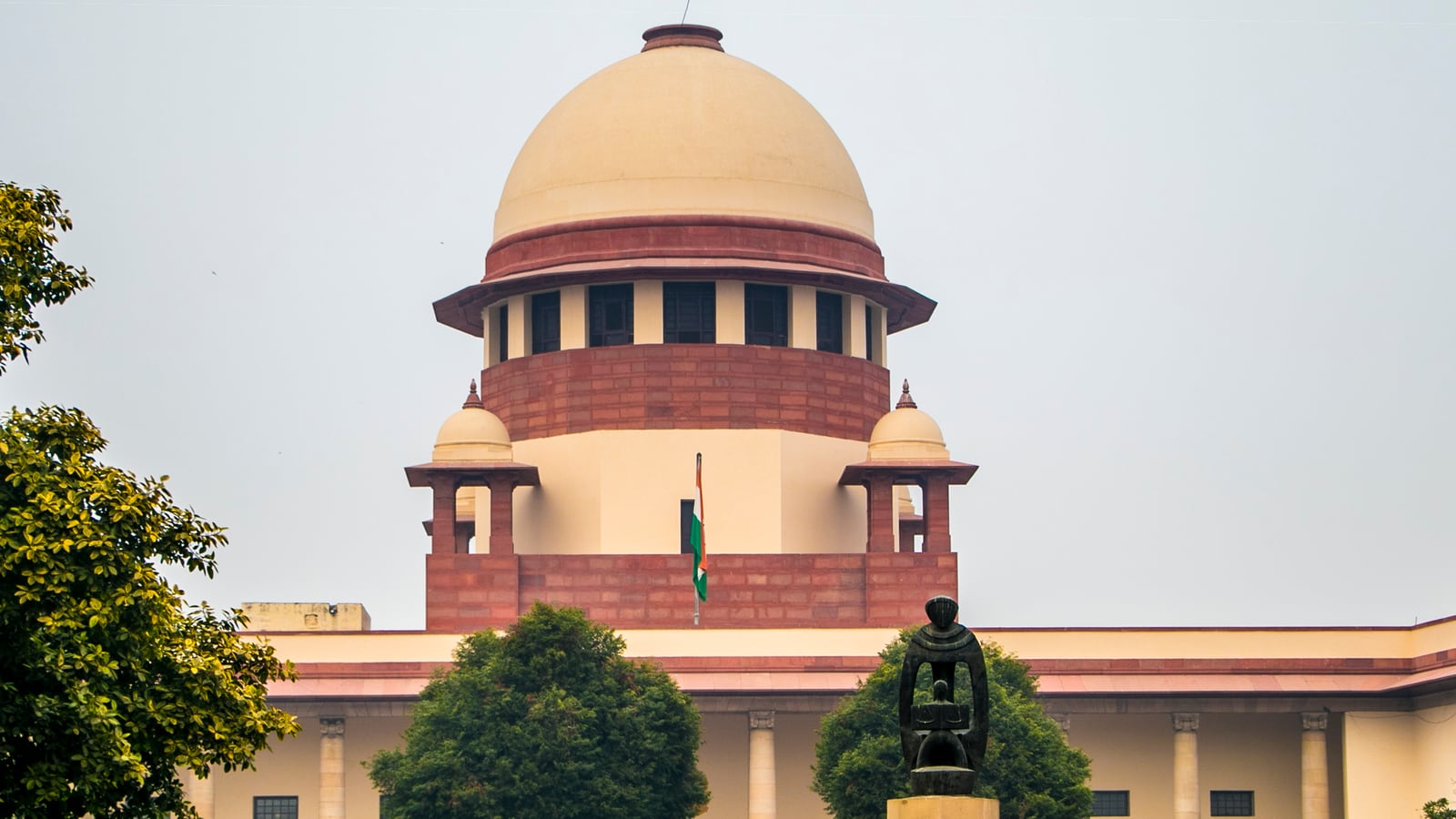
Photo: Subhashish Panigrahi / Wikimedia Commons, CC BY-SA 4.0 (cropped). File photo.
The Enforcement Action
The Supreme Court of India has held that an order confirming the Enforcement Directorate's (ED) provisional attachment of property under the Prevention of Money Laundering Act, 2002 (PMLA) can only be passed by a bench of the Adjudicating Authority (AA) that consists of, or includes, its Judicial Member. The judgment, Union of India vs J. Sekar, 2026 INSC 1277, was delivered on 26 November 2026 in Civil Appeal No. 1548 of 2024 and a connected batch of appeals and a writ petition.
The bench of Chief Justice Surya Kant and Justices Joymalya Bagchi and V. Mohana held that adjudication under Sections 8(2) and 8(3) of the PMLA "shall be undertaken only by a Bench of the AA which consists of, or includes, the Judicial Member". It directed the Chairperson of the AA to issue an administrative circular so that every bench passing an order under Section 8(3) includes a Judicial Member.
The Court upheld Sections 6(5)(b) and 6(7) of the PMLA, which allow benches of one or two Members, and held that there is no legal mandate that only the Judicial Member be appointed Chairperson. A single-Member bench can still hear confirmation cases, provided that Member is the Judicial Member.
The ruling modifies judgments of the Delhi, Calcutta and Telangana High Courts, including the Delhi High Court's judgment of 11 January 2018. The Court also recommended that the Union of India consider reverting to a framework of multiple Adjudicating Authorities.
How the Scheme Worked
The judgment explains how ED attachments move through the PMLA. An ED officer may provisionally attach property believed to be proceeds of crime by issuing a Provisional Attachment Order (PAO) under Section 5(1), and must then file a complaint before the AA under Section 5(5). The AA issues a show-cause notice under Section 8(1), hears the parties, and decides under Sections 8(2) and 8(3) whether the property is involved in money laundering and whether the attachment should be confirmed. The Court noted that once the AA so finds, the rigours of Section 8(4) are attracted and possession passes to the Government of India, a dispossession that "may well endure until the conclusion of the trial".
The lead matter, as the judgment records it, began with Income Tax searches in December 2016 on a partnership firm, M/s SRS Mining. The CBI then registered FIR No. RC-MAI-2016-A-0040, alleging that a partner of the firm, in connivance with certain bank officials, converted unaccounted demonetised currency into new notes. Treating that FIR as the predicate offence, the ED registered ECIR No. 19/2016 dated 19 December 2016 and issued PAO No. 13/2017 dated 29 May 2017, attaching movable properties valued at Rs 8.57 crore. These remain allegations; the judgment does not decide them.
When the AA issued its show-cause notice on 21 June 2017, the judgment notes, the AA consisted only of a Technical Member officiating as Chairperson, with no Member from a judicial or legal background in office. The respondent challenged this before the Delhi High Court, which held on 11 January 2018 that a Judicial Member was not required. The Union appealed on other points, and the question of composition reached the Supreme Court along with matters from the Calcutta and Telangana High Courts. The judgment records that the Court heard the batch on 15 September 2026.
The Court framed three issues: whether the AA can act through a single non-Judicial Member, whether every bench must include a Judicial Member, and whether the Chairperson must be a Judicial Member. It distinguished between the AA's role as "the keeper of the sealed cover" and its role in weighing evidence, and held that the second requires legal training.
The Law Invoked
The judgment turns on the provisions of the PMLA it construes. Section 5(1) empowers ED officers to provisionally attach property, and Section 5(5) requires them to file a complaint before the AA. Section 6 constitutes the AA, and Sections 6(5)(b) and 6(7), which the Court upheld, allow benches of one or two Members. Section 8(1) covers the show-cause notice; Sections 8(2) and 8(3) cover the adjudication and confirmation of attachment; and Section 8(4) deals with possession of confirmed property.
The Court extended its requirement to the first proviso to Section 9, which concerns encumbrances or leasehold interests over attached property, and to Sections 20(4) and 21(4), on the retention of seized property and records. These determinations, it held, are ancillary to Section 8 adjudication and must go to a bench that includes the Judicial Member.
The Court also referred to the Prevention of Money Laundering (Amendment) Act, 2009, which replaced the original scheme of multiple Adjudicating Authorities with a single AA. It held that directing additional authorities under Article 142 of the Constitution would negate that amendment, so it recommended the change to the Union rather than ordering it.
What Happens Next
The judgment operates prospectively. The Court clarified that the law it declared "shall not furnish a ground to question the jurisdiction" of an AA bench for orders passed before 26 November 2026. Parties aggrieved by earlier orders of single, non-judicial benches remain free to challenge them on their merits through the statutory appeal available in law, which lies to the Appellate Tribunal under the PMLA.
For pending matters, the Court vacated all interim relief, including any stay of proceedings before the AA granted by it, and directed that the applications and complaints pending before the AA in these cases be decided strictly in accordance with the principles in the judgment. The Chairperson of the AA is now required to issue an administrative circular so that confirmation benches include the Judicial Member.
On structure, the decision now rests with the Union, which the Court has asked to consider repealing the 2009 amendment and reverting to multiple Adjudicating Authorities. Separately, the predicate criminal cases, including the CBI FIR in the lead matter, proceed on their own track; they contain allegations, not findings of guilt.
What It Means
For anyone whose property, bank account or flat is caught in a PMLA attachment, the first forum where they can contest it is the AA. The Court has now held that a person trained in law must sit on the bench that decides whether that attachment is confirmed. That matters because, as the Court put it, the PMLA is "a law of exceptional rigour, enacted to meet a mischief of exceptional gravity", and confirmation can strip a person of possession long before any trial ends.
The ruling also puts a number on the workload. An ED affidavit reproduced in the judgment shows 3,639 PAOs issued up to 31 August 2026, rising from 321 in 2023-24 to 461 in 2024-25 and 712 in 2025-26. With a 180-day window to complete confirmation, the Court said the single-AA design has created an "undesirable, if not unsolvable, lock-jam of cases".
For homebuyers and investors who are victims in attachment cases, the practical point is that attached property is frozen, not distributed. Anyone with a claim on such property should track the AA proceedings, keep documentary proof of payment, and take legal advice on restoration routes under the PMLA. As the Court held, the AA's confirmation decides who keeps possession while the case runs, so that hearing is where such claims first get tested.
FAQ
Does this mean the people named are guilty?
No. The Supreme Court decided a question about how the Adjudicating Authority must be composed; it did not rule on the underlying allegations. A provisional attachment or FIR contains allegations, not findings of guilt; the accused are presumed innocent until proven guilty, and due process continues. The CBI FIR and ED case in the lead matter remain to be tested.
What exactly did the Supreme Court hold?
In Union of India vs J. Sekar, 2026 INSC 1277, dated 26 November 2026, the Court held that adjudication under Sections 8(2) and 8(3) of the PMLA, and related determinations under Sections 9, 20(4) and 21(4), must be done by an AA bench that consists of or includes the Judicial Member. It upheld Sections 6(5)(b) and 6(7).
Can a single Member still confirm an attachment?
Yes, but only if that single Member is the Judicial Member of the AA. The Court expressly said it was not mandating benches of at least two Members. Issuing a show-cause notice under Section 8(1) does not require the Judicial Member.
Are attachments already confirmed now invalid?
No. The Court said its ruling cannot be used to question the jurisdiction of an AA bench for orders passed before 26 November 2026. Those affected can still challenge earlier orders on their merits through the statutory appeal.
Does the Chairperson of the AA have to be a judge?
No. The Court held there is no legal mandate that only the Judicial Member be appointed Chairperson, describing the Chairperson's role as administrative.
Where can I read the judgment?
The full text of Union of India vs J. Sekar, 2026 INSC 1277, is available on Indian Kanoon and linked below.
This report is based on the official Supreme Court judgment in Union of India vs J. Sekar, 2026 INSC 1277, dated 26 November 2026. It was surfaced via coverage in Bar & Bench.
This report describes enforcement actions and allegations on the public record, attributed to the officials cited. An order, FIR or chargesheet is not a conviction; parties are presumed innocent until proven guilty.
Named in this report, or spotted an error? Corrections and responses: editor@oquilia.com. We correct errors promptly and record responses from named parties.
Sources & Citations
- Union of India vs J. Sekar, 2026 INSC 1277 (Supreme Court of India, 26 November 2026) — Supreme Court of India