

SEBI closes recovery of Arvind Remedies penalty, releases attached accounts
SEBI has completed Recovery Certificate No. 7696 of 2024 after recovering Rs 7,68,196 tied to a 2022 penalty in the Arvind Remedies matter, and released attached accounts.
Key points
- SEBI's Chennai Recovery Officer declared Recovery Certificate No. 7696 of 2024 against S Nagarajan completed on 27 November 2026.
- Rs 7,68,196, including interest and costs, was recovered for a Rs 5 lakh penalty SEBI imposed in its 24 August 2022 Arvind Remedies order.
- Attached bank, demat and mutual fund accounts are released; SEBI's 2022 order shows that lending your trading account can bring a penalty and a market ban.
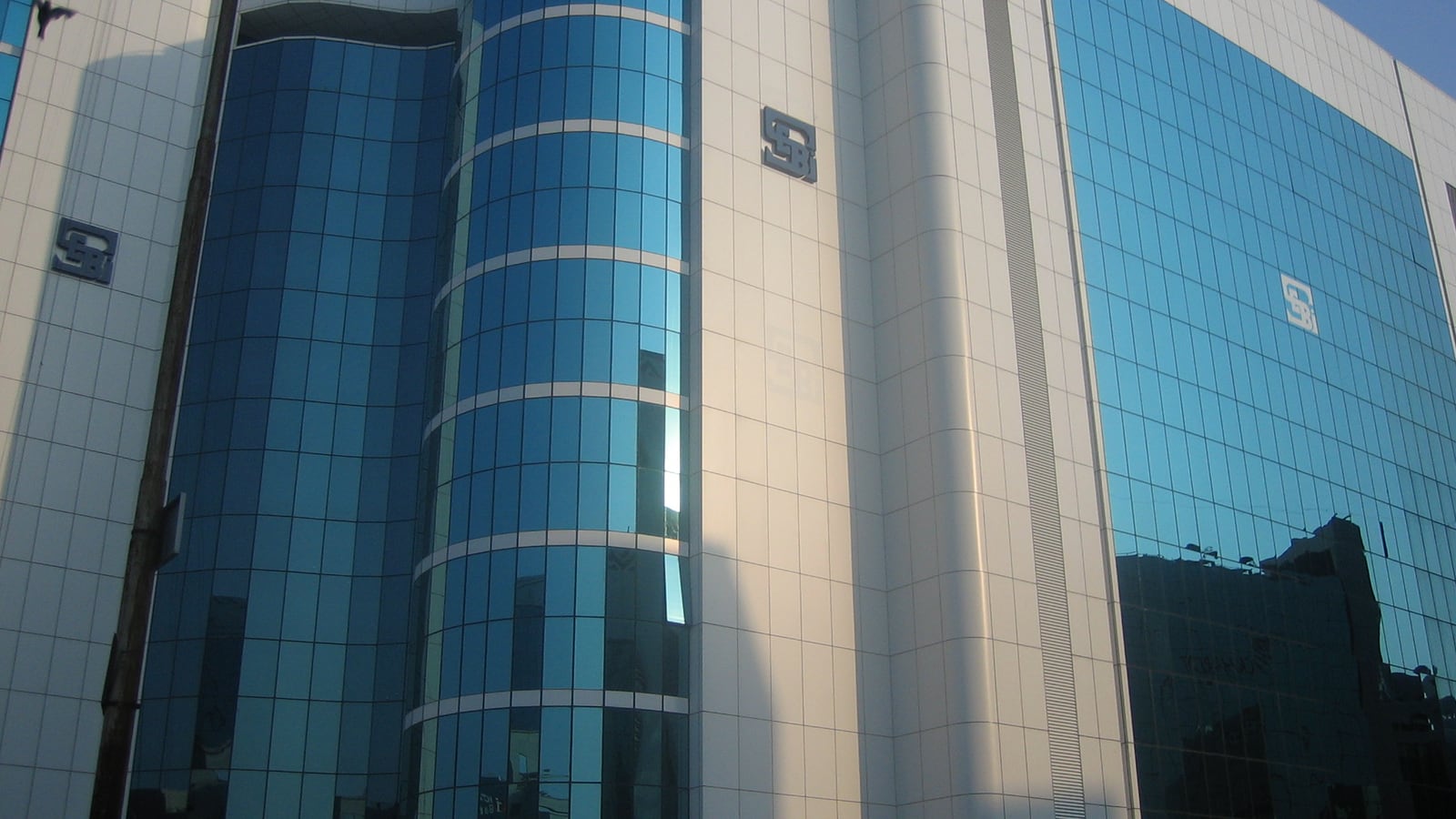
Photo: Jimmy vikas / Wikimedia Commons, CC BY-SA 3.0 (cropped). File photo.
The Enforcement Action
The Securities and Exchange Board of India (SEBI) has closed a recovery case arising from its 2022 order in the Arvind Remedies Limited matter, after collecting Rs 7,68,196 from S Nagarajan, one of 43 noticees named in that order. In a notice dated 27 November 2026, the Recovery Officer at SEBI's Southern Regional Office in Chennai declared Recovery Certificate No. 7696 of 2024 "completed" under sub-section (1) of Section 28A of the SEBI Act, 1992, read with Section 224 of the Income-tax Act, 1961.
The certificate, dated 26 February 2024, was drawn up for Rs 5,96,000 along with interest, costs and expenses, for non-payment of the penalty imposed by Whole Time Member order No. Order/WTM/SM/IVD/ID2/18493/2022-23 dated 24 August 2022. The amount finally recovered, Rs 7,68,196, includes interest and costs and was accepted in "full and final settlement" of the demand, according to a separate release order issued the same day.
That release order directs all banks, post offices, the depositories NSDL and CDSL, and all mutual funds to release the bank and post office accounts, lockers, demat accounts and mutual fund folios of S Nagarajan that had been attached under Attachment Proceeding Nos. 15829 and 15830 of 2026, dated 13 October 2026.
The recovery notices do not record any statement from S Nagarajan. In the 2022 proceedings, as the final order records, he was among a group of noticees who filed identical replies disputing the case against them, which SEBI rejected.
How the Scheme Worked
The underlying matter began, according to the 2022 order, with a reference from Punjab National Bank forwarding a forensic audit report dated 23 May 2015 that highlighted irregularities in the financial statements of Arvind Remedies Limited (ARL) and inflated sales and profits. SEBI also received two investor complaints, in November 2015 and September 2016, alleging that promoters had published false results to inflate the share price and then sold their shares.
SEBI's investigation covered 1 April 2010 to 13 June 2016. The order records findings that ARL inflated purchases and sales through transactions with connected or controlled entities, with payments that were "either reversed or routed in a circular manner without movement of goods". It found the published accounts for the years ending March 2012 to March 2015 did not show a true and fair picture, and that the company prepared different sets of financial statements for different stakeholders. SEBI passed an ad interim ex parte order against the company and its managing director on 16 February 2017, the date the order treats as the point when the manipulation became public.
The order then traced how shares left promoter hands while that information was still unpublished. It found that promoters and three promoter-connected entities sold 4,52,66,397 shares and averted losses of about Rs 164.41 crore (Rs 74.77 crore plus Rs 89.63 crore). It also found that 25 entities, Noticees no. 19 to 43, received ARL shares off-market from the promoter-connected entities and sold them on the stock exchanges, and that 21 of them sent a total of Rs 31.08 crore in sale proceeds back to those entities.
S Nagarajan was Noticee no. 29. According to the order's data table, he transferred Rs 74,10,036 to the promoter-connected entities after selling ARL shares on the exchange. He and 13 others filed identical replies stating that they had borrowed ARL shares from the promoter-connected entities to meet margin requirements for futures and options trading, and later sold them and paid the lenders. The Whole Time Member wrote that he found "absolutely no merit" in this explanation because no supporting documents were produced. He also found that another noticee, who said he had worked in client acquisition at a broking firm, had opened and facilitated these accounts. The order held that the 25 noticees aided and abetted the promoters in offloading shares "in a fraudulent manner".
A common show-cause notice went to all 43 noticees on 23 June 2020, and the final order followed on 24 August 2022. For Noticee no. 29, it imposed a six-month market ban and a penalty of Rs 5 lakh under Section 15HA. The recovery certificate came in February 2024, and the attachments in October 2026.
The Law Invoked
The 2022 order found that Noticees no. 19 to 43 violated Section 12A(a), (b) and (c) of the SEBI Act, 1992, read with regulations 3(a), (b), (c), (d) and 4(1) of the SEBI (Prohibition of Fraudulent and Unfair Trade Practices relating to Securities Market) Regulations, 2003. Section 12A bars the use of manipulative or deceptive devices, and any act that operates as a fraud on any person, in connection with buying or selling securities. The PFUTP Regulations spell out those prohibitions in more detail.
The penalty was imposed under Section 15HA of the SEBI Act, the penalty for fraudulent and unfair trade practices. As quoted in the order, it sets a minimum penalty of five lakh rupees, extending to twenty-five crore rupees or three times the profit made, whichever is higher. The directions were issued under Sections 11, 11(4), 11B(1) and 11B(2) of the Act, which allow SEBI to restrain persons from the market and impose penalties to protect investors.
Recovery is governed by Section 28A of the SEBI Act. It lets a SEBI Recovery Officer recover unpaid penalties as if they were income-tax arrears, including by attaching bank and demat accounts. The completion notice cites Section 28A(1) read with Section 224 of the Income-tax Act, 1961.
What Happens Next
For S Nagarajan, the recovery file is closed. With the dues paid in full, the release order lifts the attachments on his bank, demat and mutual fund accounts. The six-month market ban imposed in 2022 was a separate direction in the final order, and the recovery documents do not deal with it.
The wider Arvind Remedies matter involved 43 noticees, a range of bans, penalties and, for 13 of them, directions to repay unlawful gains with interest at 8% a year. Each penalty is collected individually, so SEBI issues separate recovery certificates, attachment notices and completion notices against each person who does not pay within the 45 days the order allowed. Here, about four years passed between the final order and full payment.
SEBI final orders can be appealed to the Securities Appellate Tribunal, with a further appeal to the Supreme Court on questions of law. The recovery documents do not mention any appeal against the 2022 order by S Nagarajan. A recovery officer's role is limited to collecting what the order requires; it does not reopen the findings.
What It Means
The case shows that a regulator's penalty does not lapse if it is ignored. SEBI can turn an unpaid penalty into a recovery certificate, attach bank accounts, demat holdings and mutual fund units, and hold them until the amount is paid with interest. In this matter, a Rs 5 lakh penalty from 2022 had become Rs 7,68,196 by the time it was settled.
For ordinary investors, the case is a warning about lending your trading or demat account to someone else. The 2022 order describes 25 account holders receiving shares off-market from promoter-linked firms, selling them on the exchange, and sending the proceeds back. SEBI held that this helped the promoters exit while the company's true accounts were hidden. It also noted that one account holder said a broking-firm employee had used her account and her relative's. Under the order, the account holder, not only the person who used the account, bears the penalty and the ban.
A few precautions follow from the order itself. Never let anyone else run trades in your name, and never accept shares off-market from people you do not know. Watch your depository's monthly statement for transfers you do not recognise. You can check whether a broker or adviser is registered on SEBI's intermediary search at sebi.gov.in before you open an account through them.
FAQ
What exactly did SEBI do this week?
On 27 November 2026, SEBI's Recovery Officer in Chennai declared Recovery Certificate No. 7696 of 2024 against S Nagarajan completed, after Rs 7,68,196 was recovered. A separate release order lifted the attachment of his bank, post office, demat and mutual fund accounts made under Attachment Proceeding Nos. 15829 and 15830 of 2026. The certificate arose from a Rs 5 lakh penalty in SEBI's 24 August 2022 order in the Arvind Remedies Limited matter.
Why was the amount recovered higher than the penalty?
The 2022 order imposed a Rs 5 lakh penalty. The recovery certificate was drawn for Rs 5,96,000 along with interest, costs, charges and expenses. The final Rs 7,68,196 recovered, according to the release order, includes interest and costs and was accepted in full and final settlement. Delaying payment of a SEBI penalty therefore adds to what is eventually owed.
Can a SEBI order be appealed?
Yes. A person affected by a SEBI order may appeal to the Securities Appellate Tribunal, and from there to the Supreme Court on questions of law. The recovery documents published this week do not mention any appeal by S Nagarajan against the 2022 order. The recovery officer's job is to collect amounts already ordered, not to revisit the findings.
What should I do if someone asks to use my demat or trading account?
Refuse. The 2022 order penalised and banned account holders whose accounts were used to sell shares received off-market and route money back to promoter-linked firms, even where they said someone else had operated the account. Keep your login details private, check your depository statements every month, and report unfamiliar transactions to your broker and depository promptly.
This report is based on SEBI's official completion notice for Recovery Certificate No. 7696 of 2024 and release order, both dated 27 November 2026, and the SEBI final order dated 24 August 2022.
This report describes enforcement actions and allegations on the public record, attributed to the officials cited. An order, FIR or chargesheet is not a conviction; parties are presumed innocent until proven guilty.
Named in this report, or spotted an error? Send the correcting document to editor@oquilia.com. Corrections supported by a document are published on the page.
Sources & Citations
- Completion of Recovery Certificate No 7696 of 2024 issued to S Nagarajan in the matter of Arvind Remedies Ltd. — SEBI
- Release Order for Recovery Certificate No. 7696 of 2024 against S Nagarajan in the matter of Arvind Remedies Limited — SEBI
- Final Order in the matter of Arvind Remedies Limited (24 August 2022) — SEBI