

Kerala HC: repaying Karuvannur bank loans does not end ED PMLA case
The Kerala High Court refused to discharge an accused in the ED's Karuvannur bank PMLA case, holding that repaying Rs 4.3 crore in loans does not erase the alleged offence.
Key points
- The Kerala High Court on 17 November 2026 dismissed three petitions by accused No. 23 in the ED's Karuvannur Service Co-operative Bank money laundering case.
- The court held that repaying the loans in full, Rs 4,30,85,889 in 2025, does not wipe out an offence under Section 3 of the PMLA.
- The attachment of his property stays in place and the ED's allegations will now be tested at trial before the Special Court in Ernakulam.
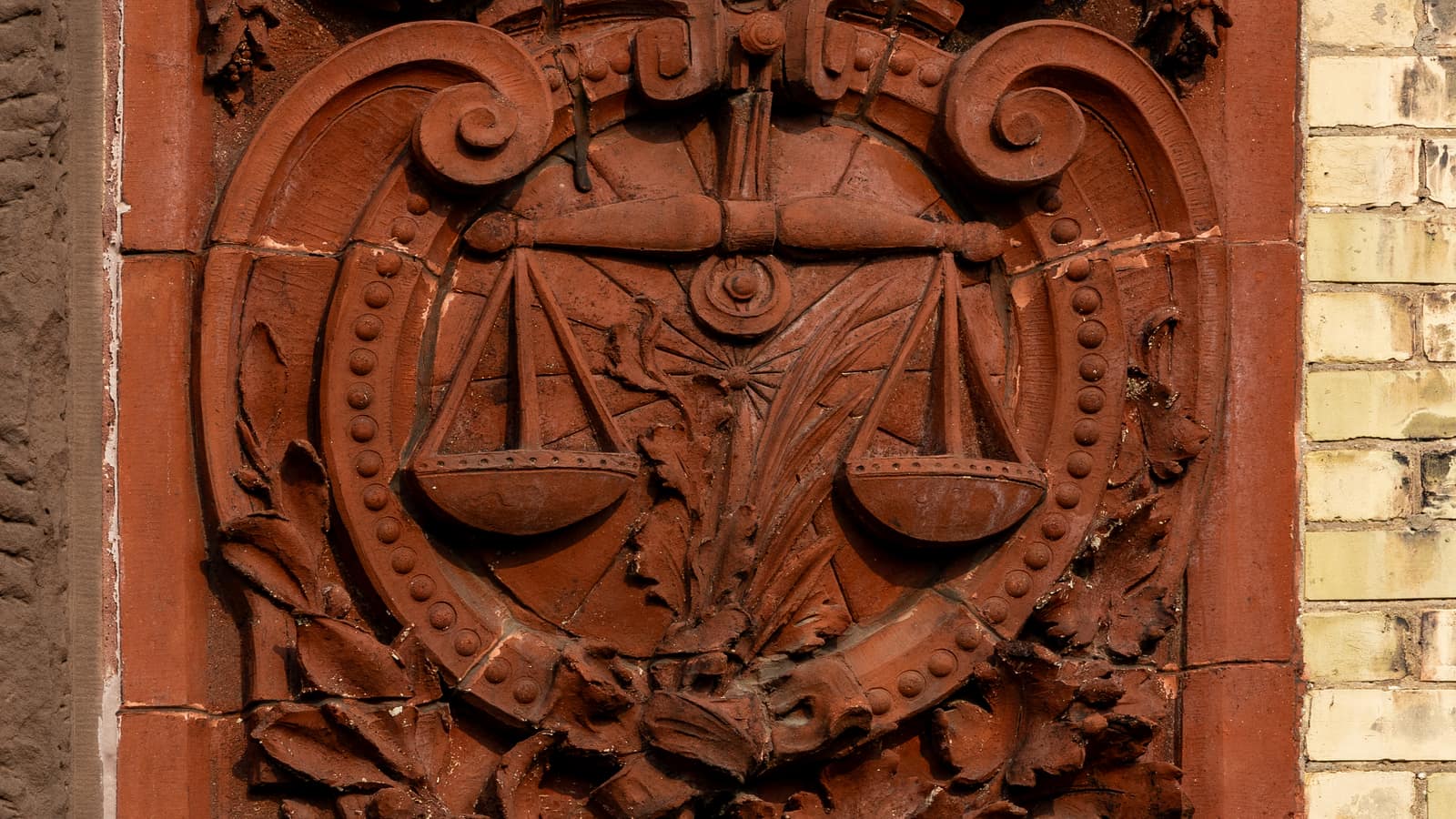
Photo: Chris Woodrich / Wikimedia Commons, CC BY-SA 4.0 (cropped). Representational image.
The Enforcement Action
The Kerala High Court on 17 November 2026 dismissed three petitions filed by an accused in the Enforcement Directorate's money laundering case linked to the Karuvannur Service Co-operative Bank in Thrissur district. Justice G. Girish held that the accused's later repayment of the loans at the centre of the case does not entitle him to a discharge, to the lifting of the attachment on his property, or to the return of documents the ED seized from him.
The petitioner is arraigned as accused No. 23 in S.C (PMLA) No. 4 of 2023, the ED's complaint pending before the Additional Special Court for PMLA offences (SPE/CBI-III) at Ernakulam. He had challenged that court's common order dated 4 April 2026, which refused all three of his requests. The High Court matters were numbered Crl.R.P No. 684/2026 and Crl.M.C Nos. 4211 and 4257 of 2026, and the ruling carries the neutral citation 2026:KER:87506.
The ED's allegation, as the order records it, is that Rs 2.5 crore was siphoned off through five loans of Rs 50 lakh each, taken in 2014 in the petitioner's name and in the names of four relatives. The petitioner disputes the ED's case. Before the High Court he argued that he had not concealed or dealt with any proceeds of crime, that the land the ED attached was bought with a loan from a different bank, and that the statements the ED attributes to him are not authentic. The court did not rule on those factual disputes, which remain for trial.
How the Scheme Worked
The matter begins with Crime No. 650/2021, registered by the Irinjalakuda Police against Director Board members and other office bearers of the Karuvannur bank. According to the order, the police case alleges "large scale misappropriation of funds" through loans sanctioned in breach of the society's bye-laws and the Kerala Co-operative Societies Act. The State Crime Branch later took over that investigation.
The order sets out the wider allegation in the predicate case: that membership was extended to ineligible persons for the sole purpose of releasing loans to them, and that those borrowers stood as benami for nominees of the Board of Directors and other office bearers. Offences including cheating, criminal breach of trust and forgery are alleged against the accused in the police case. The order also records the allegation that many depositors could not recover their deposits.
The ED registered an Enforcement Case Information Report, ECIR/KCZO/45/2021, on the basis of the police case. Its investigation led to a prosecution complaint, numbered S.C (PMLA) No. 4/2023 by the Special Court. The ED alleges that the five loans to the petitioner and his relatives were one of the improper transactions behind the bank's losses, advanced in connivance with the bank's office bearers in violation of its rules.
The ED further alleges that the money was layered and concealed through the purchase of land at Gundalpet in Karnataka. According to the order, the ED contends that in a statement recorded under Section 50 of the PMLA, the petitioner said the loan money paid for 36 cents of land at Gundalpet, with the balance used to clear his debts and renovate his hotel and lodge. The petitioner disputes the authenticity of that statement.
The procedural history, per the order, runs as follows:
- 13 October 2023: the ED provisionally attached the petitioner's properties (POA No. 05/2023).
- 12 March 2024: the Adjudicating Authority confirmed the attachment.
- 13 November 2025: the petitioner and his relatives closed all five loans by paying the full outstanding dues of Rs 4,30,85,889 to the bank.
- 25 November 2025: the bank's recovery proceedings (E.P No. 216/2024 in A.R.C No. 861/2022) were closed after the dues were paid.
- 4 April 2026: the Special Court rejected the petitioner's applications for discharge, release of the attachment and return of seized documents.
- 17 November 2026: the High Court dismissed his challenges to that order.
The Law Invoked
The ED's complaint charges the petitioner with an offence under Section 3 read with Section 4 of the Prevention of Money Laundering Act, 2002. Section 3 defines money laundering as taking part, directly or indirectly, in any process or activity connected with proceeds of crime, including concealing, possessing, acquiring or using them, or projecting them as untainted. The Explanation to Section 3 treats this as a continuing activity for as long as a person enjoys the proceeds. Section 4 prescribes the punishment.
The central question was whether the Rs 2.5 crore fell within Section 2(1)(u), which defines "proceeds of crime" as property derived or obtained, directly or indirectly, from criminal activity relating to a scheduled offence, or the value of such property. The court held that if releasing the loans is treated as part of the alleged misappropriation in the police case, the loan money and any property bought with it would fall within that definition.
The order also refers to Section 8 (confirmation of attachment by the Adjudicating Authority), Section 26 (appeal against that order to the Appellate Tribunal), Section 42 (appeal from the Appellate Tribunal to the High Court on a question of law or fact) and Section 50 (the ED's power to record statements).
What Happens Next
The ruling decides only that the petitioner cannot be discharged at this stage and that the attachment and seizure stay in place for now. It is not a finding that he committed money laundering. The case returns to the Special Court at Ernakulam, where the ED's allegations will be tested at trial, including the disputed Section 50 statement, whose admissibility and weight the High Court said it could not examine in these proceedings.
On the attachment, the court pointed to the route the statute provides. The Adjudicating Authority has already rejected the petitioner's argument that the Gundalpet land was bought with a South Indian Bank loan. That order can be appealed to the Appellate Tribunal under Section 26, and from there to the High Court under Section 42. The court held that the attachment's validity could not be revisited in a discharge application, since the records "prima facie point" to dealing with proceeds of the predicate offence.
The petitioner may also challenge the High Court's order before the Supreme Court. The predicate police case, now with the State Crime Branch, proceeds separately. A prosecution complaint and a provisional attachment contain allegations, not findings of guilt; the accused are presumed innocent until proven guilty, and due process continues.
What It Means
The legal point is narrow but significant. The court held that clearing a loan later "will not obliterate the offence under Section 3" of the PMLA. Money laundering under the Act is a separate offence attached to how proceeds of crime are handled, not a civil debt that is settled once the lender is repaid. Repayment ended the bank's recovery case, but not the ED's prosecution. The court also held that a person need not be an accused in the predicate police case to face PMLA proceedings over the alleged proceeds.
For depositors in co-operative societies, the case shows how these failures usually work: losses often come from loans made in breach of the society's own rules, through borrowers who may not qualify for them. Before placing a large deposit, check whether the institution holds an RBI banking licence (the RBI publishes lists of licensed urban and state co-operative banks) and whether its deposits are covered by DICGC insurance, which protects up to Rs 5 lakh per depositor per bank. Most primary agricultural credit societies are not covered.
For borrowers, the court held that repaying a loan the ED alleges was obtained in breach of an institution's rules does not, by itself, end PMLA proceedings.
FAQ
Does this mean the people named are guilty?
No. The High Court refused a discharge and declined to lift the attachment; it did not convict anyone. A prosecution complaint and a provisional attachment contain allegations, not findings of guilt; the accused are presumed innocent until proven guilty, and due process continues. The ED's allegations and the petitioner's defence, including his challenge to the disputed statement, will be decided at trial before the Special Court in Ernakulam.
What exactly did the High Court decide?
On 17 November 2026, Justice G. Girish dismissed a criminal revision petition and two criminal miscellaneous cases filed by accused No. 23. The court upheld the Special Court's order of 4 April 2026, which had refused his discharge from S.C (PMLA) No. 4/2023, refused to lift the attachment of his properties and refused to order the return of documents the ED seized from him.
Can the attachment of property be challenged?
Yes, through the route the PMLA provides. The Adjudicating Authority confirmed the attachment on 12 March 2024. Under Section 26 that confirmation can be appealed to the Appellate Tribunal, and under Section 42 the Tribunal's decision can be appealed to the High Court. The court said the attachment could not be examined in a discharge application.
How can I check whether my co-operative bank deposit is safe?
Check whether the institution is an RBI-licensed co-operative bank. The RBI publishes lists of licensed urban and state co-operative banks on its website. Then check that it is an insured bank on the DICGC website. DICGC cover protects up to Rs 5 lakh per depositor per bank. Credit societies that are not licensed banks are generally outside this cover.
Where can I read the official order?
The full text of the order in Paulson A.J. v. Assistant Director and connected cases (2026:KER:87506) is available on Indian Kanoon.
This report is based on the official Kerala High Court order dated 17 November 2026 in Crl.R.P No. 684/2026 and connected cases. It was surfaced via coverage in LiveLaw.
This report describes enforcement actions and allegations on the public record, attributed to the officials cited. An order, FIR or chargesheet is not a conviction; parties are presumed innocent until proven guilty.
Named in this report, or spotted an error? Corrections and responses: editor@oquilia.com. We correct errors promptly and record responses from named parties.
Sources & Citations
- Paulson. A. J vs Assistant Director, Directorate Of Enforcement, Kerala High Court, 17 November 2026 (2026:KER:87506) — Kerala High Court (via Indian Kanoon)