

Karnataka HC refuses to quash SFIO case against Razorpay directors
The Karnataka High Court has declined to quash an SFIO prosecution against two Razorpay directors linked to an alleged digital lending network, leaving the case for trial.
Key points
- The Karnataka High Court on 4 November 2026 rejected a plea by two Razorpay directors to quash an SFIO prosecution against them.
- The complaint alleges a digital lending firm made wrongful gains of Rs 56.63 crore, and the Union of India says Rs 320 crore of its transactions passed through Razorpay.
- The case now goes to trial in Bengaluru, where the allegations will be tested and the accused are presumed innocent until a court rules.
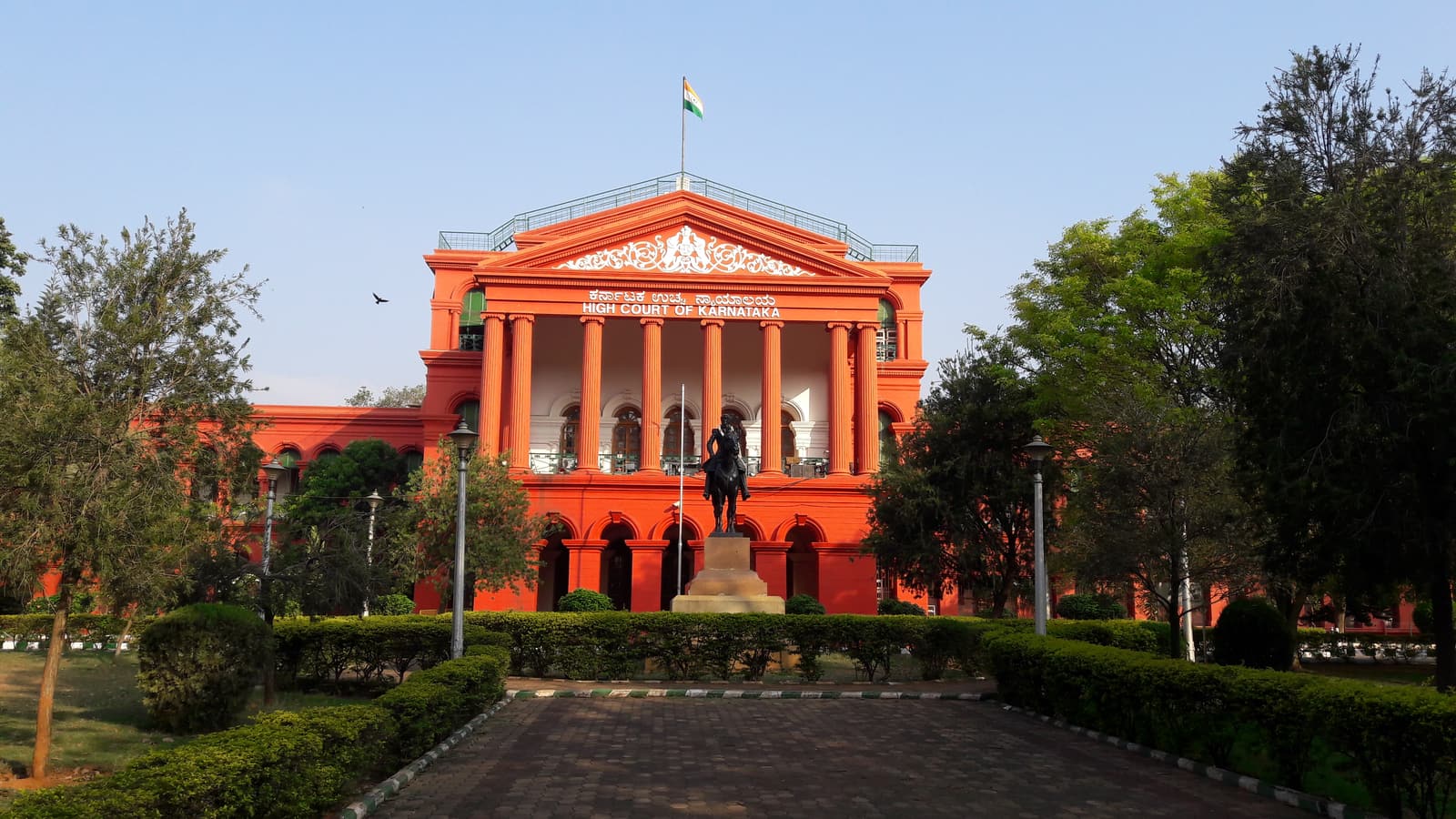
Photo: Vivek Urs / Wikimedia Commons, CC BY-SA 4.0 (cropped). File photo.
The Enforcement Action
The High Court of Karnataka has refused to quash a Serious Fraud Investigation Office (SFIO) prosecution against two directors of the payment aggregator Razorpay, leaving them to face trial in Bengaluru. In an order dated 4 November 2026 in Writ Petition No. 16078 of 2026, Justice M. Nagaprasanna rejected a petition filed by Harshil Mathur, described in the order as the whole time director, and Shashank Kumar, described as the managing director.
The two are arrayed as accused Nos. 8 and 9 in Special C. No. 324 of 2026, arising out of P.C.R. No. 33 of 2025, pending before the LIX Additional City Civil and Sessions Judge, Bengaluru (CCH-60). They had asked the High Court to quash the complaint in so far as it implicates them, the cognizance order dated 5 March 2026 and the summons issued on it.
The complaint stems from an SFIO investigation into a network of companies. According to the order, the complaint alleges that one of those companies, Mad Elephant Network Technology Private Limited (MENTPL), made wrongful gains of Rs 56.63 crore through predatory and coercive loan recovery, and that Razorpay's directors failed in their duties when the company was onboarded and monitored as a merchant.
The court did not rule on whether the allegations are true. It held that whether the directors met their fiduciary duty is "a disputed question of fact, which can only be considered at the stage of trial". The directors contested the case in court on several grounds, set out below.
How the Scheme Worked
The order traces the matter to a confidential report of the Registrar of Companies, which, it records, is "said to have uncovered a network of shell companies with dummy directors". According to the order, that network was created by Jilian Consultants India Private Limited (JCIPL), a wholly owned subsidiary of a company named Fininty Private Limited.
On 9 September 2022 the Government of India directed an investigation into the affairs of JCIPL and 32 other companies under Section 212 of the Companies Act, 2013. The SFIO placed its investigation report before the government on 31 July 2024, and the order notes that the report "forms the sole foundation for the impugned complaint".
As the complaint describes it, MENTPL, one of the 33 companies under investigation, was incorporated on 15 November 2019 through JCIPL, allegedly with dummy directors "completely controlled by Chinese entities". MENTPL then entered into an arrangement with X10 Financial Services Limited, a non-banking financial company, as a service provider for lending through digital platforms and mobile applications. The complaint alleges that recovery methods were unethical, predatory and coercive, and generated wrongful gains of Rs 56.63 crore for MENTPL.
On behalf of the Union of India, the Additional Solicitor General told the court that the operation made gains of about Rs 57 crore through usurious interest, with 30 per cent deducted upfront when the loan was paid out, and through coercive recovery. He submitted that money was routed through fake companies and that Razorpay was "a conduit carrying Rs.320/- crores of MENTPL's transactions".
The allegations against the two directors, as the order summarises them, concern deficiencies in merchant onboarding: alleged lapses in know your customer (KYC) checks on MENTPL, no due diligence, and no monitoring of MENTPL's transactions by Razorpay. Mr Mathur's statement was recorded on 16 August 2023; according to the order, he explained that Reserve Bank of India guidelines were then evolving and the onus of a full KYC was not on the petitioners. Cognizance of the complaint was taken on 5 March 2026.
The Law Invoked
The complaint charges the directors under Section 166 of the Companies Act, 2013. That section sets out the duties of a company director, including the duty to act with due and reasonable care, skill and diligence and to exercise independent judgement. The complaint alleges the two failed to exercise those duties.
The investigation was ordered under Section 212 of the Companies Act, which lets the Central Government assign an investigation into a company's affairs to the SFIO. The order quotes sub-section (14), under which the government may, after examining the SFIO report, direct prosecution against the company, its officers, or "any other person directly or indirectly connected with the affairs of the company". The Union of India relied on this wording to argue that the investigation reaches entities through which funds were routed.
The petition was filed under Article 226 of the Constitution read with Section 528 of the Bharatiya Nagarik Suraksha Sanhita (BNSS), 2023, the provision that preserves a High Court's inherent powers. The directors also invoked Section 468 of the Code of Criminal Procedure on limitation, and Section 223(1) of the BNSS on how cognizance is taken.
What Happens Next
The rejection of the petition means the case returns to the special court in Bengaluru, where the prosecution complaint will proceed to trial in the ordinary course. The High Court described the matter as "still at a nascent stage" and observed that the directors' arguments would need to be considered "at a later point in time". It added that, as the proceedings move forward, "the role of Razorpay could come about", since the company itself is not an accused at present.
The directors' arguments remain open for the trial. In the High Court they contended that the SFIO had no jurisdiction because Razorpay was not among the companies named in the 2022 investigation order; that Section 166 was inapplicable and negligence alone is not an offence; that there is no vicarious liability in criminal law; that KYC is the duty of banks, not intermediaries; that similar intermediaries were not proceeded against; and that the complaint was time-barred. The court did not decide these points on merit.
An order of a single judge of a High Court refusing to quash proceedings can ordinarily be challenged before the Supreme Court. Whatever route the parties take, the allegations in the complaint have not been tested in evidence, and the accused remain presumed innocent until a trial court rules.
What It Means
The case is a reminder that the plumbing behind a loan app can come under scrutiny, not only the app itself. Here the SFIO has gone beyond the lending network it was asked to investigate and named the directors of a payment intermediary, relying on the wide wording of Section 212(14). Whether that reach holds up is for the courts to decide, but the High Court has allowed the question to go to trial.
For borrowers, the practical lessons are familiar. Before taking a loan through an app, check which regulated entity actually lends the money: the lender should be a bank or an NBFC registered with the Reserve Bank of India, which you can verify on the RBI website, and the app should name that lender clearly. Be wary of loans where a large share of the amount is deducted upfront, a feature the Union of India described in this case.
If you face harassment or threats from a recovery agent of a digital lender, you can complain to the lender, then to the RBI Ombudsman through the RBI's complaint portal, and report threats or misuse of your contacts to the National Cyber Crime Reporting Portal or the 1930 helpline. Keep screenshots, call records and loan documents. None of this depends on the outcome of the Razorpay case.
FAQ
Does the court's order mean the people named are guilty?
No. The High Court only declined to stop the case at this stage, holding that the issues are disputed questions of fact for trial. A prosecution complaint contains allegations, not findings of guilt; the accused are presumed innocent until proven guilty, and due process continues. The special court in Bengaluru will decide the case on the evidence led before it.
What exactly did the High Court decide?
In its order dated 4 November 2026 in Writ Petition No. 16078 of 2026, the court rejected the directors' plea to quash Special C. No. 324 of 2026 against them. It said a High Court exercising powers under Section 528 of the BNSS cannot conduct a mini-trial on disputed facts, and that it was for the petitioners "to come out clean in a full-blown trial".
Is Razorpay itself an accused?
According to the order, Razorpay is not an accused; its two directors are arrayed as accused Nos. 8 and 9 under Section 166 of the Companies Act. The court observed that the role of Razorpay could emerge as proceedings move forward, but it made no finding against the company.
What is the allegation about the digital lending network?
As the complaint describes it, MENTPL, allegedly controlled by Chinese entities through dummy directors, acted as a service provider to X10 Financial Services Limited for app-based lending. The complaint alleges predatory and coercive recovery and wrongful gains of Rs 56.63 crore. These remain allegations to be proved at trial.
How can I check whether a loan app is legitimate?
Find the name of the bank or NBFC that actually lends through the app and confirm it is registered with the Reserve Bank of India on the RBI website. Read the key fact statement before accepting a loan, and avoid apps that demand access to your contacts or deduct a large share of the loan upfront.
Where can I read the official order?
The full order of the High Court of Karnataka in Mr. Harshil Mathur vs Union of India, dated 4 November 2026, is available on Indian Kanoon. The text of Section 166 and Section 212 of the Companies Act is also available there.
This report is based on the official order of the High Court of Karnataka dated 4 November 2026 in Writ Petition No. 16078 of 2026. It was surfaced via coverage in Bar & Bench.
This report describes enforcement actions and allegations on the public record, attributed to the officials cited. An order, FIR or chargesheet is not a conviction; parties are presumed innocent until proven guilty.
Named in this report, or spotted an error? Corrections and responses: editor@oquilia.com. We correct errors promptly and record responses from named parties.
Sources & Citations
- Mr. Harshil Mathur vs Union Of India on 4 November, 2026 (Karnataka High Court, WP No. 16078 of 2026) — High Court of Karnataka
- Section 166 in The Companies Act, 2013 — Indian Kanoon
- Section 212 in The Companies Act, 2013 — Indian Kanoon
- Karnataka High Court refuses to quash SFIO case against Razorpay directors — Bar and Bench