

Bombay HC orders CBI, ED probe into Sinhgad society over unpaid staff dues
The Bombay High Court has directed the CBI, ED and Income Tax authorities to investigate Sinhgad Technical Education Society and froze its accounts over staff dues.
Key points
- The Bombay High Court on 10 November 2026 directed the CBI, ED and Income Tax authorities to investigate Sinhgad Technical Education Society and its trustees.
- Unpaid salaries and retirement dues are stated in the order to exceed Rs 400 crore, and the court froze the bank accounts and investments of the society and its trustees.
- The court's remarks are prima facie, not findings of guilt; a preliminary report and replies to contempt notices are due on 19 November 2026.
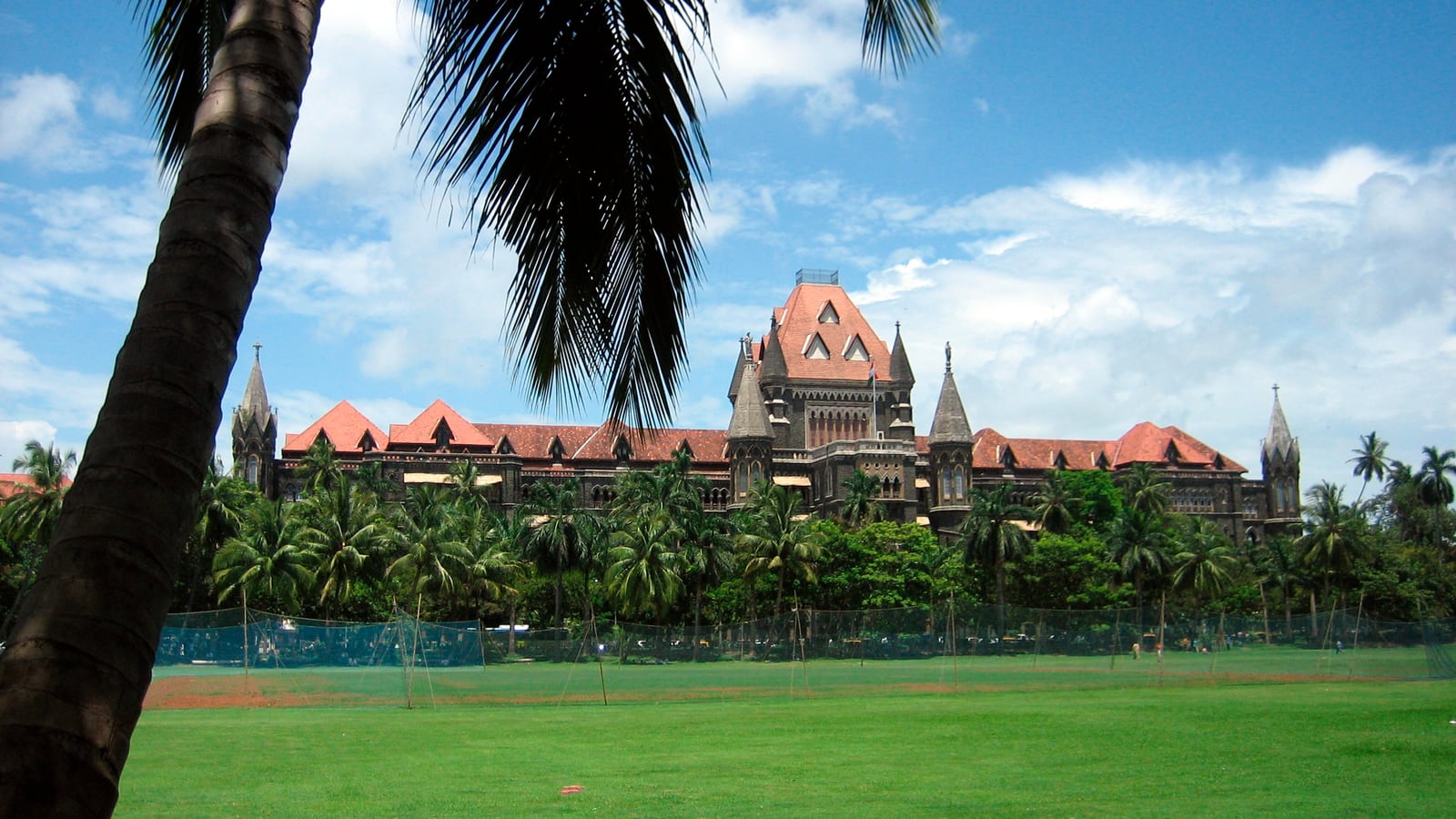
Photo: Michael Siegel AKA michaelj-siegel / Wikimedia Commons, CC BY-SA 2.0 (cropped). File photo.
The Enforcement Action
The Bombay High Court has directed the Central Bureau of Investigation (CBI), the Enforcement Directorate (ED) acting under the Prevention of Money Laundering Act, 2002, and the Income Tax authorities to investigate the affairs of the Sinhgad Technical Education Society (STES), its 44 educational institutions and its trustees. The order was passed on 10 November 2026 by a Special Bench of Justices G. S. Kulkarni and Advait M. Sethna, in Contempt Petition No. 349 of 2026 in Writ Petition No. 6765 of 2018 (Rohini Aniruddha Mohekar vs. Maruti Nivrutti Navale) and a batch of connected matters.
The batch comprises about 220 writ petitions filed by teaching and non-teaching employees of the society's institutions over unpaid salaries and retirement dues. According to the order, the outstanding amounts payable to employees "are stated to be more than Rupees 400 crores", and about 13 employees are stated to have died by suicide.
Pending the investigation, the court directed that all bank accounts and investments of the society and its trustees "shall remain freezed", barred the trustees from dealing with their shareholdings, and continued earlier interim orders restraining any dealing in the society's movable and immovable property. It also issued contempt show-cause notices to the society and eight named trustees, including Maruti Nivrutti Navale, whom the order describes as President and Chief Managing Trustee.
The order records that new counsel for the society sought an adjournment, which the bench refused. The society has not publicly responded to the order. The order is an interim direction; it is not a finding of guilt against anyone.
How the Scheme Worked
The order sets out how the matter reached a Special Bench during the Diwali vacation. On 6 November 2026, the Regular Bench recorded a statement made on the instructions of the managing trustee, who was present in court, that Rs 60,65,06,436 would be released to the petitioning employees that evening, in proportion to the sums owed to each. The bench accepted the statement as an undertaking to the court. Six letters dated 6 November 2026, addressed to the Nare branch of IDBI Bank in Pune and asking it to release the funds, were placed on record.
On the strength of that undertaking, the Regular Bench directed that orders already issued by the state's education directors, de-recognising 13 schools and appointing an administrator over the society's technical institutes, should not be acted on for the time being. The same order recorded that the State Government had deposited Rs 27,77,94,288 in court, and directed the managing trustee to deposit his passport with the court's registry by 10 November 2026.
According to the 10 November order, "not a single rupee" was paid. The bench described the letters to the bank as "purportedly false" and held that the undertaking had "remained only as a paper undertaking" and was breached.
On the underlying finances, the court reasoned that 44 fully running institutions with full admissions, whose students (other than reserved-category students whose fees are subsidised by the Government) pay regular fees, could not plausibly default on salaries for almost eight years "unless the monies as gathered are diverted". It said it had "a strong prima facie case" of material indicating that amounts were being siphoned away, and observed that "there appears to be a large-scale fraud on the part of the STES" in managing the institutions.
The bench also examined asset-disclosure affidavits that the trustees had earlier been directed to file. It noted shareholdings in a number of companies and co-operative banks, large advances, and what it called "shockingly disproportionate" income tax returns. The bench observed, per the order, that the possibility of funds being siphoned off into other businesses, or out of the country, "cannot be ruled out", and recorded that one trustee is stated to be a non-resident Indian living in Dubai. These are prima facie observations made to justify ordering an investigation.
The Law Invoked
The court grounded the order in the employees' fundamental rights. It held that non-payment of salaries engaged the right to livelihood under Article 21 of the Constitution, and described the trustees' conduct as "an ex facie affront" on rights under Articles 14 and 21. Article 21 protects life and personal liberty, which courts have read to include livelihood.
For the investigation, the order invokes the Prevention of Money Laundering Act, 2002, the law under which the ED investigates the proceeds of crime, and what it calls the Delhi Police Establishment Act, 1946, the statute that governs the CBI's jurisdiction. Relying on the Supreme Court's decision in State of West Bengal vs. Committee for Protection of Democratic Rights, (2010) 5 SCC 571, the bench said a constitutional court may order a CBI inquiry in exceptional cases, adding that it was "certainly not passing such order as a routine".
The contempt notices are issued under the Contempt of Courts Act read with Article 215 of the Constitution, which gives High Courts power to punish contempt of themselves. The order also refers to the Maharashtra Educational Institutions (Management) Act, 1976 and the Maharashtra Educational Institutions (Transfer of Management) Act, 1971, under which the state can take over the running of defaulting institutions, and the Maharashtra Public Trusts Act, 1950, under which the Charity Commissioner has been asked to hold an inquiry. The order does not cite specific section numbers.
What Happens Next
The court has asked for the action taken on its investigation direction, or a preliminary report, to be placed before it on 19 November 2026, when the matter is listed before the Regular Bench at 3 pm. Replies to the contempt show-cause notices are due on or before that date. The trustees must deposit their passports with the registry, report weekly to the Deccan police station in Pune, stay within Pune's jurisdiction and inform the police before any travel to Mumbai.
The court also directed the Chief Commissioner of Income Tax, Circle No. 2, Pune to examine the returns of the institutions and trustees, the Employees' Provident Fund authorities to check statutory compliance, and the Pune Police Commissioner to act on FIRs already lodged. The Education Department is to take over the schools or move students elsewhere, and the administrator is to take charge of the technical institutions.
An order of this kind opens an investigation; it does not decide one. Any FIR, attachment or chargesheet that follows would contain allegations to be tested in due process. The society may also seek legal remedies against the order, including by approaching the Supreme Court.
What It Means
For the employees, the most immediate practical effects are the freeze on the society's and trustees' accounts and assets, which preserves property while the investigation runs, and the money already deposited in court by the State Government, the release of which the court said it would decide. Employees with unpaid dues should keep their appointment letters, salary slips, provident fund statements and any written acknowledgement of dues, because investigators have been directed to record staff statements.
For students, the order directs the Education Department to take over institutions or move students into other schools. Families can check an institution's recognition and affiliation status with the state directorate or university before paying further fees.
The wider signal is that courts treat prolonged non-payment of staff by a fee-collecting institution as a possible warning sign of diverted funds, not merely a contract dispute. Employees of private trusts and colleges can check whether their provident fund contributions are actually being deposited through the EPFO member passbook. A gap between deductions on the salary slip and deposits in the passbook is a documented early indicator worth raising with the authorities.
FAQ
What exactly did the Bombay High Court order?
On 10 November 2026, a Special Bench directed the CBI, the ED under the Prevention of Money Laundering Act, 2002, and the Income Tax authorities to investigate the Sinhgad Technical Education Society, its 44 institutions and its trustees. It froze their bank accounts and investments, issued contempt show-cause notices and asked for a preliminary report by 19 November 2026.
The court held only that an investigation is warranted, per the order dated 10 November 2026.
Does this mean the people named are guilty?
No. The court's remarks are prima facie observations made to justify an investigation, not findings of guilt. Any FIR, chargesheet or provisional attachment that may follow would contain allegations, not findings of guilt; the accused are presumed innocent until proven guilty, and due process continues. The contempt notices also only ask the trustees to show cause why they should not be punished.
Why did the court order a CBI and ED investigation?
The order says 44 institutions with full admissions could not plausibly fail to pay salaries for about eight years unless money was diverted. It cited the trustees' asset disclosures, the breach of the 6 November undertaking and the lack of progress on FIRs already lodged, and described the step as exceptional.
How much money do the employees say they are owed?
According to the order, the amounts outstanding to teaching and non-teaching employees are stated to be more than Rs 400 crore. The State Government has deposited Rs 27,77,94,288 in court under earlier directions. The court has said it will hear the parties on how and to whom that money should be released.
What should affected employees do now?
Keep records of appointment, salary slips, deductions and any acknowledgement of dues, and check provident fund deposits in the EPFO member passbook. The court has directed investigators to record the statements of teaching and non-teaching staff, and the EPF authorities to examine the society's compliance.
This report is based on the official Bombay High Court order dated 10 November 2026 in Contempt Petition No. 349 of 2026 and connected matters. It was surfaced via coverage in Bar and Bench.
This report describes enforcement actions and allegations on the public record, attributed to the officials cited. An order, FIR or chargesheet is not a conviction; parties are presumed innocent until proven guilty.
Named in this report, or spotted an error? Corrections and responses: editor@oquilia.com. We correct errors promptly and record responses from named parties.