

SEBI issues recovery notices to Kalahridhaan Trendz directors over penalties
SEBI's Recovery Officer has demanded Rs 10.41 lakh each from two Kalahridhaan Trendz directors to recover penalties imposed in its 30 July 2026 final order on misleading disclosures.
Key points
- SEBI's Recovery Officer issued Notices of Demand on 30 October 2026 to Kalahridhaan Trendz directors Aditya N Agarwal and Sunitadevi Niranjan Agarwal.
- Each notice demands Rs 10,41,000, covering a Rs 10 lakh penalty from SEBI's 30 July 2026 final order plus interest and recovery cost, payable within 15 days.
- If unpaid, SEBI can attach bank accounts and property, and the final order on misleading announcements remains open to appeal before the Securities Appellate Tribunal.
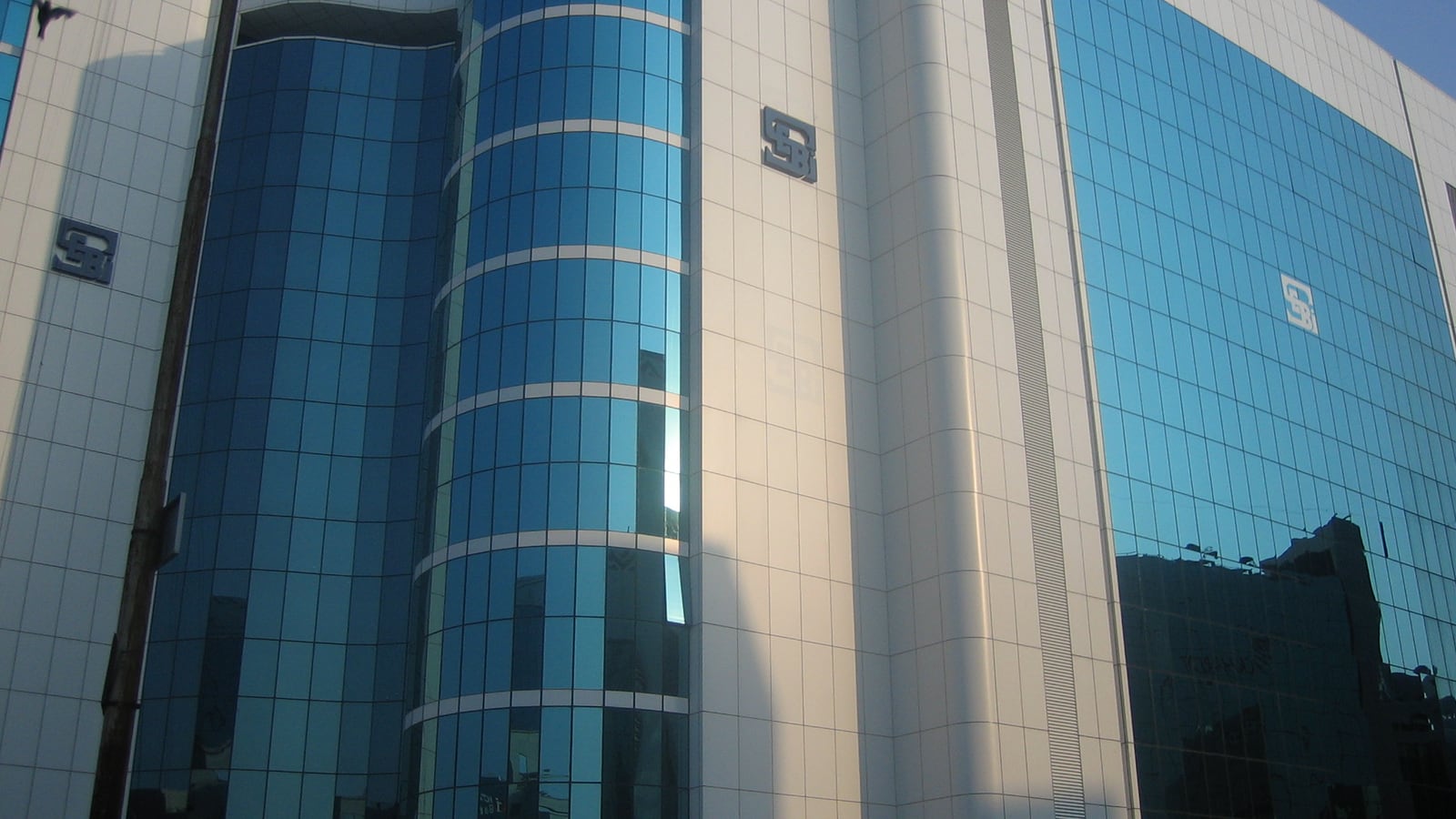
Photo: Jimmy vikas / Wikimedia Commons, CC BY-SA 3.0 (cropped). File photo.
The Enforcement Action
The Securities and Exchange Board of India (SEBI) has started recovery proceedings against two directors of Kalahridhaan Trendz Limited, an Ahmedabad-based fabrics company listed on the NSE SME platform, for unpaid penalties of Rs 10 lakh each. SEBI's Recovery Officer issued two Notices of Demand dated 30 October 2026: one against Aditya N Agarwal under Recovery Certificate (RC) No. 9310 of 2026, and one against Sunitadevi Niranjan Agarwal under RC No. 9311 of 2026.
Each notice certifies that Rs 10,41,000 is due to SEBI. That figure is made up of the Rs 10,00,000 penalty, Rs 40,000 of interest for July to October 2026 at 1% a month, and a recovery cost of Rs 1,000. Each notice directs the person named to pay within 15 days of receipt, failing which the Recovery Officer "shall proceed to recover the amount due" under the SEBI Act and the income-tax recovery provisions it borrows.
The penalties come from SEBI's final order dated 30 July 2026 (Order No. WTM/AS/CFD/CFD-SEC-4/32528/2026-27), passed by Whole Time Member Amarjeet Singh. In that order SEBI found that the company had failed to disclose loan defaults and had made false and misleading corporate announcements, including one about a Rs 115.50 crore export order from a buyer SEBI found could not be shown to exist. The order imposed penalties totalling Rs 1 crore on the company and three directors.
During the proceedings, the order records, the noticees argued that the lapses were procedural and that the company was itself a victim of misrepresentation by third parties. SEBI rejected those arguments. Neither person named in the notices has publicly responded to the recovery proceedings.
How the Scheme Worked
The final order lays out the matter in sequence. Kalahridhaan Trendz listed on the NSE SME platform on 23 February 2024, raising Rs 22.49 crore at an issue price of Rs 45 a share. According to the order, HDFC Bank wrote to SEBI on 9 September 2024 complaining that the company had not told the exchange it had defaulted on credit card dues of Rs 50.99 lakh. A second complaint, dated 18 November 2024, concerned an undisclosed default on business loan dues of Rs 30.23 lakh. The order records that the company told SEBI on 23 October 2024 that it had "inadvertently missed" the disclosure, and was given two days to make it, but remained in default.
The order then examined two announcements. On 2 May 2024, the company announced plans to expand production capacity to 7 lakh metres a month, expected a 25% rise in profit margin, and projected revenue of Rs 75 crore to Rs 100 crore. SEBI found the announcement gave no specific contracts, timelines or investment figures, and recorded that trading volumes and the number of trades rose by around 300% that day. The company later recorded a loss of about Rs 68.07 crore for FY 2024-25, the order notes.
The second announcement, made on 12 August 2024, claimed an order worth Rs 115.50 crore from "Beximcorp Textiles", described as a subsidiary of Akij Textile Mills Ltd of Bangladesh. According to the order, searches of Bangladesh's company records found no such entity. All correspondence ran through a Gmail account, the website on the letterhead did not work, and the contact person's number carried a UAE country code. The order found the deal went from first email (2:41 pm on 11 August 2024) to apparent acceptance within about 40 minutes, and was finalised the next day.
SEBI's trading data show the effect. Of 113 trades on 12 August 2024, 111 came after the announcement went out at 13:00:45. The share price closed 20% higher at Rs 52.20, reached Rs 62.60 the next day, and then fell back to Rs 40.10 by 16 August as volumes rose into the millions of shares. SEBI concluded the announcement was "deliberately disseminated to the market to portray a misleading impression".
The procedural history runs from an Interim Order cum Show Cause Notice dated 10 February 2025, which restrained all four noticees from the market, through replies and a personal hearing, to the final order of 30 July 2026, and now to recovery.
The Law Invoked
The final order was passed under Sections 11(1), 11(4), 11(4A), 11B(1) and 11B(2) of the SEBI Act, read with Rule 4(1) of the SEBI (Procedure for Holding Inquiry and Imposing Penalties) Rules, 1995. These let SEBI issue protective directions, including market bans, and impose penalties in the same proceeding. The penalties on the two directors now facing recovery were imposed under Section 15HB, the general penalty for failing to comply with SEBI regulations where no separate penalty is provided. SEBI found that they breached regulation 4(2)(f)(i)(2) and 4(2)(f)(ii)(8) of the Listing Obligations and Disclosure Requirements (LODR) Regulations, which require a board to oversee disclosures and make sure they are true and fair.
The company and its managing director were also penalised under Section 15HA, which covers fraudulent and unfair trade practices, after SEBI found breaches of Section 12A of the SEBI Act and the PFUTP Regulations, 2003.
The recovery notices rest on Section 28A of the SEBI Act, which lets SEBI recover unpaid penalties as if they were income-tax arrears. The notices cite Section 413 of the Income-Tax Act, 2025, Sections 411 to 419 and 421 of that Act, and Rule 225 of the Income-tax Rules, 2026.
What Happens Next
The notices give each person 15 days from receipt to pay. If they do not, the notices list the modes of recovery available: attachment and sale of movable property, attachment of bank accounts, attachment and sale of immovable property, arrest and detention in prison, and the appointment of a receiver to manage their properties. Copies have gone to CDSL, NSDL and all mutual funds in India, asking them to report the defaulter's holdings and to alert the Recovery Officer if any sale or redemption request arrives.
Under rule 225(16), once the notice is served the person cannot mortgage, lease or otherwise deal with their property without the Recovery Officer's permission. Any such transfer is treated as void. Explanation 1 to Section 28A also counts as the defaulter's own any transfer to certain relatives, made on or after 30 July 2026 without adequate consideration, for the purposes of recovery.
SEBI's final orders can be appealed to the Securities Appellate Tribunal, and from there to the Supreme Court on questions of law. The two notices do not refer to any appeal or stay. Separately, the final order told NSE to act on the company's continuing compliance failures, including starting compulsory delisting if warranted.
What It Means
Recovery is the stage where a SEBI penalty actually starts to cost something. The order gave the directors 45 days to pay, and these certificates follow once that window has passed. The notices are short, but they carry real weight: a freeze on dealing with property, and requests to depositories and fund houses to report holdings.
For investors, the bigger lesson is in the order itself. A small company announced an order worth more than half its annual turnover from a counterparty nobody had checked, and the stock rose 20% in an afternoon. Some checks are worth running before acting on a large announcement from a small listed company. Does the counterparty exist in its home country's company registry? Did the company say anything later about delivery or cancellation? Has it disclosed defaults on its borrowings? SME-platform stocks often trade thinly, so a single announcement can move them sharply in both directions.
SEBI's Enforcement section lists orders and recovery notices by company name. Investors who hold shares in a company under SEBI action can see there what has been ordered and against whom. NSE also publishes corporate announcements and any surveillance or delisting actions.
FAQ
What exactly has SEBI done now?
SEBI's Recovery Officer issued Notices of Demand dated 30 October 2026 under RC Nos. 9310 and 9311 of 2026 against Aditya N Agarwal and Sunitadevi Niranjan Agarwal. Each demands Rs 10,41,000, made up of a Rs 10 lakh penalty from the 30 July 2026 final order, Rs 40,000 interest and Rs 1,000 recovery cost, payable within 15 days.
What did the original order find?
The final order of 30 July 2026 found that Kalahridhaan Trendz failed to disclose defaults to HDFC Bank and made misleading announcements, including a claimed Rs 115.50 crore order from a Bangladeshi buyer that SEBI could not trace. It barred the company and its managing director for two years and two other directors for one year, with penalties totalling Rs 1 crore.
Can the order be appealed?
Yes. Final orders of a SEBI Whole Time Member can be challenged before the Securities Appellate Tribunal, and SAT decisions can be appealed to the Supreme Court on questions of law. The recovery notices published on 30 October do not mention any appeal or stay, so recovery has started on the dues as certified.
What can SEBI do if the amount is not paid?
The notices list the options: attaching and selling movable and immovable property, attaching bank accounts, arrest and detention in prison, and appointing a receiver. Depositories and mutual funds have been asked to report holdings, and the person cannot transfer or mortgage property without the Recovery Officer's permission once the notice is served.
How can I check whether a company is facing SEBI action?
SEBI's website has an Enforcement section listing orders and recovery proceedings, searchable by entity name. NSE and BSE publish each listed company's corporate announcements, so you can compare what a company claimed with what followed. For brokers and advisers, SEBI's registered intermediary lists show whether a firm is registered.
Does this mean the people named are guilty of a crime?
No. SEBI's findings are regulatory findings in civil proceedings, open to appeal before the Securities Appellate Tribunal, and the arrest power listed in the notices is a civil recovery measure for unpaid dues. No criminal court has convicted anyone in this matter. The people named are presumed innocent of any criminal offence until proven guilty, and due process continues.
Where can I read the official documents?
The final order and both recovery notices are on SEBI's website under Enforcement. Links to all three are in the note below.
This report is based on SEBI's Notice of Demand under RC No. 9310 of 2026, its Notice of Demand under RC No. 9311 of 2026, both dated 30 October 2026, and the SEBI final order dated 30 July 2026.
This report describes enforcement actions and allegations on the public record, attributed to the officials cited. An order, FIR or chargesheet is not a conviction; parties are presumed innocent until proven guilty.
Named in this report, or spotted an error? Corrections and responses: editor@oquilia.com. We correct errors promptly and record responses from named parties.