

SEBI moves to recover Rs 27.51 lakh in Unison Metals Telegram tips case
SEBI issued a notice of demand for Rs 27.51 lakh to enforce a penalty from its February 2026 order on Telegram stock tips in Unison Metals shares.
Key points
- SEBI issued a notice of demand on 2 November 2026 to recover Rs 27.51 lakh from a person it penalised in the Unison Metals matter.
- The sum covers a Rs 25 lakh penalty from SEBI's 5 February 2026 order, plus interest at 1 per cent a month and recovery costs.
- If unpaid within 15 days, SEBI may attach bank accounts and property; the underlying order can be appealed before SAT.
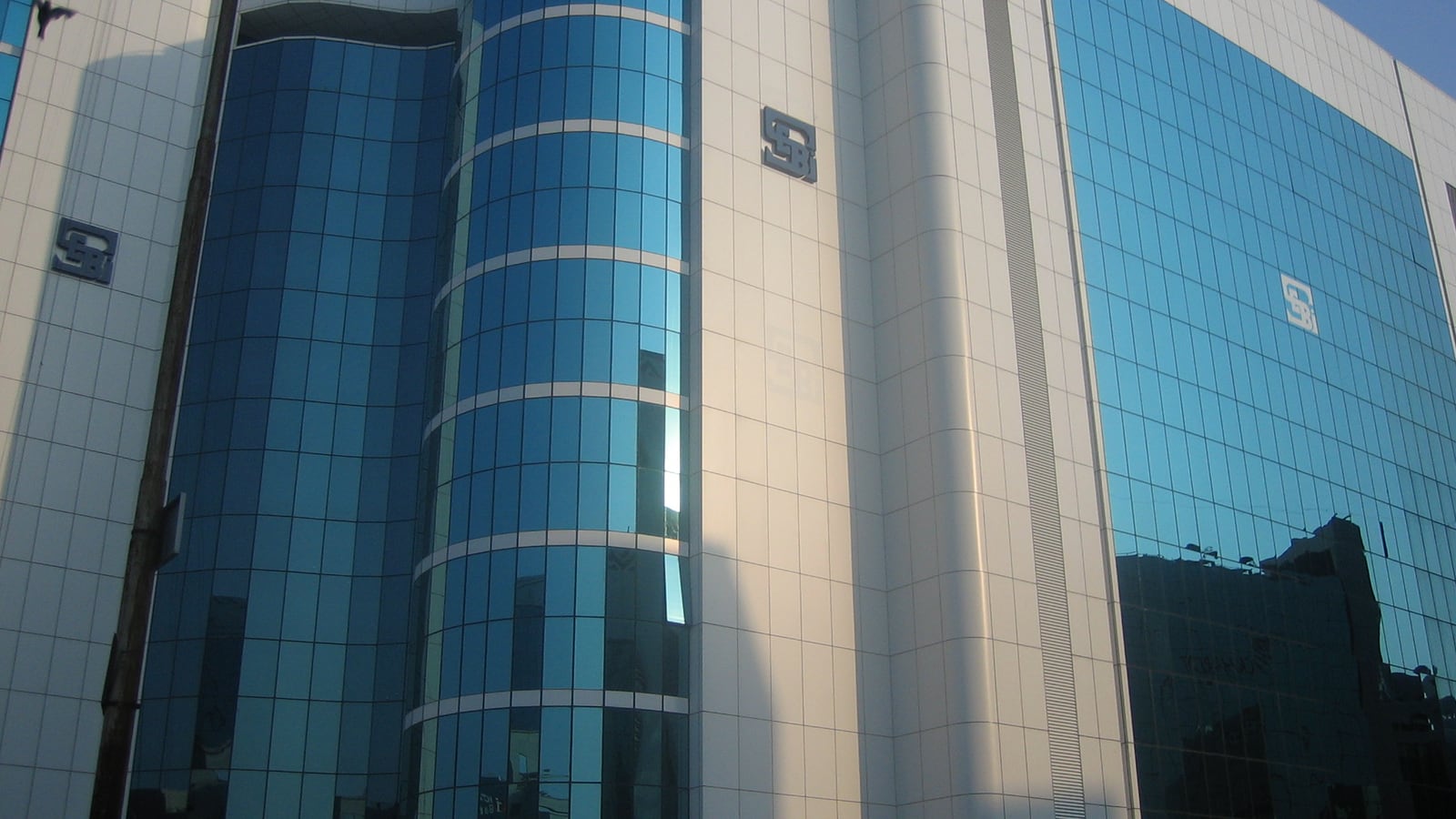
Photo: Jimmy vikas / Wikimedia Commons, CC BY-SA 3.0 (cropped). File photo.
The Enforcement Action
The Securities and Exchange Board of India (SEBI) has begun recovery proceedings to collect Rs 27,51,000 from Jalaj Agrawal in the matter of stock recommendation tips in the scrip of Unison Metals Limited. A Notice of Demand dated 2 November 2026 was issued under Recovery Certificate No. 9315 of 2026 by SEBI's General Manager and Recovery Officer, Kirtikumar Jadhav. The recovery certificate spells the name Jalaj Agarwal; the underlying order spells it Jalaj Agrawal. Both carry the same PAN, AUDPA0226H.
According to the notice, the sum is made up of a Rs 25,00,000 penalty, Rs 2,50,000 in interest at 1 per cent a month from February 2026 to November 2026, and Rs 1,000 in recovery costs. Further interest and costs may be added.
The penalty was imposed by a SEBI final order dated 5 February 2026, numbered WTM/AS/ISD/ISD-SEC-6/32028/2025-26 and passed by Whole Time Member Amarjeet Singh. In that order, SEBI found that buy recommendations for Unison Metals were posted on Telegram channels in December 2021 as part of a scheme to inflate the share's price and volume, and that Mr Agrawal was one of three "Operators" of that scheme.
Mr Agrawal denied the allegations in his reply to SEBI, as recorded in the final order. He submitted that he never traded in the shares, never posted any recommendation, received no payment, and had been "used as a scapegoat". SEBI rejected those submissions.
How the Scheme Worked
The final order traces the matter to complaints SEBI received in December 2021 about Telegram recommendations to buy Unison Metals, a BSE-listed maker of stainless steel sheets based in Ahmedabad. SEBI investigated the period from 1 December to 31 December 2021.
According to the order, buy recommendations were posted on three Telegram channels with between 4 lakh and 15 lakh subscribers each, on several days in December 2021, and were deleted on the same day. The order identifies another individual, Noticee No. 13, as the person who ran the channels.
The order describes a chain of roles. A group of shareholders, termed "Net Sellers/ Profit Makers/ Beneficiaries", sold shares into the rising market. An intermediary, Noticee No. 11, is said to have received weekly shareholding data on the company and forwarded it to Mr Agrawal. SEBI found that Mr Agrawal "directed and managed the dissemination of false recommendations", passing instructions to the channel operator that included the scrip name, quantity range, buying price and target or stop-loss price, and later asking that the posts be deleted. The order also records that Mr Agrawal, in a statement under oath during the investigation, said he had been asked in late November 2021 to promote the scrip on Telegram for around 15 days. He later said in his reply that his statement was taken under coercion.
On money, the order records that commission was calculated at 13 per cent of the shares sold on a given day at that day's closing price, and that a currency-note token was used to arrange cash payment. Another noticee's statement to SEBI put the total commission at Rs 80 lakh, of which Rs 20 lakh was said to have gone to Mr Agrawal through a non-banking route.
The market effect, per the order: average daily trading volume rose from 34,760 shares in November 2021 to 2,39,301 in December 2021, and the price touched Rs 84 on 20 December 2021, against a November close of Rs 43.45. SEBI found that the sellers made unlawful gains of Rs 3,87,45,475.70.
The procedural history is as follows. SEBI carried out search and seizure on 10 March 2022, issued an interim ex parte order cum show-cause notice on 31 July 2024, received Mr Agrawal's reply dated 7 April 2025, and passed the final order on 5 February 2026. The recovery certificate followed on 2 November 2026.
The Law Invoked
The final order held that Mr Agrawal, along with the other two Operators, violated clauses (a), (b), (c) and (e) of Section 12A of the SEBI Act, 1992, and clauses (a), (b), (c) and (d) of regulation 3, sub-regulation (1) of regulation 4 and clauses (a), (d), (e), (k) and (r) of regulation 4(2) of the SEBI (Prohibition of Fraudulent and Unfair Trade Practices relating to Securities Market) Regulations, 2003. Together these provisions prohibit manipulative and deceptive devices in securities dealing, including spreading misleading information to induce trading.
Directions were issued under Sections 11(1), 11(4) and 11B(1) of the SEBI Act, which empower SEBI to restrain people from the market. The penalty was imposed under Sections 11(4A) and 11B(2) read with Section 15HA, the penalty provision for fraudulent and unfair trade practices.
The recovery notice is issued under Section 28A of the SEBI Act, which lets SEBI recover unpaid dues using Income-tax recovery powers. The notice cites sections 411 to 419 and 421 of the Income-tax Act, 2025 and Rule 225 of the Income-tax Rules, 2026.
What Happens Next
The notice directs payment within 15 days of receipt. If the dues are not paid, it states that SEBI may recover them by attachment and sale of movable or immovable property, attachment of bank accounts, arrest and detention, or appointment of a receiver. Once the notice is served, the person cannot mortgage, lease or otherwise deal with their property without the Recovery Officer's permission. Under Explanation 1 to Section 28A, transfers to specified relatives on or after 30 July 2026, other than for adequate consideration, are treated as the person's own property for recovery. Copies went to CDSL, NSDL and all mutual funds, asking for holding details and notice of any sale or redemption request.
Separately, the final order restrained Mr Agrawal from the securities market for three years. The order states that this restraint runs consecutively, beginning only after earlier restraints imposed on him in the Superior Finlease Ltd. and Svarnim Trade Udyog Ltd. matters expire.
SEBI final orders can be appealed before the Securities Appellate Tribunal, and further on questions of law to the Supreme Court. The notice does not say whether any appeal by Mr Agrawal is pending. These are civil regulatory findings, not a criminal conviction.
What It Means
The order shows how a Telegram "tip" can serve people selling the stock rather than the subscribers buying it. According to SEBI, the recommendations ran while connected sellers were offloading shares, and the posts were deleted on the same day, which makes it harder for subscribers to check what they were told. The order found that public shareholders bought "at an inflated price" and that the number of public shareholders rose sharply.
Some practical checks follow. Anyone giving a specific buy call with a target price for a fee is generally doing work that requires SEBI registration as an investment adviser or research analyst. The registration number can be checked on SEBI's website under its intermediaries list. Free Telegram or WhatsApp channels that post small-cap buy calls with exact entry prices, then delete them, match the pattern described in this order and in the earlier Superior Finlease and Svarnim Trade Udyog orders it cites. A sudden jump in daily volume in a thinly traded small-cap, with no corporate announcement, is another warning sign.
For investors who bought during such episodes, the order sends disgorged gains to SEBI's Investor Protection and Education Fund rather than straight back to individual buyers. Complaints can be filed on SEBI's SCORES portal.
FAQ
Does this mean the people named are guilty?
SEBI's final order is a regulatory finding by a Whole Time Member that the provisions of the SEBI Act and the PFUTP Regulations were violated. It is not a criminal conviction. The order can be appealed before the Securities Appellate Tribunal, and Mr Agrawal denied the allegations in his reply to SEBI. The recovery notice enforces the penalty SEBI imposed; it does not add any new finding. No criminal charge is described in either document, and in any criminal matter a person is presumed innocent until proven guilty by a court; due process continues through any appeal.
What exactly is SEBI recovering?
The notice demands Rs 27,51,000: the Rs 25,00,000 penalty from the 5 February 2026 final order, Rs 2,50,000 in interest at 1 per cent a month from February to November 2026, and Rs 1,000 in recovery costs. Further interest, costs and charges may be added until the sum is paid.
What did the original order direct?
The 5 February 2026 order restrained 15 noticees from the securities market for one or three years, directed nine to disgorge a total of Rs 3,87,45,475.70, and imposed penalties on 15 noticees. Proceedings against two noticees were disposed of without directions. Mr Agrawal received a three-year restraint and a Rs 25 lakh penalty.
How can I check if an adviser or tipster is registered?
Search the SEBI website's list of recognised intermediaries for registered investment advisers and research analysts, and confirm the registration number and name match. An unregistered person or channel offering paid stock calls is outside SEBI's adviser framework.
Where can I read the official documents?
Both are published on SEBI's website: the notice of demand under Enforcement, Recovery Proceedings, and the final order under Enforcement, Orders. Links are given in the source note below.
This report is based on the official SEBI Notice of Demand dated 2 November 2026 and the SEBI final order dated 5 February 2026 in the matter of stock recommendation tips in Unison Metals Limited.
This report describes enforcement actions and allegations on the public record, attributed to the officials cited. An order, FIR or chargesheet is not a conviction; parties are presumed innocent until proven guilty.
Named in this report, or spotted an error? Corrections and responses: editor@oquilia.com. We correct errors promptly and record responses from named parties.
Sources & Citations
- Notice of Demand dated November 02, 2026 issued under RC No. 9315 of 2026 drawn against Jalaj Agarwal (PAN: AUDPA0226H) in the matter of stock recommendation tips in the scrip of Unison Metals Limited — SEBI
- Final Order in the matter of stock recommendation tips in the scrip of Unison Metals Ltd. — SEBI