

SEBI issues recovery notices for Rs 2.13 crore in Decillion Finance case
SEBI's Recovery Officer has issued two recovery certificates seeking Rs 2.13 crore in unpaid penalties, interest and costs from nine persons it penalised in the Decillion Finance matter.
Key points
- SEBI's Recovery Officer issued Recovery Certificates 9316 and 9317 of 2026 on 5 November to collect unpaid penalties in the Decillion Finance matter.
- The notices demand Rs 2,13,22,000 in total, covering the Rs 2 crore and Rs 5 lakh penalties from SEBI's 3 August 2026 order plus interest and costs.
- If the sums are not paid within 15 days, SEBI says it may attach bank accounts, demat holdings and property; the order remains appealable to the SAT.
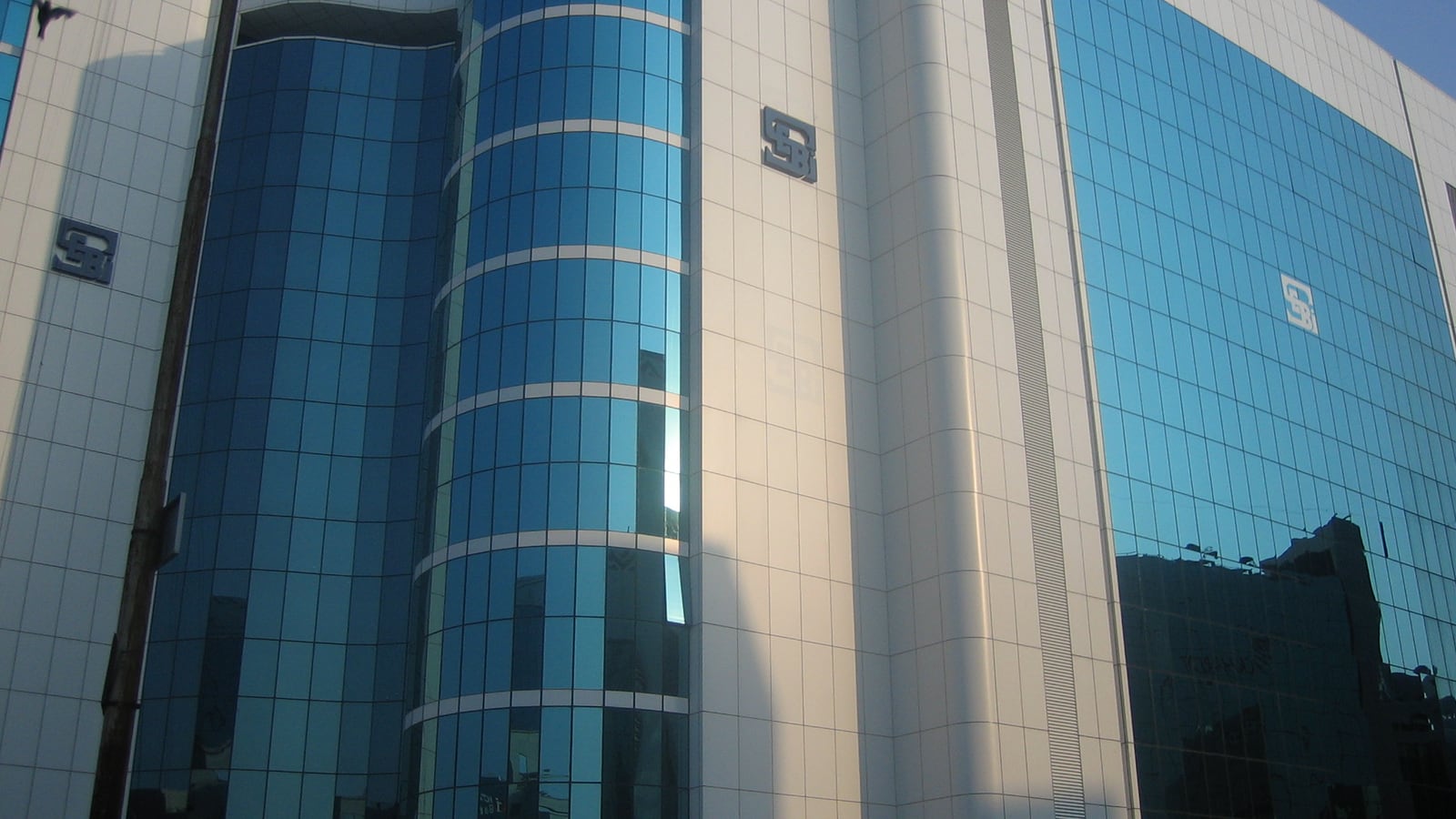
Photo: Jimmy vikas / Wikimedia Commons, CC BY-SA 3.0 (cropped). File photo.
The Enforcement Action
The Securities and Exchange Board of India (SEBI) has moved to recover unpaid penalties in the Decillion Finance Limited share-manipulation matter. Its Recovery Officer at the Northern Regional Office in New Delhi issued two recovery certificates on 5 November 2026 under Section 28A of the SEBI Act, 1992. The two certificates are Recovery Certificate No. 9317 of 2026 and Recovery Certificate No. 9316 of 2026.
Certificate No. 9317 demands Rs 2,08,01,000 jointly and severally from nine persons whom the notice lists as defaulters: Manish Mishra, Anshu Mishra, Dipak Dwiwedi, Vivek Chauhan, Ankur Sharma, Abhay Dwivedi, Neetu Dwivedi, Pallavi and Amrit Pal Singh. That sum is the Rs 2 crore penalty itself, interest of Rs 8 lakh and a recovery cost of Rs 1,000.
Certificate No. 9316 demands Rs 5,21,000 jointly and severally from five of them: Manish Mishra, Dipak Dwiwedi, Vivek Chauhan, Ankur Sharma and Neetu Dwivedi. It covers a Rs 5 lakh penalty, Rs 20,000 in interest and the same Rs 1,000 recovery cost. Together, the two notices seek Rs 2,13,22,000, or about Rs 2.13 crore.
Both penalties come from adjudication order No. Order/AK/RK/2026-27/32567-32589 dated 3 August 2026, which Oquilia reported at the time. A recovery certificate shows that, on SEBI's records, the penalty was not paid in time. It is not a new finding of wrongdoing. Before the order was passed, Abhay Dwivedi and Anshu Mishra denied knowing the YouTube channel at the centre of the case and disputed that the videos could be traced to them. None of the persons named has publicly responded to the recovery notices.
How the Scheme Worked
SEBI's investigation covered trading in Decillion Finance Limited (DFL) shares on BSE from 20 October 2022 to 14 February 2023. According to the August order, the price opened at Rs 22.55, rose to Rs 95.10 on 17 January 2023 and closed at Rs 61.25 on 14 February 2023. SEBI split this period into three phases: before the videos, while the videos were circulating, and the price fall afterwards.
The order records that two videos were uploaded to a YouTube channel called "Stock Yatra", one on 1 January 2023 and the other on 14 January 2023. Per the order, the first video gave a three-month target of Rs 500 and a one-year target of Rs 2,000 when the share was trading at about Rs 55. It also claimed that mutual funds and foreign institutional investors had invested in DFL and that a joint venture with Bajaj Finance was coming. DFL told SEBI that this information was "misleading, incorrect" and that "some unknown persons were misusing its name". SEBI treated the videos as false and misleading.
To trace who uploaded the videos, SEBI used information from Google LLC and from internet service providers. The order notes that both videos passed 23 lakh views. It also records that, between 21 November and 31 December 2022, one of the noticees paid Rs 33,99,996 to Google's advertising service to promote videos on YouTube.
Applying the civil standard of "preponderance of probability", the Adjudicating Officer held that the group bought substantial quantities of DFL shares before the videos. The order says the group then "systematically offloaded those shares" at higher prices once the videos were out, making wrongful gains of Rs 1.27 crore. On the connections it set out and the trading pattern, SEBI found that nine noticees had colluded to carry out the scheme.
The procedural history is recorded in the order itself. SEBI appointed the Adjudicating Officer by an order dated 20 June 2025 and issued a common show-cause notice on 19 September 2025. Most noticees inspected the documents and filed replies or attended a hearing. One noticee did not reply, and the matter went ahead ex parte for that person. The final order of 3 August 2026 gave the noticees 45 days to pay, and the recovery certificates followed once that period had passed.
The Law Invoked
The Rs 2 crore penalty was imposed under Section 15HA of the SEBI Act. According to the order, the violations were of Section 12A(a), (b) and (c) of the SEBI Act, read with Regulations 3(a), (b), (c) and (d) and Regulation 4(1) and 4(2) of the SEBI (Prohibition of Fraudulent and Unfair Trade Practices relating to Securities Market) Regulations, 2003. Section 12A bans manipulative and deceptive devices in securities dealings. The regulations list specific prohibited acts, such as creating a misleading appearance of trading and spreading false information to induce dealing.
The Rs 5 lakh penalty was imposed under Section 15A(b) of the SEBI Act for violating Regulations 29(1) and 29(2) read with Regulation 29(3) of the SEBI (Substantial Acquisition of Shares and Takeovers) Regulations, 2011. These rules require shareholders acting together to disclose acquisitions and disposals once their holdings cross set thresholds.
The recovery certificates rely on Section 28A of the SEBI Act, which lets SEBI recover unpaid dues as if they were income-tax arrears. Certificate No. 9317 cites section 413 of the Income-tax Act, 2025, sections 411 to 419 and 421 of that Act, and Rule 225 of the Income-tax Rules, 2026. It also cites Explanation 1 to Section 28A, under which a transfer of property to certain close relatives on or after 3 August 2026, otherwise than for adequate consideration, is deemed to remain the defaulter's property for recovery purposes.
What Happens Next
The notices direct the defaulters to pay within 15 days of receiving them, by demand draft, bank transfer or SEBI's online recovery-payment facility. If they do not pay, the notices say the Recovery Officer may attach and sell their movable and immovable property, attach their bank accounts, appoint a receiver to manage their property, or order arrest and detention in prison. Interest continues to accrue, as do any further costs of recovery.
The notices also warn that, once a notice is served, the person named cannot mortgage, charge, lease or otherwise deal with their property without the Recovery Officer's permission, and that any such transfer is void under Rule 225(16) of the Income-tax Rules, 2026. Copies have gone to the depositories CDSL and NSDL and to all mutual funds. SEBI has asked them to report the defaulters' holdings and to alert the Recovery Officer to any sale or redemption request made after the date of the notice.
The underlying order is a regulator's finding, not a criminal conviction. Under the SEBI Act, a noticee who disagrees with an adjudication order can appeal to the Securities Appellate Tribunal, and then to the Supreme Court on questions of law. Recovery is a separate enforcement step. The records reviewed for this report do not show whether any appeal has been filed or any stay granted.
What It Means
For ordinary investors, the main point is that a SEBI penalty does not end when the order is published. The recovery machinery under Section 28A gives the regulator the same reach as a tax recovery officer. It covers bank accounts, demat holdings, mutual fund units and property, including some assets moved to family members after the order. The instruction to depositories and fund houses shows how quickly that net can close.
The case also shows how stock-tip videos can be used. The claims SEBI found false were specific and exciting: a Rs 500 target, a link with a well-known lender, institutional money arriving. That is the kind of detail that prompts quick buying in a thinly traded small company. Treat any unsolicited price target in such a stock as a warning sign. Check corporate news only through BSE and NSE filings and the company's own disclosures, and confirm that anyone giving stock advice is a registered investment adviser or research analyst on SEBI's public registers.
The money SEBI recovers in a penalty case goes to the regulator, not to individual investors who lost money. Anyone who believes they were misled by a promotion can file a complaint on SEBI's SCORES portal and keep records of their trades and the material they relied on.
FAQ
What exactly did SEBI do on 5 November 2026?
SEBI's Recovery Officer at the Northern Regional Office issued two recovery certificates, Nos. 9316 and 9317 of 2026, under Section 28A of the SEBI Act. Together they demand Rs 2,13,22,000, made up of the penalties, interest at 1 per cent a month and recovery costs. The penalties were imposed by the adjudication order of 3 August 2026 in the Decillion Finance matter.
Does this mean the people named are guilty?
No. The penalties come from a SEBI adjudication order, a civil regulatory finding under the SEBI Act. It is not a judgment of a criminal court. The recovery certificates enforce payment of those penalties and add no new finding. The order can be challenged before the Securities Appellate Tribunal. The arrest and detention power listed in the notices is a civil recovery measure, not a criminal charge. No criminal case is part of these documents, the persons named are presumed innocent of any criminal offence, and due process continues.
What can SEBI do if the amount is not paid?
According to the notices, the Recovery Officer may attach and sell movable and immovable property, attach bank accounts, appoint a receiver to manage property, or order arrest and detention in prison. Depositories and all mutual funds have been asked to report holdings and to alert SEBI to any sale or redemption request.
Was Decillion Finance Limited itself penalised?
No. The company was not a noticee in the August order. It told SEBI that the information about it was misleading, that unknown persons were misusing its name, and that it had complained to the police and cyber authorities. The penalties and recovery notices are against individual noticees.
How can I check whether a stock tipster is registered?
SEBI publishes searchable lists of registered investment advisers and research analysts on its website. Anyone giving specific buy or sell calls for a fee should appear on one of them. Check corporate claims, such as a joint venture or institutional buying, against the company's filings on BSE or NSE before acting on a video or social media post.
This report is based on the official SEBI Recovery Certificate No. 9317 of 2026 dated 5 November 2026, Recovery Certificate No. 9316 of 2026 of the same date, and the SEBI adjudication order dated 3 August 2026. It was surfaced via SEBI's own enforcement notices.
This report describes enforcement actions and allegations on the public record, attributed to the officials cited. An order, FIR or chargesheet is not a conviction; parties are presumed innocent until proven guilty.
Named in this report, or spotted an error? Corrections and responses: editor@oquilia.com. We correct errors promptly and record responses from named parties.
Sources & Citations
- Notice of Demand under Recovery Certificate No. 9317 of 2026 dated November 05, 2026, in the matter of Decillion Finance Limited — SEBI
- Notice of Demand under Recovery Certificate No. 9316 of 2026 dated November 05, 2026 — SEBI
- Adjudication Order in the matter of Decillion Finance Limited, 3 August 2026 — SEBI