

SEBI bars CAT Technologies, two directors from selling property
SEBI's recovery officer has barred CAT Technologies and two directors from selling assets to recover about Rs 14.37 crore in penalties from its 2021 GDR order.
Key points
- SEBI's Recovery Officer issued prohibitory orders on 10 November 2026 barring CAT Technologies and two directors from selling or mortgaging their properties.
- The three recovery certificates total about Rs 14.37 crore plus interest, arising from penalties SEBI imposed in April 2021 over the company's GDR issues.
- Appeals have run out, and Telangana sub-registrars have been told not to register any transfer of the listed properties.
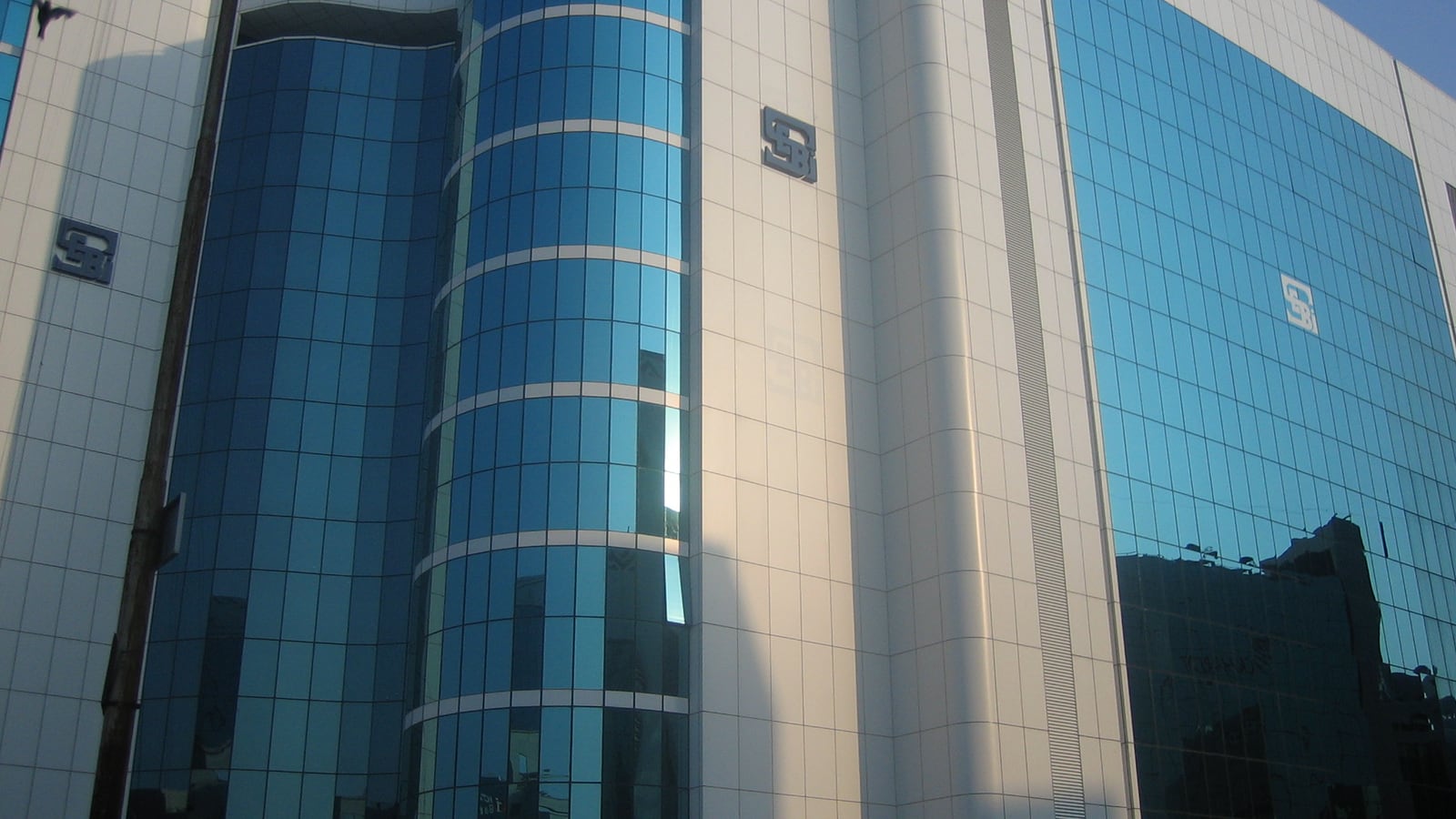
Photo: Jimmy vikas / Wikimedia Commons, CC BY-SA 3.0 (cropped). File photo.
The Enforcement Action
The Securities and Exchange Board of India (SEBI) has barred CAT Technologies Limited and two of its directors from selling, transferring or mortgaging their properties. The step comes as the regulator works to recover penalties it imposed five years ago in a case about the company's Global Depository Receipt (GDR) issues.
On 10 November 2026 the Recovery Officer at SEBI's Southern Regional Office in Chennai issued three prohibitory orders. Prohibitory Order No. RRD/SRO/1583/2026 is against the Hyderabad-based company under Recovery Certificate No. 4398 of 2021, which puts the dues at Rs 13,08,08,233 plus further interest, costs and charges. Order No. RRD/SRO/1581/2026 is against Dhiraj Kumar Jaiswal, the company's managing director at the time of the 2021 adjudication order, under Recovery Certificate No. 4391 of 2021 for Rs 1,18,43,630. Order No. RRD/SRO/1582/2026 is against Dinesh Kumar Jaiswal, a director, under Recovery Certificate No. 4395 of 2021 for Rs 10,77,603.
Together, the three certificates come to about Rs 14.37 crore before further interest. Each order says the defaulter is "prohibited from disposing, transferring, alienating, or charging" the listed properties.
The orders list one 2,800 sq ft plot in Rangareddy district held by the company. They also list four Hyderabad properties held by Dhiraj Kumar Jaiswal and one Hyderabad flat held by Dinesh Kumar Jaiswal. They also cover all other immovable and movable property the three hold. None of the three has publicly responded to the 10 November orders.
How the Scheme Worked
The dues come from an adjudication order dated 28 April 2021, signed by Adjudicating Officer K Saravanan. According to that order, SEBI began investigating after alerts in its surveillance system about companies that had issued GDRs. CAT Technologies made two GDR issues. The first closed on 27 July 2007 and raised USD 6.46 million through 43,04,348 GDRs. The second closed on 6 November 2009 and raised USD 10.002 million through 15,95,333 GDRs. Pan Asia Advisors Ltd was the book running lead manager for both.
The order records that Vintage FZE subscribed to the GDRs using loans from EURAM Bank. For the second issue, it refers to a loan agreement dated 27 October 2009 for USD 1,00,02,737.91, which was to be used to subscribe to CAT's GDRs. On the same date, CAT signed a pledge agreement with EURAM Bank that offered the GDR proceeds in its account as security for that loan. The first issue followed the same pattern, with a loan agreement dated 23 July 2007 and a pledge agreement dated 20 July 2007.
In the order's words, the issuer guaranteeing the loan taken by the subscriber to its own GDRs formed "the central and determining features of this scheme". SEBI alleged that the issue would not have been subscribed without that security. It also alleged that the agreements were not disclosed to BSE or to shareholders. The order further records allegations that CAT funded promoters to buy its shares and did not disclose related party transactions in its annual reports.
The matter went through two separate SEBI tracks. A whole-time member's order dated 3 April 2019 barred the company and its directors from the securities market for five years. The Securities Appellate Tribunal (SAT) dismissed the appeal against that order on 6 October 2021. When dismissing the appeals against the 2021 penalties, the SAT order of 18 October 2021 records findings that major portions of the GDR proceeds were not received in India and were transferred directly to a subsidiary in the UAE. It also refers to "misleading corporate announcements" and to non-disclosure of the pledge and loan agreements.
The Law Invoked
The 2021 adjudication order found violations of Section 12A(a), (b) and (c) of the SEBI Act, 1992, read with Regulations 3(b), (c), (d) and 4(2)(c), (f), (k) and (r) of the SEBI (Prohibition of Fraudulent and Unfair Trade Practices relating to Securities Market) Regulations, 2003. Section 12A prohibits manipulative and deceptive devices in dealing in securities. The PFUTP Regulations set out what counts as fraudulent or unfair trade practice. Penalties for these violations were imposed under Section 15HA of the SEBI Act.
The order also imposed penalties on the company and its managing director under Section 15A(a) of the SEBI Act, for failing to provide information SEBI asked for, in violation of Section 11C(3) read with 11C(6). It imposed a further penalty on the company under Section 23E of the Securities Contracts (Regulation) Act, 1956, for breaching Clause 32 of the Listing Agreement on related party disclosures. The company was fined Rs 12 crore, Rs 10 lakh and Rs 5 lakh under these three heads. Dhiraj Kumar Jaiswal was fined Rs 1 crore and Rs 10 lakh, and Dinesh Kumar Jaiswal Rs 10 lakh.
The prohibitory orders themselves rely on Rules 16 and 48 of the Second Schedule to the Income-tax Act, 1961, read with Section 28A of the SEBI Act. Section 28A lets SEBI's Recovery Officer recover unpaid penalties using the tax recovery machinery. Under that machinery, an attached property cannot be transferred or charged.
What Happens Next
The appeals are over. The SAT dismissed the appeals against the penalties at the admission stage on 18 October 2021. The parties then filed civil appeals in the Supreme Court and, according to a later SAT order, withdrew them on 25 November 2024. On 22 July 2026 the SAT dismissed their review applications. It held that it no longer had jurisdiction because its order had merged with the Supreme Court's order.
The prohibitory orders are the latest step in recovery. The Notices of Demand were issued on 17 December 2021. SEBI attached the company's demat and bank accounts on 10 March 2026, and those of the two directors on 25 February 2026. On 21 April 2026 the Recovery Officer directed banks to send the available balances to SEBI and mutual funds to redeem units and send the proceeds.
According to the orders, the amounts recovered from bank accounts were "not sufficient". Each defaulter must give full details of their assets, along with original title deeds, within two weeks. The orders are being served on Telangana's Inspector General of Registration and the relevant sub-registrars, who are told not to register any document dealing with the properties. The 2021 adjudication order had warned that unpaid penalties could be recovered by "attachment and sale of movable and immovable properties".
What It Means
For shareholders of companies that raised money abroad, the case shows how a GDR issue can be misused. According to the findings in this case, money that seemed to come from foreign investors was in practice backed by the issuing company's own pledge. That means the capital raised was not freely available to the business. Investors reading a company's announcements about overseas fundraising can check its annual reports for pledges, security given on others' loans, and where the proceeds were actually deposited.
The case also shows how long recovery can take. The penalties were imposed in April 2021, but SEBI moved against property only in November 2026, after litigation in two forums. A recovery certificate does not end when the original penalty is due. Interest keeps running, which is why the certificates exceed the penalties first imposed.
For anyone buying property in Hyderabad or Rangareddy, a SEBI prohibitory order means sub-registrars have been told not to register transfers of the listed assets. Checking encumbrance records and SEBI's recovery proceedings page before a purchase is a sensible precaution. SEBI publishes recovery certificates, attachment notices and prohibitory orders on its website, searchable by name.
FAQ
What exactly did SEBI order on 10 November 2026?
SEBI's Recovery Officer at the Southern Regional Office issued three prohibitory orders, against CAT Technologies Limited, Dhiraj Kumar Jaiswal and Dinesh Kumar Jaiswal. Each bars the defaulter from disposing of, transferring or charging the listed properties and all their other assets. Each also forbids anyone from benefiting from such a transaction. The orders enforce Recovery Certificates 4398, 4391 and 4395 of 2021, which together total about Rs 14.37 crore plus further interest.
Is this a criminal conviction?
No. This is a civil regulatory matter. SEBI's adjudicating officer imposed monetary penalties in April 2021 after finding violations of the SEBI Act and the PFUTP Regulations, and the Securities Appellate Tribunal upheld those penalties. The prohibitory orders are a way of collecting penalties that remain unpaid. They are not a finding by a criminal court, and nothing in these orders sends anyone to jail.
Can the orders still be challenged?
The penalties themselves can no longer be appealed in the ordinary way. The SAT dismissed the appeals in October 2021. The appeals in the Supreme Court were withdrawn in November 2024, and the SAT dismissed the review applications in July 2026. The recovery certificates remain in force until the dues are paid.
What does this mean for CAT Technologies shareholders?
The orders do not directly affect shareholders' own holdings. They restrict the company's and the two directors' assets. Shareholders should read the company's exchange filings for any disclosure about the recovery. They should also note that any amount SEBI recovers goes towards the unpaid penalty, not to compensate individual investors.
Where can I read the official orders?
All three prohibitory orders, the April 2021 adjudication order and the related recovery certificates are on SEBI's website under Enforcement, then Recovery Proceedings and Orders. The SAT's October 2021 ruling dismissing the appeals is available on Indian Kanoon.
This report is based on SEBI's official Prohibitory Order No. RRD/SRO/1583/2026 dated 10 November 2026, its companion orders, and the adjudication order dated 28 April 2021, as published by SEBI.
This report describes enforcement actions and allegations on the public record, attributed to the officials cited. An order, FIR or chargesheet is not a conviction; parties are presumed innocent until proven guilty.
Named in this report, or spotted an error? Corrections and responses: editor@oquilia.com. We correct errors promptly and record responses from named parties.
Sources & Citations
- Prohibitory Order No. 1583 of 2026 issued against CAT Technologies Limited associated with RC 4398 of 2021 — SEBI
- Prohibitory Order No. 1581 of 2026 associated with RC 4391 of 2021 — SEBI
- Prohibitory Order No. 1582 of 2026 associated with RC 4395 of 2021 — SEBI
- Adjudication Order in the matter of GDR Issues of CAT Technologies Ltd — SEBI
- SAT order dated 18 October 2021, Appeal No. 640 of 2021 and connected appeals — Securities Appellate Tribunal