

SEBI fines Integra Switchgear and promoters Rs 13 lakh over disclosures
A SEBI adjudicating officer imposed Rs 5 lakh on Integra Switchgear and Rs 8 lakh on 16 promoter-group members for incorrect shareholding patterns and late SAST disclosures.
Key points
- A SEBI adjudicating officer fined Integra Switchgear Rs 5 lakh and 16 promoter-group members Rs 8 lakh jointly in an order dated 30 October 2026.
- SEBI found promoter disclosures due in 2019 and 2021 were filed only on 29 January 2024, delays of 1,763 and 1,123 days.
- The penalties must be paid within 45 days, failing which SEBI may start recovery; the order can be challenged before the Securities Appellate Tribunal.
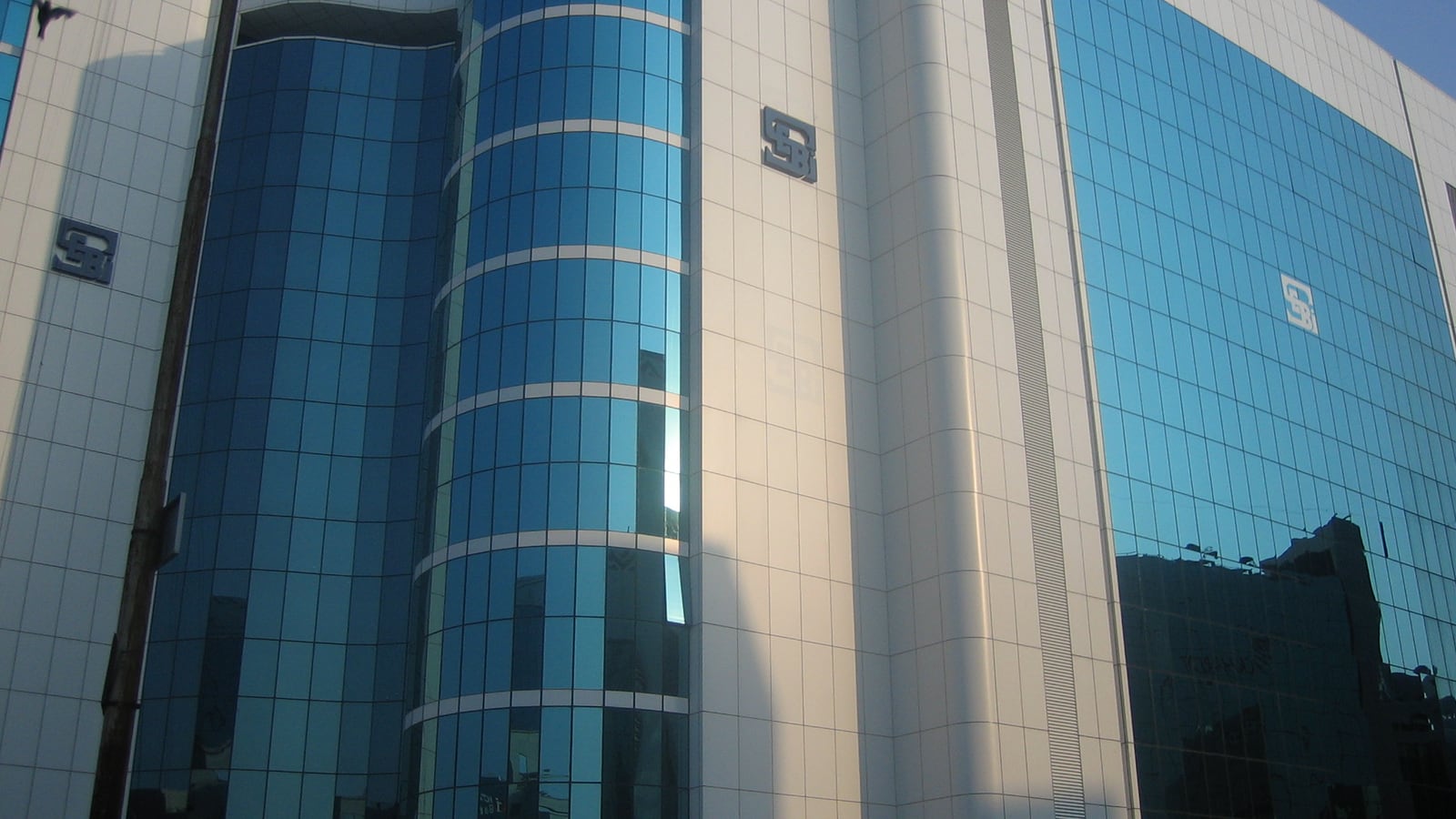
Photo: Jimmy vikas / Wikimedia Commons, CC BY-SA 3.0 (cropped). File photo.
The Enforcement Action
The Securities and Exchange Board of India (SEBI) has imposed penalties totalling Rs 13 lakh on Integra Switchgear Limited and 16 members of its promoter group, after an adjudicating officer found that the company filed incorrect shareholding patterns and that its promoters disclosed changes in their holdings years late. The adjudication order, numbered Order/MS/SM/2026-27/32799-32815, is dated 30 October 2026 and was passed in Mumbai under Section 15-I of the SEBI Act, 1992.
Per the order, the company itself (Noticee 1) must pay Rs 5,00,000 under Section 15HB of the SEBI Act for breaches of the Listing Obligations and Disclosure Requirements (LODR) Regulations, 2015. Noticees 2 to 17, the promoters and promoter-group entities, were directed to pay Rs 8,00,000 "jointly and severally" under Section 15A(b) for breaches of the Substantial Acquisition of Shares and Takeovers (SAST) Regulations, 2011.
The matter is a disclosure case, not one involving any finding of investor loss. The order itself records that the material on record "does not indicate the amount of disproportionate gain or unfair advantage" made by the noticees, nor loss caused to investors, nor that the defaults were repetitive.
The company "categorically denies all alleged violations", according to its submissions summarised in the order, and asked that the proceedings be dropped or closed with an administrative warning. The promoters also contested the charges. The adjudicating officer rejected those arguments.
How the Scheme Worked
There was no scheme in the sense of a plan to extract money; the order describes a long run of classification and disclosure lapses that came to light in mid-2024. SEBI received a Draft Letter of Offer from Northvale Capital Partners Private Limited, which proposed to acquire shares of Integra Switchgear, and a letter dated 6 June 2024 from the manager to the offer. Scrutiny of those documents, the order says, led SEBI to observe that the company and its promoters were in breach of the LODR and SAST Regulations.
On the company's side, the order sets out three groups of findings. First, a shareholder who was the son of a founding promoter was shown as a public shareholder until December 2015, and then moved into the promoter category from March 2016 without any reclassification application to BSE; BSE confirmed it had received none. Second, after two promoters died, their shares were inherited on 30 December 2020 by two family members who, per the order, were not classified as promoters in shareholding patterns from December 2020 to June 2023, and were then moved into the promoter group from September 2023 without following the prescribed process or disclosing it as a material event. Third, two shareholders shown as promoters until December 2015 were shown as public shareholders from March 2016 to December 2024, again with no BSE application or approval on record.
On the promoters' side, the order examined three dates on which holdings changed. A 4.08% off-market acquisition on 29 March 2016 was received by BSE two days after its due date. Transfers on 30 March 2019, which the order says added up to 5.45% against a pre-transaction holding of 50.01%, should have been disclosed by 2 April 2019 but were reported on 29 January 2024, a delay of 1,763 days. Transmissions of shares to legal heirs on 30 December 2020 were due by 1 January 2021 and were also reported on 29 January 2024, a delay of 1,123 days.
The procedural history runs as follows, according to the order. An adjudicating officer was appointed on 25 June 2025. A show-cause notice went to the company on 15 October 2025. The promoters were offered summary settlement, which the order treats as failed because the stipulated requirements were not met; a common show-cause notice followed on 7 January 2026. Hearings were held on 24 August 2026, with additional submissions on 27 August 2026, before the final order of 30 October 2026.
The noticees argued, among other things, that the disclosures had been sent by email at the time but the mailbox was no longer accessible, that the company had ceased operations (intimated to BSE in July 2020), and that the lapses caused no market impact. The order held that, in the absence of documentary evidence, these were "merely an assertion".
The Law Invoked
The company was found in violation of Regulation 31(1)(b) read with Regulation 4(1)(e) of the LODR Regulations, which require a listed company to file an accurate shareholding pattern with the exchange each quarter. It was also found in breach of Regulation 31A(2), read with Regulations 4(1)(g) and 4(1)(h), which govern how a promoter may be reclassified as public (and the reverse) only with exchange approval; Regulations 31A(6)(a), 31A(7)(c) and 31A(8)(c), which cover reclassification on events such as inheritance and the disclosure of reclassification as a material event; and Regulation 4(1)(c), which the order applied to the misrepresentation of facts about reclassification filings.
The promoters were found in breach of Regulations 29(1) and 29(2) of the SAST Regulations. As the order explains, Regulation 29(1) requires disclosure when a holder reaches 5% or more, and Regulation 29(2) requires disclosure of any change exceeding 2% by an existing holder of 5% or more, in each case within two working days.
The penalties were imposed under Section 15HB of the SEBI Act, the residual penalty for breaches with no separate penalty, and Section 15A(b), the penalty for failing to file information on time. In fixing the amount, the officer applied the factors in Section 15J. The order adds that unpaid penalties may lead to recovery proceedings under Section 28A.
What Happens Next
The noticees must pay the penalties within 45 days of receiving the order, through SEBI's online payment facility. If they do not, the order says SEBI may initiate consequential action, including recovery proceedings under Section 28A of the SEBI Act, which can extend to attachment and sale of movable and immovable property, along with interest.
As with any order of a SEBI adjudicating officer, the noticees can challenge it before the Securities Appellate Tribunal (SAT). An appeal does not automatically stay a penalty; the tribunal decides on interim relief. The SAT's own decisions can be taken further to the Supreme Court on questions of law.
There is also the corporate backdrop. The order notes that these proceedings arose during the review of an open-offer document for the June 2024 acquisition of the company, and it holds that a change of promoter or management does not affect the company's liability for past defaults. No public statement from the company or its promoters responding to the final order was found on the record at the time of writing.
What It Means
For ordinary investors, the case is a reminder of why shareholding disclosures matter even when a company is small. Who counts as a promoter decides how much of the company is genuinely in public hands, and whether a controlling group is building or shedding its stake. When those filings are wrong for years, investors reading the quarterly shareholding pattern on BSE are working from an inaccurate picture of control.
The order also restates two practical points. First, the "promoter group" is defined by family relationship, and the officer held that a change of surname after marriage does not change that status. Second, the burden is on the person filing to keep proof of submission; an inaccessible email account was not accepted as evidence.
Investors in thinly traded or dormant listed companies can protect themselves with simple checks: compare successive quarterly shareholding patterns on the exchange website, look for sudden reclassifications between promoter and public categories, and read the SAST disclosures filed under Regulation 29. SEBI's own orders page lists adjudication orders by company, so anyone can see whether a company or its promoters have a history of disclosure lapses before investing.
FAQ
What exactly did SEBI order?
An adjudicating officer of SEBI imposed a penalty of Rs 5 lakh on Integra Switchgear Limited under Section 15HB of the SEBI Act for LODR breaches, and Rs 8 lakh, payable jointly and severally, on 16 promoters and promoter-group entities under Section 15A(b) for delayed SAST disclosures. The order is dated 30 October 2026 and must be complied with within 45 days of receipt.
Did SEBI find that investors lost money?
No. The order states that the material on record does not indicate any disproportionate gain or unfair advantage made by the noticees, any loss caused to investors, or that the defaults were repetitive. The penalties relate to inaccurate and late disclosures, which SEBI treats as breaches in themselves because, as the order notes, the obligation applies regardless of the company's size.
Can the order be appealed?
Yes. Orders passed by SEBI adjudicating officers can be challenged before the Securities Appellate Tribunal. Until any appeal is decided, the order stands, and the tribunal decides whether to grant interim relief. The noticees denied the violations during the proceedings; no appeal is recorded in the order itself.
How can I check a company's promoter holdings?
Every listed company files a quarterly shareholding pattern with its stock exchange, available on the company's page on the BSE or NSE website. Disclosures by large holders under the SAST Regulations appear in the same place. Comparing several quarters side by side is the quickest way to spot unexplained moves between promoter and public categories.
Where can I read the official order?
The full 38-page order is published on SEBI's website under Enforcement, Orders, Orders of AO, titled "Adjudication Order in the matter of Integra Switchgear Limited", dated 30 October 2026. A direct link appears at the end of this report.
This report is based on the official SEBI adjudication order dated 30 October 2026 in the matter of Integra Switchgear Limited. It was surfaced via coverage by Moneylife on Google News.
This report describes enforcement actions and allegations on the public record, attributed to the officials cited. An order, FIR or chargesheet is not a conviction; parties are presumed innocent until proven guilty.
Named in this report, or spotted an error? Corrections and responses: editor@oquilia.com. We correct errors promptly and record responses from named parties.