

SEBI bars EKI Energy and its MD, imposes Rs 88 lakh in penalties
SEBI's 30 October order bars EKI Energy for 2 months and its MD for 12 months, finding premature revenue of Rs 197.04 crore and Rs 26.34 crore in diverted funds.
Key points
- SEBI barred EKI Energy Services from the securities market for 2 months and its managing director for 12 months in an order dated 30 October 2026.
- SEBI found the company prematurely recognised Rs 197.04 crore of revenue in FY 2022-23 and diverted Rs 26.34 crore through expenses it held to be fictitious.
- Penalties totalling Rs 88 lakh are payable within 45 days, and the parties may appeal the order to the Securities Appellate Tribunal.
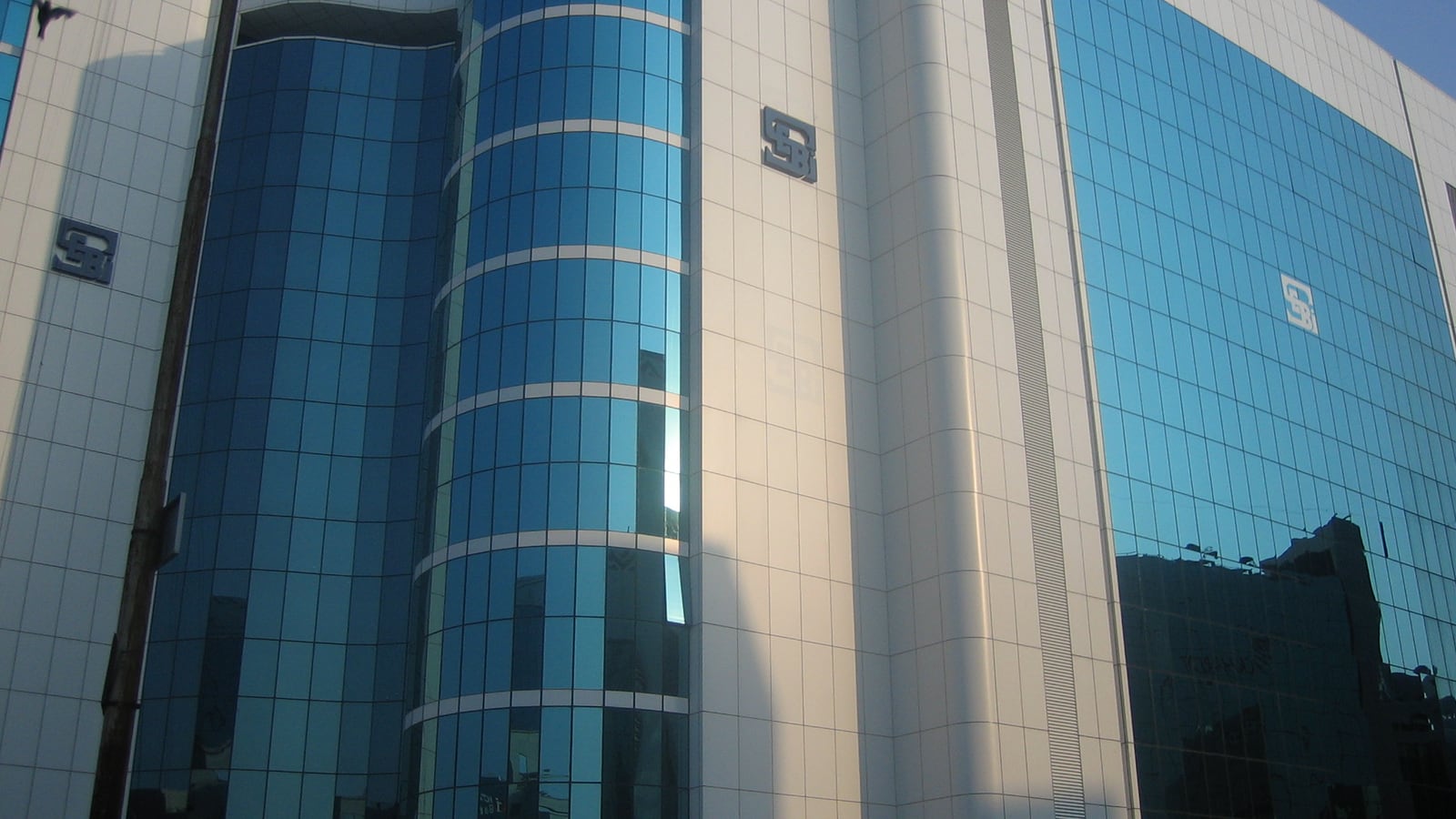
Photo: Jimmy vikas / Wikimedia Commons, CC BY-SA 3.0 (cropped). File photo.
The Enforcement Action
The Securities and Exchange Board of India (SEBI) has barred EKI Energy Services Ltd, a listed carbon-credit trading company, and four of its present or former officers from the securities market, and imposed penalties totalling Rs 88 lakh on the company and seven individuals. The 74-page final order, reference QJA/MN/CFID/CFID-SEC6/32818/2026-27, was passed on 30 October 2026 by SEBI's quasi-judicial authority, N. Murugan.
Under the directions, the company is restrained from accessing the securities market for 2 months, managing director Manish Kumar Dabkara for 12 months, former chief financial officer Mohit Kumar Agarwal for 8 months, whole-time director Naveen Sharma for 5 months and whole-time director Sonali Sheikh for 1 month, each from the date of the order. SEBI also directed Mr Dabkara "to take immediate steps to recoup" for the company the amount it found had been diverted.
SEBI found that EKI prematurely recognised revenue of Rs 197.04 crore across the first three quarters of FY 2022-23, and that it diverted Rs 26.34 crore by booking expenses the regulator held to be fictitious during FY 2021-22 and FY 2022-23. Penalties were also levied on the former compliance officer and two independent directors who sat on the audit committee.
According to the order, the company and the individuals contested the allegations during the proceedings, arguing that the revenue treatment reflected a good-faith accounting judgement and that the disputed expenses were genuine. Oquilia could not find a public statement from the company responding to the order at the time of writing.
How the Scheme Worked
According to the order, EKI, incorporated in 2011, trades carbon credits and runs community projects such as distributing efficient cookstoves in rural homes. It listed on the BSE SME platform on 7 April 2021 and migrated to the main board on 4 July 2022. Under its cookstove agreements, the company had to manufacture and distribute the stoves and also deliver verified carbon credits (VCUs) to buyers over time.
The order records that EKI booked revenue upfront once the stoves were distributed, without the VCUs having been delivered. SEBI held this was contrary to Ind AS 115, the accounting standard on revenue from contracts with customers. By the order's figures, revenue was overstated by Rs 74.06 crore in the June 2022 quarter, Rs 104.80 crore in the September 2022 quarter and Rs 18.18 crore in the December 2022 quarter. EKI argued that deployment and project registration satisfied its main performance obligation and that later VCU issuance was "only administrative"; SEBI did not accept that.
The order sets out the chronology. The statutory auditor, Walker Chandiok & Co LLP, appointed on 7 December 2022, qualified the results for the quarter and nine months ended December 2022, and on 10 July 2023 reported suspected fraud to the audit committee under Section 143(12) of the Companies Act, 2013. The company revised its annual revenue downward when announcing its FY 2022-23 results on 23 September 2023, but, the order notes, did not separately restate the earlier quarterly results. SEBI observed that trading volume in the stock rose during the period of the misstatement and that the share hit its lower circuit on 13 February 2023, after the revenue decline and the auditor's qualified opinion became public.
On expenses, the show-cause notice had alleged diversion of Rs 48 crore through commission, consultancy and legal and professional charges. After a transaction-wise review, SEBI held that Rs 26.34 crore of these was not backed by sufficient documents, finding "on a preponderance of probabilities" that EKI booked fictitious expenses against services not rendered. The order says this finding is limited to those transactions and does not extend to expenditure accepted on the evidence.
The procedural history runs from SEBI's investigation covering FY 2020-21 to FY 2022-23, to a show-cause notice dated 18 September 2025, an inspection of documents on 2 February 2026 and, finally, the 30 October 2026 order.
The Law Invoked
The order was passed under Sections 11(1), 11(4), 11(4A), 11B(1) and 11B(2) of the SEBI Act, 1992, read with Rule 5 of the SEBI (Procedure for Holding Inquiry and Imposing Penalties) Rules, 1995, and Section 19 of the Act. These sections let SEBI issue directions in the interest of investors, including market bans, and impose penalties in the same proceedings.
On the substance, SEBI held that the company and the officers named had contravened Section 12A(c) of the SEBI Act and provisions of Regulations 3 and 4 of the SEBI (Prohibition of Fraudulent and Unfair Trade Practices) Regulations, 2003. The order relied on Regulation 2(1)(c), which treats a representation made "in a reckless and careless manner" as falling within the regulations' definition of fraud. It also found breaches of disclosure duties under Regulations 4(1), 33 and 48 of the SEBI (Listing Obligations and Disclosure Requirements) Regulations, 2015, read with Ind AS 115.
Penalties were levied under Section 15HA (fraudulent and unfair trade practices, minimum Rs 5 lakh), Section 15HB (contraventions with no separate penalty, minimum Rs 1 lakh) and, for the former CFO and the compliance officer, Section 15A(a), for failing to furnish information in response to SEBI summons dated 7 August 2023, which the order held breached Sections 11C(2) and 11C(3).
What Happens Next
The order came into force immediately. Penalties must be paid within 45 days of receipt of the order, through SEBI's online payment facility. Per the order, those with open positions in exchange-traded derivatives may close them within 3 months or at contract expiry, whichever is earlier.
The penalties break down as follows: Rs 12 lakh on EKI, Rs 28 lakh on Mr Dabkara, Rs 19 lakh on Mr Agarwal, Rs 13 lakh on Mr Sharma, Rs 6 lakh on Ms Sheikh, Rs 4 lakh each on independent directors Ritesh Gupta and Burhanuddin Ali Husain Maksi Wala, and Rs 2 lakh on former compliance officer Itisha Sahu.
As with any SEBI order, the parties may appeal to the Securities Appellate Tribunal (SAT), which can stay, modify or set aside the directions. A SAT decision can in turn be appealed to the Supreme Court. If penalties go unpaid, SEBI may start recovery proceedings. The findings are those of the regulator and remain open to appellate review.
What It Means
For shareholders, the central message is that quarterly numbers can be revised long after the market has reacted to them. SEBI's order notes that the corrections to the June and September 2022 quarters appeared only in comparative columns of later filings. Investors in smaller listed companies can protect themselves by reading the auditor's report and any qualified opinion alongside the headline results, and by treating a sharp quarter-on-quarter revenue swing or an auditor change as a prompt for closer reading rather than a trading signal.
The order also signals how SEBI is approaching accounting cases. It treated reckless disclosure, not only deliberate deceit, as falling within the PFUTP framework, and it held independent directors to account for not pressing on red flags before signing off the accounts.
In weighing penalties, the order records that no quantifiable investor loss or disproportionate gain was established and that the company had itself revised its annual revenue. For existing EKI shareholders, the ban restricts the company and named individuals from dealing in securities; it does not cancel anyone's shares or suspend trading in the stock. Company announcements on BSE and NSE are the place to watch for any appeal or recoupment update.
FAQ
What exactly did SEBI order?
SEBI barred EKI Energy Services Ltd from the securities market for 2 months and four present or former officers for between 1 and 12 months. It imposed penalties totalling Rs 88 lakh on the company and seven individuals, and directed the managing director to take immediate steps to recoup the amount it found had been diverted from the company.
Is this order a criminal conviction?
No. This is a civil regulatory order by SEBI's quasi-judicial authority, not a criminal conviction by a court. SEBI found violations of securities law on the material before it, but the findings can be challenged before the Securities Appellate Tribunal. No criminal charge is part of this order, and the parties are entitled to pursue their appeal remedies.
Can the order be appealed?
Yes. Any party aggrieved by a SEBI order can appeal to the Securities Appellate Tribunal, usually within 45 days of receiving it. The tribunal can stay, modify or set aside the directions and penalties. A further appeal lies to the Supreme Court on questions of law.
What should EKI shareholders do?
The order does not suspend trading in EKI shares or affect existing holdings. Shareholders should rely on the company's official exchange filings for updates, including any appeal, and read the full order on SEBI's website rather than relying on summaries. Decisions on holding or selling should rest on a shareholder's own assessment.
How can I check a company's financial reporting risk?
Read the auditor's report attached to the results, not just the headline numbers. A qualified opinion, an auditor resignation or change, or a later restatement are all disclosed on stock exchange websites. SEBI's enforcement orders are also searchable by company name at sebi.gov.in.
Where can I read the official order?
The full final order in the matter of EKI Energy Services Ltd is published on SEBI's website under Enforcement, Orders, and is linked at the end of this report.
This report is based on the official SEBI final order dated 30 October 2026 in the matter of EKI Energy Services Ltd. It was surfaced via coverage in The Economic Times.
This report describes enforcement actions and allegations on the public record, attributed to the officials cited. An order, FIR or chargesheet is not a conviction; parties are presumed innocent until proven guilty.
Named in this report, or spotted an error? Corrections and responses: editor@oquilia.com. We correct errors promptly and record responses from named parties.