

Rabi crop insurance: PMFBY caps farmers' premium at 1.5% for foodgrain and oilseeds
Under PMFBY, farmers pay at most 1.5% of the sum insured for rabi foodgrain and oilseed crops, a PIB backgrounder says; Bihar joins from Rabi 2026-27.
Key points
- A PIB backgrounder dated 29 August 2026 sets out how the Pradhan Mantri Fasal Bima Yojana works.
- Farmers pay at most 1.5% of the sum insured for rabi foodgrain and oilseed crops; the Centre and states pay the rest.
- Farmers can register crop insurance complaints through the Krishi Rakshak Portal and its toll-free helpline 14447.
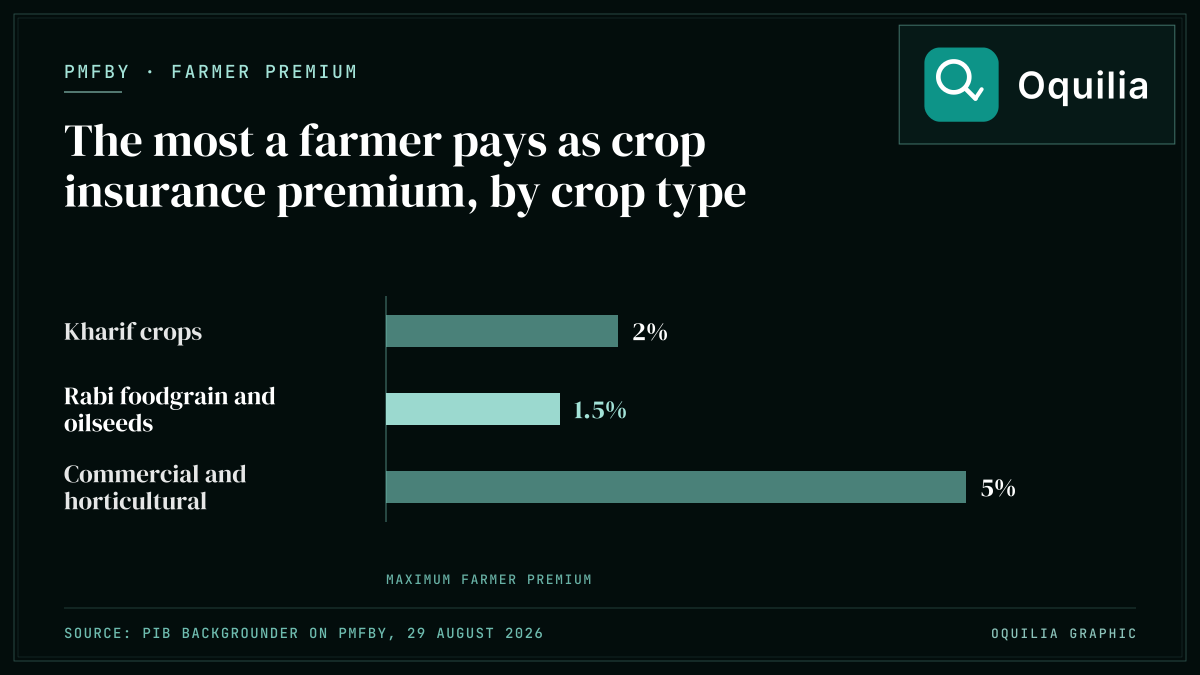
Farmers insuring rabi crops under the Pradhan Mantri Fasal Bima Yojana (PMFBY) pay a premium of at most 1.5% of the sum insured for foodgrain and oilseed crops, according to a backgrounder published by PIB on 29 August 2026. The Centre and the states pay the rest of the premium. Bihar has decided to implement the scheme from the Rabi 2026-27 season, the document says.
What Happened
The backgrounder sets out how the crop insurance scheme works. Farmers pay a maximum premium of 2% for kharif crops, 1.5% for rabi foodgrain and oilseed crops and 5% for commercial and horticultural crops. The Central and State Governments share the remaining premium equally; in the North-Eastern and Himalayan States and Union Territories they share it in a 90:10 ratio.
The scheme covers both loanee and non-loanee farmers, including tenant farmers and sharecroppers subject to eligibility conditions. For loanee farmers, whose seasonal crop loans or Kisan Credit Cards are active and standard, banks deduct the premium from the loan amount automatically. Non-loanee farmers can enrol voluntarily. Farmers need an insurable interest and valid land documents, tenure agreements or sowing certificates as their state requires, and must apply within the specified timeframe.
According to the document, Rs 12,200 crore has been allocated for PMFBY in the Union Budget 2026-27, and from Kharif 2016 to Rabi 2025-26 more than 92.46 crore farmer applications were insured and claims exceeding Rs 2.06 lakh crore were paid.
What It Means
Cover runs from prevented sowing (claims of up to 25% of the sum insured) through yield losses in notified areas and localised calamities such as hailstorms and inundation, to post-harvest losses from specified cyclonic and unseasonal rain events for crops left to dry in the field for up to 14 days. Losses in non-notified areas, and losses from war, theft, riots or preventable risks, are not covered. Cover applies only if the premium reaches the insurance company within the set timelines.
The backgrounder does not give a last date for rabi enrolment. It says the National Crop Insurance Portal digitises area, crop and scheme notifications. Complaints about crop insurance can be registered through the Krishi Rakshak Portal and its toll-free helpline 14447.
Source: PIB backgrounder on PMFBY
Sources & Citations
- PIB backgrounder on PMFBY — Press Information Bureau, Government of India