

NCLT orders Auro Gold liquidator to refund Rs 42.81 lakh earnest money to bidders
The NCLT Mumbai set aside a liquidator's forfeiture of Rs 42,80,680 in earnest money paid by two unsuccessful bidders in an Auro Gold Jewellery auction and ordered a refund within 15 days.
Key points
- The NCLT Mumbai held that the liquidator of Auro Gold Jewellery Private Limited could not forfeit earnest money paid by two unsuccessful auction bidders.
- The tribunal ordered the Rs 42,80,680 deposit refunded within 15 days, in an order delivered on 28 October 2026.
- The NCLT held the auction terms allowed forfeiture only in listed cases, and an unproven rent claim against the bidders was not one of them.
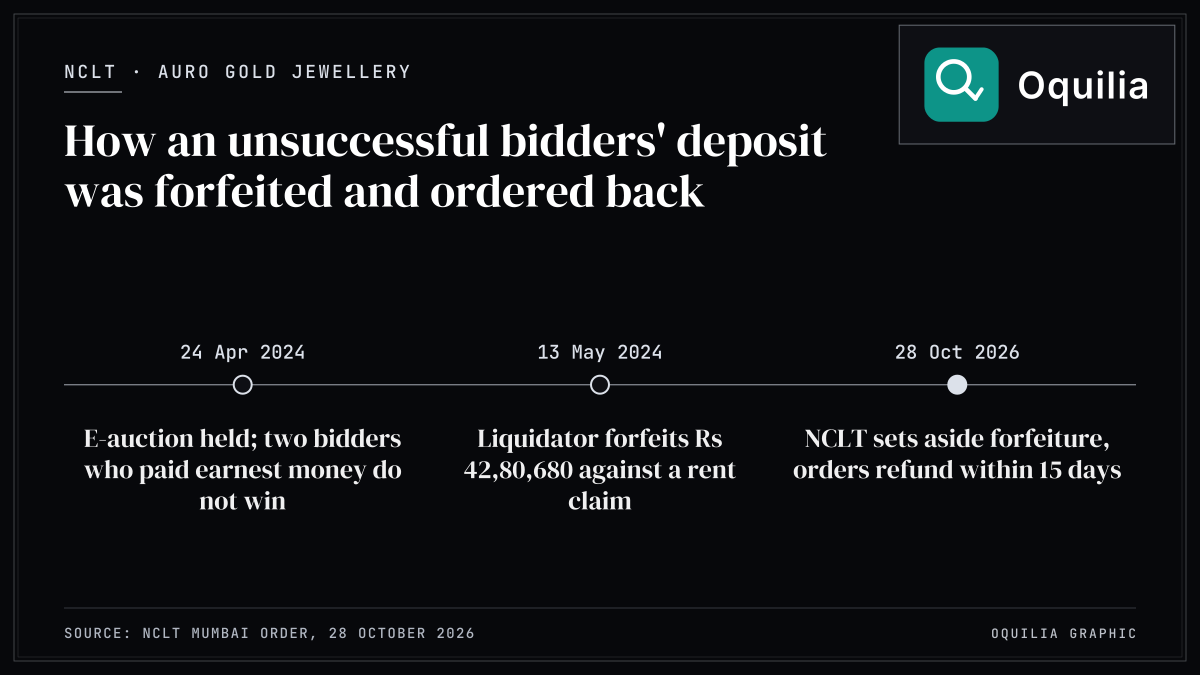
The National Company Law Tribunal (NCLT), Mumbai Bench-I, has ordered the liquidator of Auro Gold Jewellery Private Limited to refund Rs 42,80,680 (about Rs 42.81 lakh) in earnest money to two unsuccessful bidders in a liquidation auction. In its order delivered on 28 October 2026, the tribunal set aside the liquidator's forfeiture of the deposit and gave him 15 days to repay it.
What Happened
Auro Gold Jewellery is in liquidation in an insolvency case filed by State Bank of India. According to the order, the two bidders paid the deposit, known as earnest money, to take part in an e-auction held on 24 April 2024 and did not win. Under the auction's process memorandum, an unsuccessful bidder's earnest money is to be refunded.
The liquidator instead forfeited the full amount by a letter dated 13 May 2024. The bidders had occupied the property being auctioned as tenants, and the liquidator adjusted the deposit against a claim for rent because, he said, they had not given details of rent they said they had paid to the company's former management.
The tribunal held that the process memorandum allows forfeiture only in specific cases, such as a winning bidder's breach or false declarations, and none applied. It held that a liquidator can set off sums under the liquidation rules only against a debt that has been quantified, and there was no finding that the bidders had not paid the rent. The earlier tribunal orders the liquidator relied on did not make the bidders liable to pay the rent, it said. The liquidator remains free to take other lawful action against them.
What It Means
People who bid for assets sold by a liquidator in an insolvency case pay earnest money up front. The order holds that a liquidator must return an unsuccessful bidder's deposit as the auction terms say, and cannot keep it to cover a separate claim that has not been decided. The order may be appealed to the NCLAT.
Source: NCLT order
Sources & Citations
- NCLT order — National Company Law Tribunal