

NCLT Delhi admits H C Jain Pipes into insolvency over Rs 2.01 crore unpaid supplier dues
The NCLT's New Delhi bench has admitted H C Jain Pipes Private Limited into insolvency on a pipe supplier's plea, rejecting the company's claim of a pre-existing dispute.
Key points
- The National Company Law Tribunal, New Delhi, admitted H C Jain Pipes Private Limited into insolvency on 31 October 2026.
- Supplier OFB Tech Limited claimed operational debt of Rs 2,01,26,299.48 from ten invoices raised in June 2024.
- A moratorium now halts suits and recovery against the company, and the order may be appealed to the NCLAT.
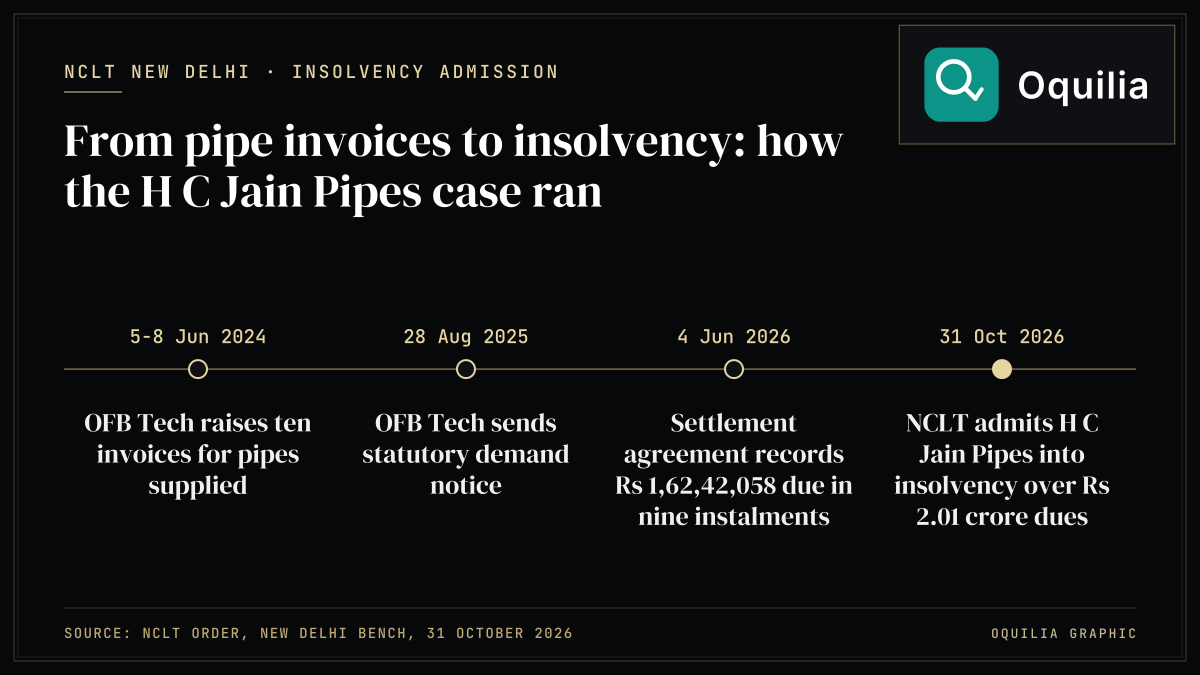
The National Company Law Tribunal (NCLT), New Delhi bench, has admitted H C Jain Pipes Private Limited into the corporate insolvency resolution process, the formal process under which creditors try to revive or resolve a company that has defaulted. The order, delivered on 31 October 2026, came on a petition by OFB Tech Limited, which said it was owed Rs 2,01,26,299.48 for pipes it supplied.
What Happened
OFB Tech, an operational creditor (a supplier owed money for goods), said the dues arose from ten invoices raised between 5 June 2024 and 8 June 2024. It sent a statutory demand notice on 28 August 2025. It said the principal stayed at Rs 1,63,50,249.69 and that differences between its notices related only to interest.
H C Jain Pipes disputed the claim. It said the supplier had failed to honour an earlier purchase order, charged inflated prices and supplied defective material, and it relied on a police complaint and a mediation application. The tribunal held that these allegations were not supported by evidence from before the demand notice, that the company kept placing orders and making payments, and that the police complaint and mediation application came later. It rejected the plea of a pre-existing dispute.
The company also placed on record a settlement agreement dated 4 June 2026, recording Rs 1,62,42,058 as due and payable in nine instalments of Rs 18,04,673, and a payment of Rs 4,50,000. The tribunal held that the record did not show the settlement was fully paid or that the signatory of the payment slip was authorised, and that the agreement does not erase a default that existed when the petition was filed.
What It Means
An interim resolution professional, appointed by the tribunal, now manages the company's affairs. A moratorium bars suits, recovery actions, enforcement of security and sale of the company's assets while the process runs. The supplier must deposit Rs 2 lakh with the interim resolution professional for initial expenses. The order does not give a date for creditors to file claims.
Admission into insolvency is not a finding of fraud or mismanagement. The NCLT's order may be appealed to the National Company Law Appellate Tribunal (NCLAT).
Source: NCLT order
Sources & Citations
- NCLT order — National Company Law Tribunal