

Karnataka HC quashes ED money-laundering case, bars ED private complaints
The Karnataka High Court on 6 November 2026 quashed an ED money-laundering case after the predicate offence closed, and held the ED cannot file its own private criminal complaint.
Key points
- The Karnataka High Court on 6 November 2026 quashed ED proceedings under ECIR No. BGZO/41/2023/2849 and the ED's private complaint in PCR No. 32/2024.
- The court held the ED cannot continue a PMLA case once the predicate offence is closed, and cannot file its own complaint when police decline to act.
- The ruling is appealable, and the underlying land-grant and recruitment allegations were never tested at trial, so no one has been found guilty.
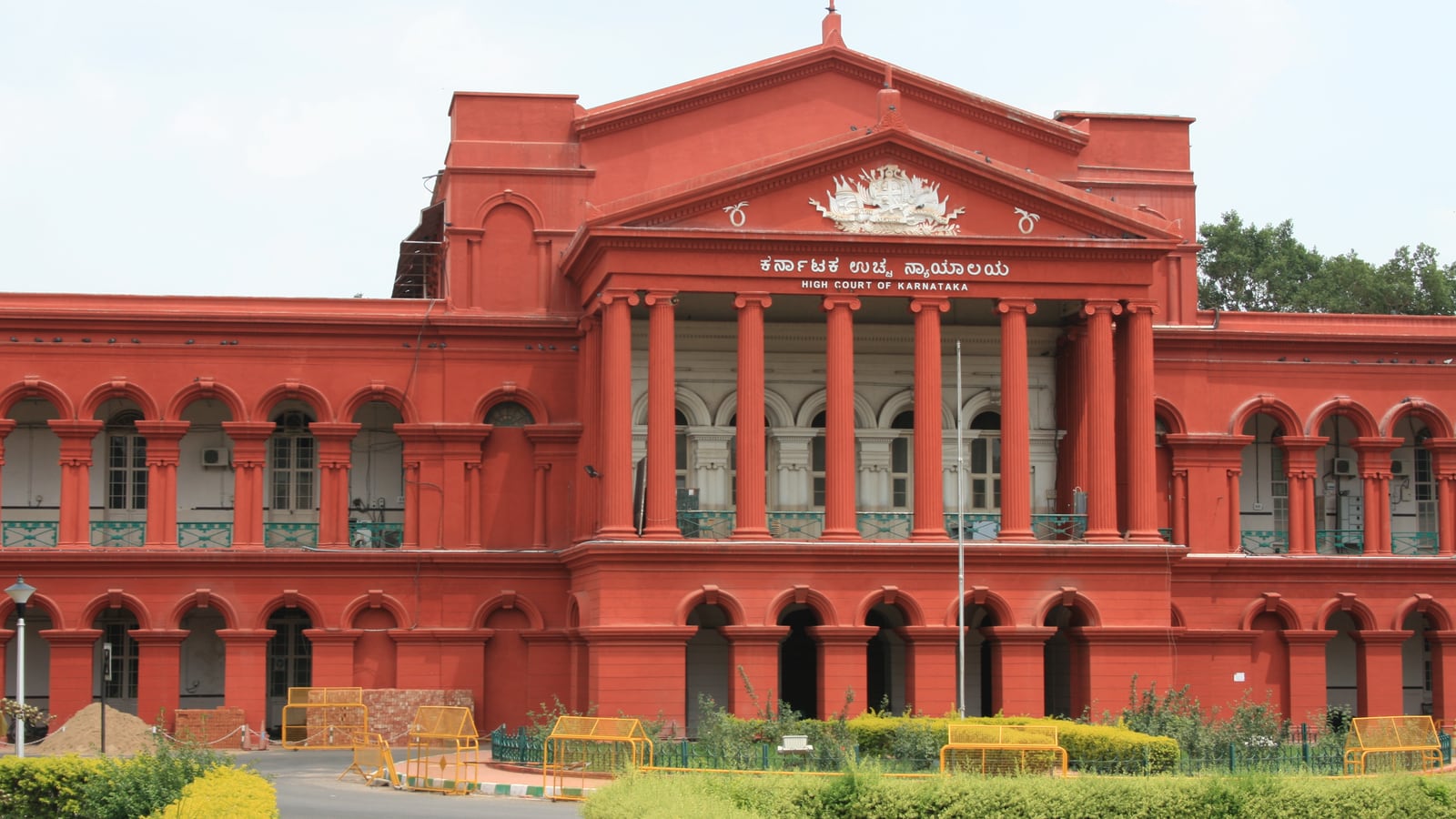
Photo: Polytropos-Commons / Wikimedia Commons, CC BY-SA 3.0 (cropped). File photo.
The Enforcement Action
The High Court of Karnataka at Bengaluru on 6 November 2026 quashed a set of money-laundering proceedings brought by the Directorate of Enforcement (ED), holding that the agency could not keep investigating once the underlying criminal case had closed, and that it had no power to file a private criminal complaint of its own. Justice M.I. Arun allowed all five writ petitions in a common order, reported as NC: 2026:KHC:61902, in Writ Petition No. 18821 of 2024 and connected matters (WP Nos. 8914 of 2024, 4630 of 2025, 5168 of 2025 and 22460 of 2025).
The court quashed ECIR No. BGZO/41/2023/2849, registered on 30 November 2023, along with the summonses issued under it and the show-cause notice dated 16 February 2024 in O.A. No. 1132/2024, insofar as they related to the petitioners. It also set aside the 6 June 2024 order of the Adjudicating Authority under the Prevention of Money-Laundering Act, 2002 (PMLA) confirming a seizure against one petitioner, and directed that any articles seized from him be returned.
The court further quashed proceedings in PCR No. 32/2024, a private complaint the ED itself had lodged before the special court in Bengaluru that hears criminal cases involving elected MPs and MLAs, as it related to three of the petitions. The court said the ED is "not a super cop to investigate anything and everything".
The ED was represented before the court by Additional Solicitor General S.V. Raju. No public statement from the agency on whether it will appeal was on record at the time of writing.
How the Scheme Worked
This section sets out the matter as the High Court's order describes it. It is important to read it as a history of allegations and procedure: no court has found any of the petitioners guilty of anything, and the ruling ends the ED's proceedings against them.
According to the order, the case began with what the court calls the "Land Scam Case". K.Y. Nanje Gowda, the petitioner in WP No. 4630/2025, had been Chairman of the Land Grant Committee of Malur in Kolar district. It was alleged that he, in collusion with other committee members, recommended the grant of about 80 acres of land to about 38 persons by abusing their official position. A private complaint, PCR No. 15366/2022, was filed before the Chief Metropolitan Magistrate, Bangalore, alleging offences under Sections 468, 464, 465, 471, 420 and 120B of the Indian Penal Code, and Crime No. 489/2022 was registered. He was later appointed Chairman of the Kolar and Chikkaballapur Milk Union Ltd (KOMUL).
Treating the land case as the predicate (or "scheduled") offence, the ED registered ECIR/BGZO/41/2023 and carried out searches. During those searches, the order records, the ED came across material which in its opinion pointed to irregularities in recruitment to KOMUL, which the court refers to as the "Job Scam Case". Summonses followed in January 2024, and the ED filed O.A. No. 1132/2024 under Section 17(4) of the PMLA before the Adjudicating Authority, which issued a show-cause notice and, on 6 June 2024, confirmed the seizure.
The ED also shared its recruitment material with the jurisdictional police under Section 66(2) of the PMLA. Meanwhile the land case unravelled: police filed a closure ('B') report, and because the required government sanction to prosecute a public servant was not obtained, the trial court dismissed the case for non-prosecution.
When the police, and later the Lokayukta, did not act on the recruitment information, the ED itself filed PCR No. 32/2024 on 11 September 2024, asking the trial court to refer the matter to the Lokayukta Police and alleging offences under Sections 7, 11, 12 and 13 of the Prevention of Corruption Act, 1988 and Sections 120B, 420, 464, 465, 468 and 471 of the IPC. The special court passed an order on that complaint on 30 October 2024. The petitioners, including the Managing Director of the Kolar Milk Union, challenged all of these steps.
The Law Invoked
The order turns on a handful of PMLA provisions. Section 3 defines the offence of money-laundering as involvement in any process or activity connected with the "proceeds of crime". Section 2(1)(u) defines proceeds of crime as property derived from criminal activity relating to a scheduled offence. Section 17(4) lets the ED apply to the Adjudicating Authority to retain property seized in a search. Section 66(2) requires the ED, when it finds material showing a breach of some other law, to share that information with the agency concerned. Section 48 sets out the authorities under the Act.
The ED argued that it could file a complaint like any other person under Section 200 of the Code of Criminal Procedure, 1973, now Section 223 of the Bharatiya Nagarik Suraksha Sanhita, 2023. The court rejected that, holding that the ED "has to exercise only those powers expressly conferred on it by the PMLA."
The court relied on two Supreme Court rulings: Vijay Madanlal Choudhary v. Union of India, (2023) 12 SCC 1, which held that without proceeds of crime the PMLA authorities "cannot step in or initiate any prosecution", and V. Senthil Balaji v. Deputy Director, Directorate of Enforcement, 2024 SCC OnLine SC 2626, which described a scheduled offence as a precondition for alleging proceeds of crime. From these it concluded that the ED's power "is derivative and not original".
What Happens Next
The ruling is a single-judge decision. As a matter of standard procedure, the ED may challenge it by way of an appeal before a Division Bench of the High Court or by a special leave petition before the Supreme Court. Until a higher court says otherwise, the ECIR, the summonses, the show-cause notice, the confirmation order and the private complaint stand quashed as regards the petitioners, and the seized articles fall to be returned to the petitioner in WP No. 18821/2024.
The order does not decide whether anything improper happened in the land grants or in KOMUL's recruitment. It decides who may set a criminal case in motion. The court said that prosecution of a predicate offence must be initiated by "the respective prosecuting agency/third party", not by the ED. Any fresh action on the underlying allegations would therefore have to come from the police, the Lokayukta or another competent complainant, under the ordinary law.
Throughout, the allegations described in the order remain allegations. None was tested at trial, and the people who brought these petitions are entitled to the presumption of innocence.
What It Means
For readers, the case is a clear statement of how India's anti-money-laundering law is built. The ED does not investigate crimes in general; it follows the money from a crime that some other agency has registered. When that underlying case ends, whether on the merits or, as here, for want of sanction, the High Court held that the money-laundering case cannot carry on alone.
The ruling also addresses a question that has come up in several states: what happens when the ED flags possible wrongdoing to local police under Section 66(2) and the police decline to act. Justice Arun held that the ED cannot then step into the police's shoes by filing its own complaint, describing that as contrary to the separation of powers and the "checks and balances" the law requires.
For anyone dealing with an ED summons or an attachment, the practical point is that an ECIR, a summons, a seizure or a provisional attachment is an investigative step, not a finding of guilt, and each can be challenged. The status of the predicate offence matters a great deal; if it is closed, that fact is directly relevant to whether PMLA proceedings survive. Anyone in that position should take advice from a qualified lawyer. Court orders in such matters can be read free on Indian Kanoon and the High Court's own website.
FAQ
Does this mean the people named are guilty?
No. A provisional attachment, an ECIR or a chargesheet contains allegations, not findings of guilt; the accused are presumed innocent until proven guilty, and due process continues. In this case the High Court went further and quashed the ED's proceedings against the petitioners altogether. No court has found that any of them committed money-laundering, corruption or any other offence.
What exactly did the Karnataka High Court order?
It allowed five writ petitions. It quashed ECIR No. BGZO/41/2023/2849, the summonses and the show-cause notice in O.A. No. 1132/2024 as regards the petitioners, set aside the Adjudicating Authority's 6 June 2024 confirmation order for one petitioner and ordered seized articles returned, and quashed the ED's private complaint in PCR No. 32/2024 for three of the petitions.
Why did the court say the ED cannot file a private complaint?
The court read Section 66(2) of the PMLA as requiring the ED to pass information about other offences to the agency concerned, not to take up those cases itself. It held that the PMLA does not empower the ED to file a complaint under Section 200 CrPC or Section 223 BNSS, and that allowing it would let the agency act as a "super cop".
Can the ruling be appealed?
Yes. The ED can, as standard procedure, seek review of a single-judge decision before a Division Bench of the High Court or approach the Supreme Court by special leave petition. No appeal was on public record at the time of writing. Until a higher court intervenes, the quashing order stands.
Where can I read the official order?
The full judgment of 6 November 2026 in WP No. 18821 of 2024 and connected cases is available on Indian Kanoon. It sets out the facts, the questions framed by the court, the Supreme Court precedents relied on and the operative directions.
This report is based on the official Karnataka High Court order dated 6 November 2026 in WP No. 18821 of 2024 and connected matters. It was surfaced via coverage in LiveLaw.
This report describes enforcement actions and allegations on the public record, attributed to the officials cited. An order, FIR or chargesheet is not a conviction; parties are presumed innocent until proven guilty.
Named in this report, or spotted an error? Corrections and responses: editor@oquilia.com. We correct errors promptly and record responses from named parties.