

Calcutta HC restores CBI case against SBI official in Rs 164.99 crore matter
The Calcutta High Court set aside a 2022 discharge and restored a CBI case against an SBI official over an alleged Rs 164.99 crore loss to the bank, ordering charges be framed.
Key points
- The Calcutta High Court on 12 November 2026 set aside the discharge of an SBI official and restored a CBI case against him.
- The CBI alleges a loss of Rs 164.99 crore to SBI linked to the accounts of borrower Shree Mahalaxmi Corporation Pvt. Ltd.
- The trial court must now frame charges and try him with the other accused; the allegations remain to be tested at trial.
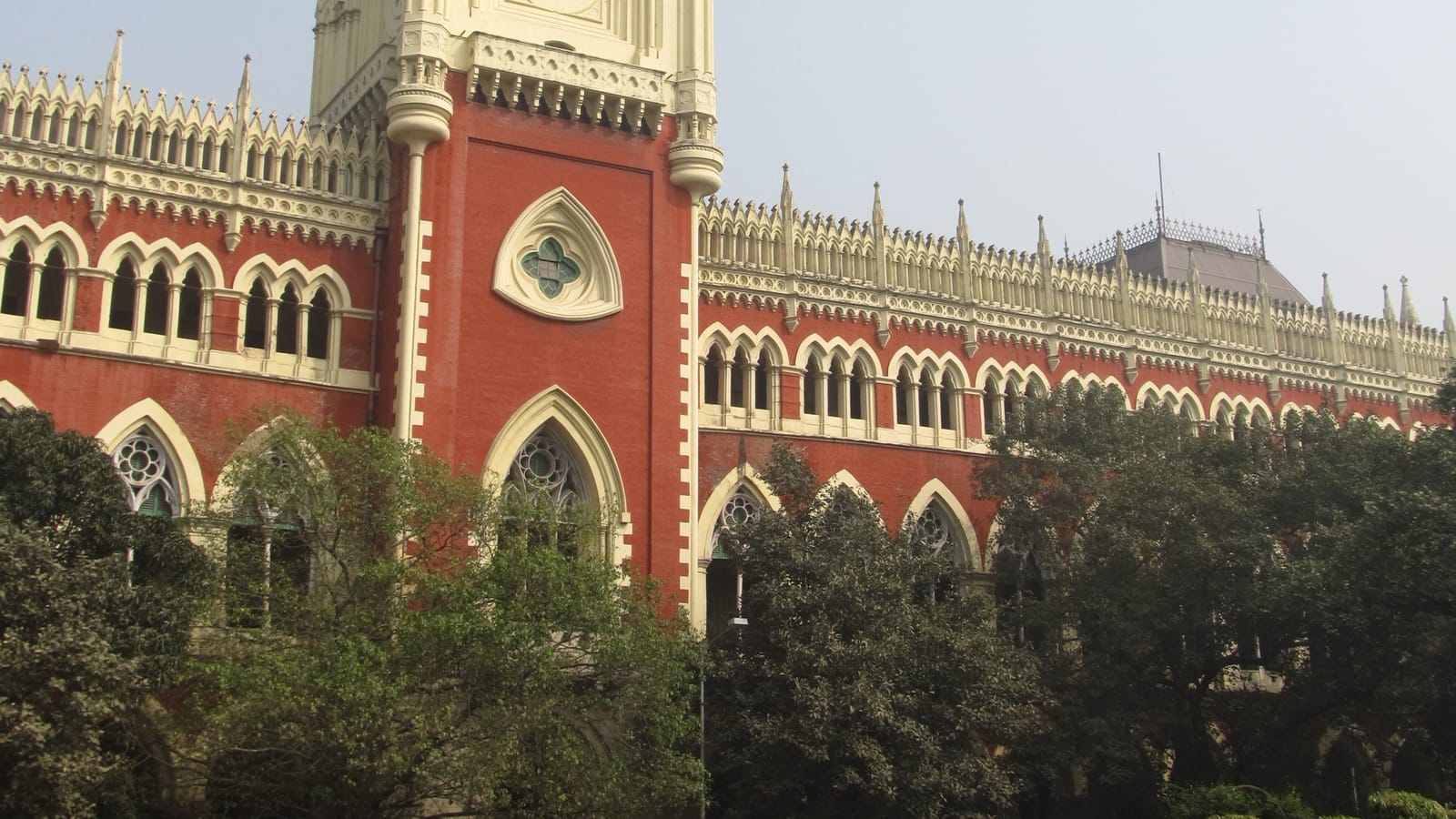
Photo: Biswarup Ganguly / Wikimedia Commons, CC BY 3.0 (cropped). File photo.
The Enforcement Action
The Calcutta High Court has set aside an order that had discharged a State Bank of India (SBI) official from a Central Bureau of Investigation (CBI) case concerning an alleged loss of Rs 164.99 crore to the bank. In a judgment pronounced on 12 November 2026 in CRR 4653 of 2022, Justice Uday Kumar allowed a criminal revision application filed by the CBI and restored Special (CBI) Case No. 02/22 against the official.
The official is Shri Jyoti Ranjan Kanungo, named in the judgment as Accused No. 3 (A-3) and described as the Chief Manager and Relationship Manager at SBI's Industrial Finance Branch (IFB), Kolkata. On 29 September 2022, the Special Judge, CBI Court No. 2, Calcutta, had discharged him by Order No. 26 under Section 239 of the Code of Criminal Procedure (CrPC). The High Court has now quashed that order and directed the trial court to frame charges against him and try him jointly with the remaining co-accused.
The case arises out of FIR No. RCBSK 2017E0001 dated 28 March 2017. According to the judgment, it began with a written complaint lodged by an SBI General Manager on 27 January 2017, alleging misappropriation of bank funds of Rs 164.99 crore linked to the accounts of Shree Mahalaxmi Corporation Pvt. Ltd., the principal borrower, named in the case as A-2.
The ruling does not decide guilt. The court held only that the material in the CBI's chargesheet, taken at face value, raised what it called a "strong and grave suspicion" sufficient to frame charges. Through his counsel, the official denied any wrongdoing before the High Court, as set out below.
How the Scheme Worked
According to the order, the borrower company held credit accounts with SBI's Commercial Branch, Ballygunge, from 2004, which were migrated to the IFB in Kolkata in 2009. Under a consortium arrangement with State Bank of Travancore and IDBI Bank, SBI's own share of the sanctioned limit eventually stood at Rs 142.89 crore, including a cash credit limit of Rs 75 crore and a local cheque collection facility under the Cash Management Product (CMP) carrying an Rs 8 crore sub-limit.
The CBI's case, as recorded by the court, is that between 2011 and 2013 the borrower and associate entities named in the chargesheet abused the CMP facility through "kite flying". The order describes this as depositing high-value cheques drawn on associate companies with insufficient funds to claim immediate credit, and cycling fresh cheques to mask overdues. The prosecution also alleges that six letters of credit worth Rs 18.48 crore were obtained using fake proforma invoices, bills of exchange and transport receipts bearing registration numbers of vehicles such as agricultural trailers, motorbikes and buses, which the order notes were unsuited to carrying steel. The chargesheet alleges that the discounted proceeds were routed through front companies to reduce overdue cash credit balances, and that inflated stock statements were submitted to raise drawing power.
Per the judgment, the account was classified as a non-performing asset on 30 June 2013 and declared a fraud on 25 June 2015. The CBI registered its FIR in March 2017 and filed Charge Sheet No. 07/2019 on 30 December 2019 against eleven accused, including private companies, directors and the bank official.
Against the official, the chargesheet makes five specific allegations, as the court summarised them. It alleges he allowed the CMP facility to keep running despite repeated cheque returns, with overdues peaking at Rs 41.24 crore; verified foreign currency demand loans without reducing drawing power, which the CBI says allowed drawing power to be pushed above Rs 85 crore; carried out a transfer of Rs 14.89 crore on 19 April 2012 from an associate entity to the borrower's account without any customer request; opened a cash credit account on 30 November 2012 to square off an Rs 15 crore RTGS exposure to a third-party company when the current account balance was Rs 5,117; and signed monthly irregularity reports that, the CBI alleges, under-reported outstandings.
The defence disputed each point. According to the judgment, his counsel argued that CMP monitoring sat with a separate cash management cell at another branch, that he stopped the facility on 11 November 2011, that core banking entries could not be manually overridden, that his proposals were countersigned by senior executives, and that an SBI departmental inquiry ended with a minor administrative warning. Counsel also submitted that there was no material showing personal financial gain.
The Law Invoked
The chargesheet, as the judgment records, invokes Section 120B (criminal conspiracy) read with Sections 420 (cheating), 468 (forgery for the purpose of cheating) and 471 (using a forged document as genuine) of the Indian Penal Code. It also invokes Section 13(2) read with Section 13(1)(d) of the Prevention of Corruption Act, 1988, which penalise criminal misconduct by a public servant, including abuse of official position to obtain a pecuniary advantage for another person. The court specifically referred to Section 13(1)(d)(ii) and held that personal enrichment or kickbacks are not an inflexible requirement under it.
The discharge had been granted under Section 239 CrPC, which allows a magistrate to discharge an accused where the charge is "groundless". The CBI moved the High Court under Section 397 read with Section 482 CrPC, and the court also referred to its revisional powers under Section 401 CrPC, noting that these correspond to Sections 438 and 442 of the Bharatiya Nagarik Suraksha Sanhita, 2023.
Relying on Supreme Court rulings including Sajjan Kumar v. CBI and State of Tamil Nadu v. N. Suresh Rajan, the court held that the trial judge had conducted an impermissible "mini-trial" by weighing defence explanations at the pre-charge stage.
What Happens Next
The revision is allowed, Order No. 26 dated 29 September 2022 is set aside, and the matter is remanded to the trial court to restore Special (CBI) Case No. 02/22 against the official. Upon submission of the prosecution sanction order, "if awaited", or otherwise in accordance with law, the trial court is to frame charges under the relevant provisions of the Indian Penal Code and the Prevention of Corruption Act and conduct a joint trial with the other accused.
Framing of charges is the step at which the formal trial begins. The prosecution will then have to lead evidence, witnesses can be cross-examined, and the accused can present a defence. The High Court said that whether the documents were executed innocently or as part of a design is a question that "requires a full-fledged trial". A conviction would require proof beyond reasonable doubt.
The official may seek further remedies, including an approach to the Supreme Court; no such step is on record as of publication. The allegations against all eleven accused remain to be tested at trial, and due process continues.
What It Means
For bank customers and depositors, the case is a reminder of how long large banking frauds can take to move through the courts. Per the judgment, the account turned bad in 2013, the FIR came in 2017, the chargesheet in 2019 and the discharge in 2022; whether one accused should even face trial has taken until late 2026.
The ruling also clarifies a point of law that recurs in bank-fraud prosecutions: at the charge stage, a court is meant to test whether the prosecution's material discloses grave suspicion, not whether it is enough to convict. An internal departmental warning, the High Court held, does not by itself justify discharging a bank officer where documentary records point to specific acts. That said, the ruling records only the prosecution's case at its strongest; the defence version has not yet been tested in evidence.
For businesses that deal with banks, the allegations recorded in the order map onto warning signs lenders are expected to watch for: cheques returned repeatedly while a facility stays open, transport documents that do not match the goods, and transfers between related companies with no trade behind them.
FAQ
What exactly did the Calcutta High Court order?
In its judgment of 12 November 2026 in CRR 4653 of 2022, the court allowed the CBI's revision application, set aside the September 2022 discharge order and restored Special (CBI) Case No. 02/22 against the SBI official named as A-3. It directed the trial court to frame charges under the Indian Penal Code and the Prevention of Corruption Act, 1988, and to try him jointly with the other co-accused.
Does the High Court ruling mean the accused official is guilty?
No. A chargesheet contains allegations, not findings of guilt, and restoring a case only means the court found enough material to frame charges. The High Court itself noted that conviction requires proof beyond reasonable doubt. The accused are presumed innocent until proven guilty, and due process continues before the trial court, where the prosecution's evidence will be tested.
Who else is accused in the case?
According to the judgment, the CBI's Charge Sheet No. 07/2019 names eleven accused, including the borrower Shree Mahalaxmi Corporation Pvt. Ltd., its directors and several associate companies. The other accused were not parties to this revision, which concerned only the discharge of the bank official. The court directed a joint trial of all of them.
Where can I read the official judgment?
The full text of Central Bureau of Investigation vs Shri Jyoti Ranjan Kanungo, decided by the Calcutta High Court on 12 November 2026, is available on Indian Kanoon at the link below. It sets out the prosecution's allegations, the defence submissions and the court's reasoning.
This report is based on the official Calcutta High Court judgment dated 12 November 2026 in CRR 4653 of 2022. It was surfaced via coverage in Bar and Bench.
This report describes enforcement actions and allegations on the public record, attributed to the officials cited. An order, FIR or chargesheet is not a conviction; parties are presumed innocent until proven guilty.
Named in this report, or spotted an error? Corrections and responses: editor@oquilia.com. We correct errors promptly and record responses from named parties.