

8th Pay Commission: what the Cabinet's terms of reference say about timing
The Union Cabinet's release on the 8th Central Pay Commission says its recommendations would normally be expected to take effect from 1 January 2026, and sets an 18-month deadline.
Key points
- The Union Cabinet approved the terms of reference of the 8th Central Pay Commission on 28 October 2025, per a PIB release.
- The release says the Commission must report within 18 months of its constitution, and its effect would normally be expected from 1 January 2026.
- The release gives no figure for pay rises, pension changes or arrears, and does not set any fitment factor.
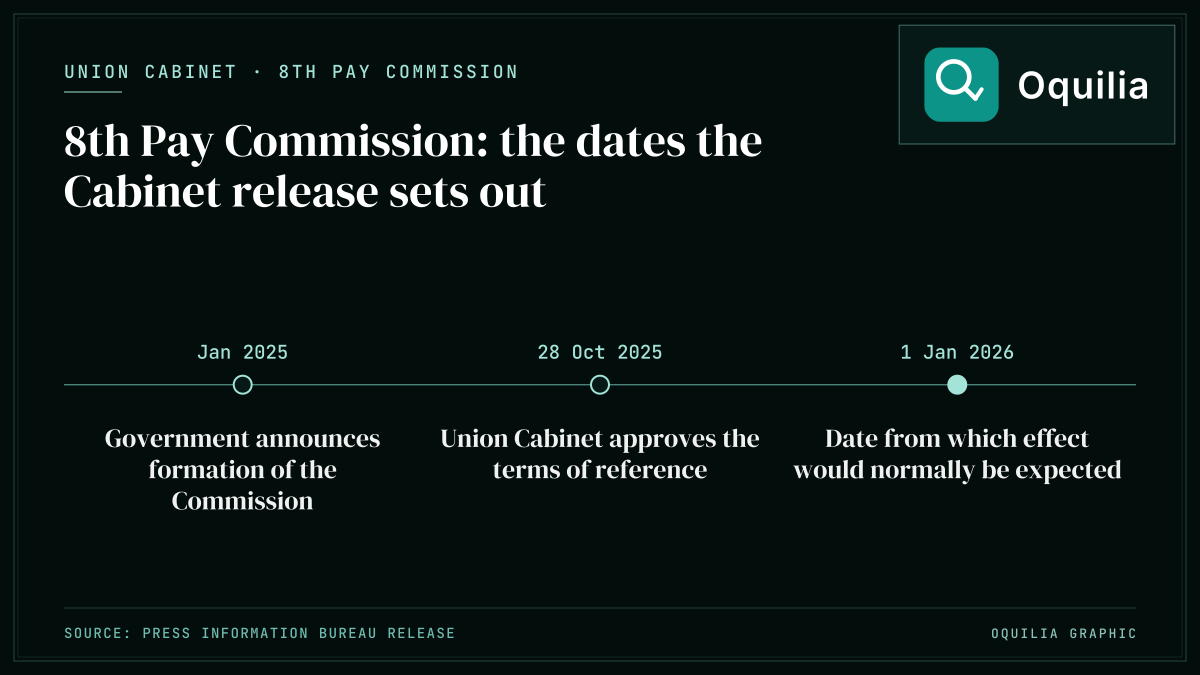
The Union Cabinet approved the terms of reference of the 8th Central Pay Commission on 28 October 2025, according to a release from the Press Information Bureau. The release says the Commission will make its recommendations within 18 months of the date of its constitution, and that the effect of those recommendations would normally be expected from 1 January 2026. It gives no figure for any increase in pay or pension.
What Happened
According to the release, the 8th Central Pay Commission is a temporary body with one Chairperson, one part-time Member and one Member-Secretary. It may send interim reports on any matter as and when its recommendations on that matter are finalised.
The release lists five things the Commission must keep in view: the economic conditions in the country and the need for fiscal prudence; the need to keep adequate resources for development spending and welfare measures; the unfunded cost of non-contributory pension schemes; the likely impact on the finances of State Governments, which usually adopt pay commission recommendations with some modifications; and the pay, benefits and working conditions of employees of Central Public Sector Undertakings and the private sector.
On timing, the release says pay commission recommendations are usually implemented after a gap of every ten years, and that "going by this trend" the effect of the 8th Commission's recommendations would normally be expected from 1 January 2026. It also records that the government announced the formation of the Commission in January 2025.
What It Means
For central government employees, the release sets out two points on timing: the Commission's 18-month reporting deadline is counted from the date it was constituted, and the effect of its recommendations would normally be expected from 1 January 2026, going by the ten-year trend. The release does not set the size of any pay or pension revision, any fitment factor, or how any arrears would be worked out.
The release also notes that State Governments usually adopt pay commission recommendations with some modifications, and it asks the Commission to keep in view the likely impact of its recommendations on their finances.
Source: PIB release on 8th Pay Commission terms of reference
Sources & Citations
- PIB release on 8th Pay Commission terms of reference — Press Information Bureau, Government of India