

New York Times sues Brave over AI data sales and paywall-bypass tool
US newspapers say Brave sold scraped journalism to AI firms and let users dodge paywalls. Here is why Indian publishers and AI founders should watch the case.
Key points
- The New York Times and three other US newspapers have sued Brave Software over alleged scraping and paywall bypass.
- The papers allege Brave sold access to its index to AI firms including Anthropic, Perplexity, Mistral, xAI and Cohere.
- The case could shape how Indian courts and startups view AI data suppliers, alongside ANI's pending suit against OpenAI.
The News
Brave Software, the company behind the privacy-focused Brave browser, is facing copyright lawsuits from The New York Times and a group of other American newspapers. The suits accuse Brave of scraping news websites without permission, selling access to that material to AI companies, and helping users get around subscription paywalls. Reuters first reported the filings.
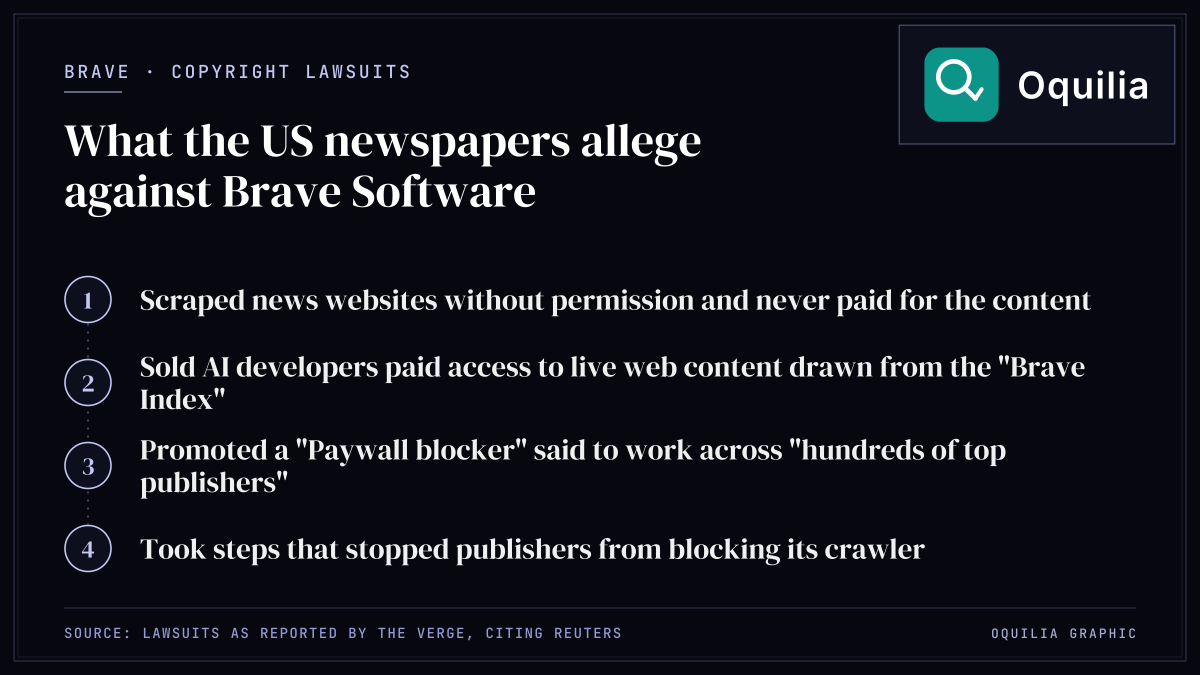
One complaint, brought by the New York Daily News, the Chicago Tribune and the Orlando Sentinel, alleges that Brave earns money from its search index partly by selling AI developers paid access to live web content drawn from the "Brave Index". According to the complaint, those buyers use the feed to train models, to answer individual user queries, or for both purposes. The papers name Anthropic, Perplexity, Mistral, xAI and Cohere among the "many" companies that allegedly received the material.
The publishers also take aim at a "Paywall blocker" feature in the browser, which Brave promotes as working across "hundreds of top publishers". The complaint says Brave never sought permission, never paid for the content and took steps that stopped publishers from blocking its crawler.
Times spokesperson Graham James said Brave had ignored repeated requests to stop. Perplexity's Jesse Dwyer dismissed the suit; Brave had not commented.
Why It Matters
The case moves the copyright fight one layer down the supply chain. Until now, most publisher litigation has targeted model builders directly, most prominently The Times's own suit against OpenAI and Microsoft, filed in December 2023. Going after an index provider tests whether AI companies can insulate themselves by licensing data from an intermediary rather than crawling the web themselves.
If the courts treat a search index as a channel for infringement, every company that buys a "real-time web" feed for retrieval-based answers could face new questions about where that content came from. That would push the industry further towards direct licensing deals with publishers, a market that has grown steadily since 2024 as newsrooms signed content agreements with large model developers.
Indian Angle
India already has its own version of this battle. News agency ANI sued OpenAI in the Delhi High Court in November 2024, alleging that its reporting was used without permission to train ChatGPT. Indian publisher groups later sought to join the case, and the outcome is likely to shape how the Copyright Act, 1957 treats AI training and fair dealing. The Brave suits will give Indian lawyers a fresh foreign reference point, particularly on whether liability can attach to a data supplier rather than only to the model maker.
For Indian AI startups, the lesson is practical. Many local developers building chat assistants, research tools and enterprise search products rely on third-party search APIs for live web results, because building a crawler is costly. Founders and investors doing due diligence should now ask vendors how their indexes are compiled and whether publisher content is licensed.
Indian subscription publishers, from business dailies to paywalled digital outlets, face the same paywall-bypass problem the American papers describe. Perplexity, one of the named buyers, already has a large Indian user base through its 2025 tie-up with Airtel.
FAQ
Who filed the lawsuits against Brave?
The New York Times filed one suit. A separate complaint was brought by the New York Daily News, the Chicago Tribune and the Orlando Sentinel, represented by attorney Steven Lieberman. Both accuse Brave Software of unlawful scraping and enabling paywall bypass.
Are the AI companies themselves being sued here?
No. The named defendant is Brave Software. Anthropic, Perplexity, Mistral, xAI and Cohere are mentioned in the complaint as alleged buyers of Brave's index data, but these filings target Brave as the supplier.
Has Brave responded?
Brave had not replied to a request for comment at the time of the original report. Perplexity's Jesse Dwyer criticised the suit, calling its claims disinformation, but did not detail any rebuttal.
Is there a similar case in India?
Yes. ANI's copyright suit against OpenAI has been before the Delhi High Court since November 2024. It is the most closely watched AI copyright case in the country and remains pending.
Where can I read the original report?
The Verge covered the lawsuits, citing Reuters. The link is in the attribution note below this article.
This story was reported by The Verge. Read the full original coverage at The Verge.