

Google's orbiting TPU satellite runs Gemma 4 and answers its first prompt
Google's Project Suncatcher satellite has booted its TPUs in orbit and run Gemma 4. Here is what the test means for India's data-centre and space sectors.
Key points
- Google says the TPUs on its Project Suncatcher satellite booted in orbit and its Gemma 4 model answered a prompt for a haiku.
- Google will next test the chips under thermal stress and radiation, ahead of twin interconnected satellites planned for 2027.
- The experiment is relevant to India's power-constrained data-centre build-out and to private space startups working on on-board processing.
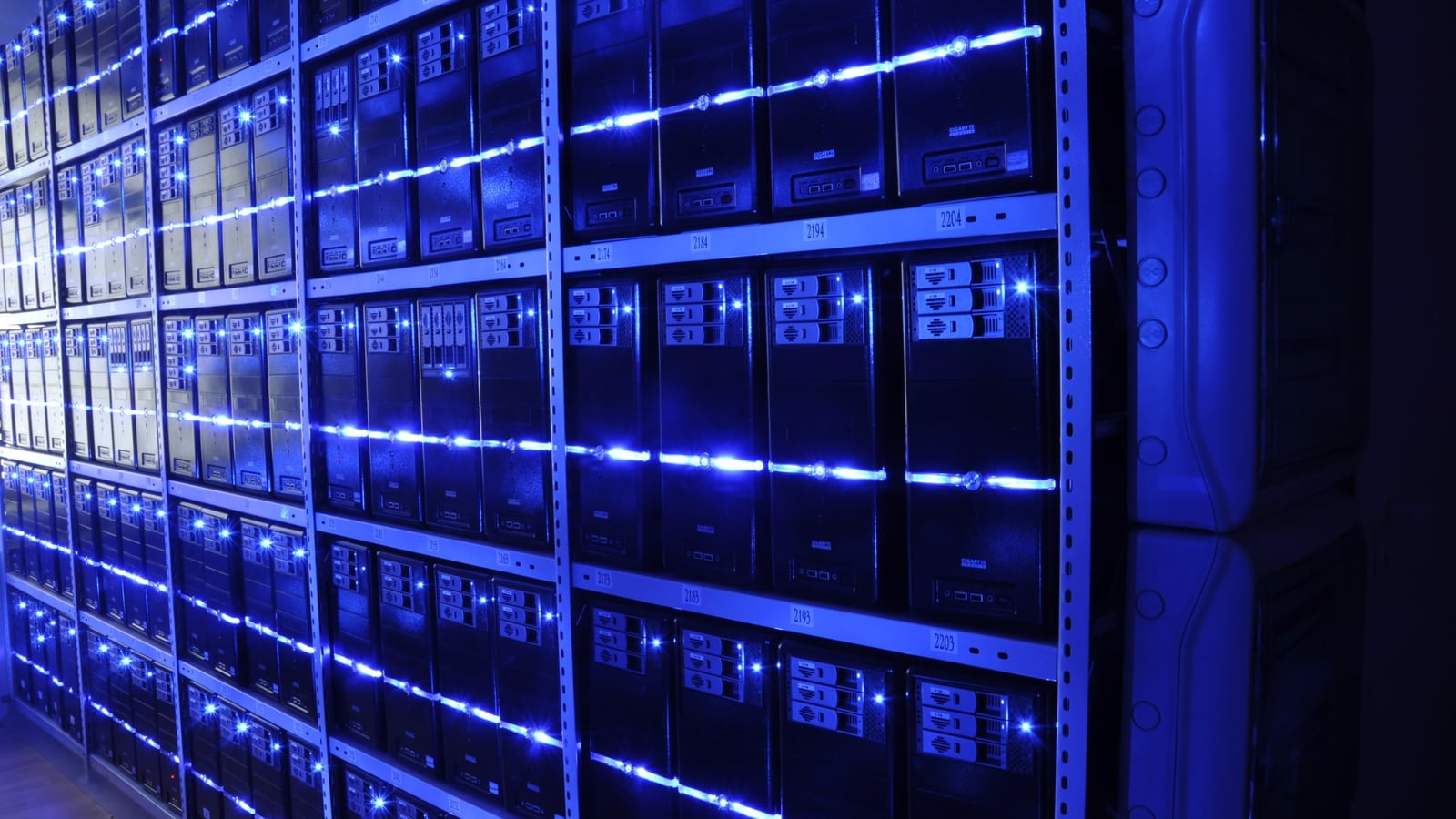
Photo: BalticServers.com / Wikimedia Commons, CC BY-SA 3.0 (cropped). Representational image.
The News
Google says the Tensor Processing Units on board its experimental Project Suncatcher satellite have powered up in orbit and answered their first prompt. In a blog post published on Friday, the company reported that its Gemma 4 model, running on the satellite's own TPUs, was asked to write a haiku about life in space, and did so.
The satellite went into orbit earlier this month. According to Google, engineers also ran other space-themed limerick requests and prompts involving telemetry data, as part of early checks that the hardware is working as intended.
The company says the next round of testing will examine how the TPUs cope with heat stress and radiation exposure in orbit. Google describes reliable operation in space as the step that "paves the way" for its next milestone: a pair of interconnected satellites planned for 2027.
Why It Matters
Project Suncatcher is Google's exploratory bet that some AI computing could one day move off the planet, where solar power is plentiful and there is no local fight over land, grid capacity or water for cooling. A haiku is a modest output, but the point of the test is proof that commercial AI accelerators can boot and run a modern model outside the protection of the atmosphere.
Computing in orbit is not new in itself. Hewlett Packard Enterprise sent its Spaceborne Computer to the International Space Station in 2017 to see whether off-the-shelf servers could survive a year in space. What is different here is ambition: Google is testing the same class of chips it uses to train and serve AI models on Earth, with an explicit long-term goal of data-centre-scale capacity.
The timing is also telling. Political resistance to large data centres on the ground is rising, with power bills and water use now campaign issues in several countries. Space-based compute remains years from commercial reality, with radiation, heat dissipation and launch costs still unsolved.
Indian Angle
For India, the story touches two fast-growing sectors at once: data centres and private space. India's data-centre build-out is accelerating as global cloud providers and domestic groups add capacity, and the same constraints that drive Google's experiment, namely reliable power, land and cooling water, are acute in hubs such as Mumbai, Chennai and Hyderabad.
The second link is the space economy. Since the government opened the sector to private players through IN-SPACe, startups such as Pixxel, Digantara, Skyroot Aerospace and Agnikul Cosmos have raised capital for satellites, space situational awareness and small launchers. On-board processing, where satellites analyse data in orbit rather than beaming raw files to the ground, is a natural area for Indian earth-observation firms, and Google's results offer a public benchmark for what commercial AI chips can tolerate.
There is also a policy angle. India's space policy and the IndiaAI Mission have so far run on separate tracks. If compute in orbit becomes viable, questions about data localisation, spectrum and liability for orbital infrastructure would need joint answers from MeitY, the Department of Space and IN-SPACe.
FAQ
What did Google's satellite actually do?
Google says the satellite's on-board TPUs booted successfully and its Gemma 4 model responded to a prompt asking for a haiku about being in space. The company also tested other space-themed limericks and telemetry prompts. It is an early functional check, not a commercial service, and it shows the hardware can run an AI model in orbit.
What comes next for Project Suncatcher?
Google says it will now test how its TPUs perform under thermal stress and radiation exposure in orbit. If those tests show the chips can reliably run workloads, the company plans to move to its next milestone, which is a pair of interconnected satellites in 2027.
Does this affect Indian data-centre investors today?
Not directly. Orbital data centres are an experiment and remain years away from any commercial scale. The more immediate relevance for Indian investors is that the same power, land and water constraints pushing Google to explore space are shaping data-centre costs and site choices in India right now.
Where can I read the original report?
The original report was published by The Verge, based on Google's blog post on Friday. A link to the full coverage appears at the end of this article.
This story was reported by The Verge. Read the full original coverage at The Verge.